True story behind Netflix's terrifying new plane crash series where 270 people lost their lives

Netflix has just dropped The Bombing of Pan Am 103, and it's about to introduce a global audience to one of the deadliest terror attacks the world has ever seen.
The six-part British drama, starring Connor Swindells, Merritt Wever and Patrick J. Adams, first aired on BBC One back in May 2025 before landing on Netflix for everyone else to binge.
It kicks off on Christmas Eve, following totally normal people going about their evening: families sitting down for dinner, a cop clocking on for his shift, passengers boarding a flight home for the holidays.
None of them had a clue that, thousands of feet above Scotland, one of the worst terrorist attacks in history was about to happen.
Advert
Nearly 40 years on, the Lockerbie bombing still shapes how the world handles aviation security and counterterrorism.
But how much do you actually know about what happened that night?
What really caused the Lockerbie bombing?
Four days before Christmas 1988, Pan Am Flight 103 was flying from London Heathrow to New York's JFK airport, having started life as a feeder flight out of Frankfurt.
Onboard were 259 passengers and crew, including 35 Syracuse University students heading home after a semester abroad.
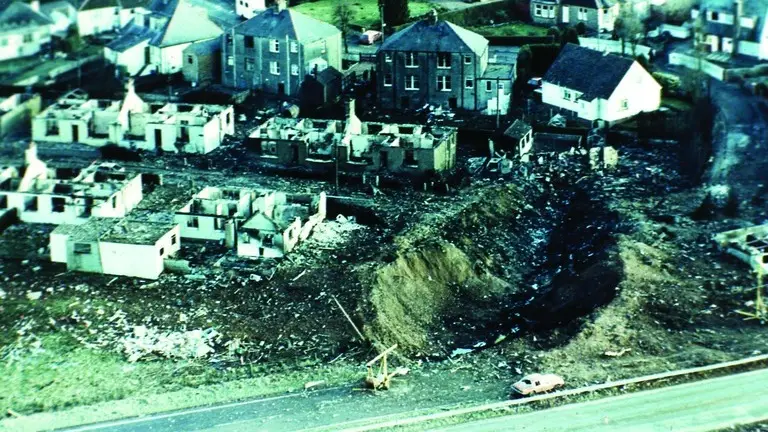
At 7:03pm, while cruising at 31,000 feet above the Scottish town of Lockerbie, a bomb hidden in the forward cargo hold went off. The Boeing 747 tore apart mid-air, scattering wreckage across more than 845 square miles of countryside.
The wings and fuel tanks slammed into Lockerbie's Sherwood Crescent, ripping a crater over 150 feet deep into the ground and setting off a massive fireball.
Every single person on the plane died. Eleven more were killed on the ground.
In total, 270 people from 21 countries lost their lives, including 190 Americans, ranging from students to grandparents to a baby just two months old.
Until 9/11, it was the deadliest terror attack ever carried out against Americans.
For the people of Lockerbie, it started as just another Thursday night, dinner, TV, getting ready for Christmas. Then a plane fell out of the sky.
David Jardine was just 19 and newly trained with the local fire brigade when he was sent racing towards the disaster.
He told the FBI he remembers spotting the fire from miles off before he even arrived, immediately knowing something huge had happened.
Police inspector George Stobbs got the news from a TV newsflash while at home. What he found at Sherwood Crescent stuck with him for life, roaring flames pouring out of a massive crater, thick smoke, and heat so intense it melted a wrought iron gate, which he said looked like it had 'turned to butter and was dripping'.
The plane's tail section and landing gear came down in nearby Rosebank Crescent, while the nose cone landed miles away in a field opposite Tundergarth Church, an image that's since become one of the most haunting symbols of the tragedy.
The case initially landed on the desk of Dumfries and Galloway Constabulary, at the time, the smallest mainland police force in Britain.
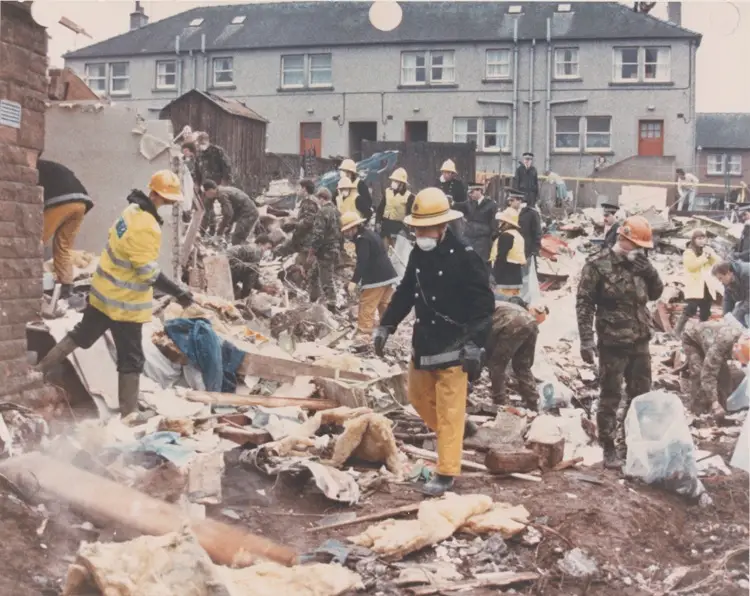
Suddenly they were running one of the biggest criminal investigations ever seen, with thousands of officers, firefighters, soldiers and volunteers flooding into the area.
Detective Stuart Cossar, who later became deputy senior investigating officer, recalled exhausted staff coming straight back in for another shift after just finishing a ten-hour one, working through the night without complaint.
Detective Harry Bell was put in charge of one of the wreckage zones and he said he ended up going out out to the scene, and 'not coming home for three years'.
He described the scene as nothing like any crime scene he'd worked before, comparing it instead to a battlefield that nothing could have prepared him for.

The key piece of evidence in the bombing
Investigators pulled around 300 tons of wreckage from the Scottish countryside, cataloguing thousands of fragments piece by piece.
Buried among it all was the detail that supercharged the investigation: a scorched scrap of clothing with a fragment of circuit board fused into the fabric.
That fragment made its way from Scottish investigators to the FBI, then the CIA, where an electronics expert spotted a match to a timer used in a previous Libyan terror attack.
Further digging confirmed it: the timer had been built specifically for Libya.
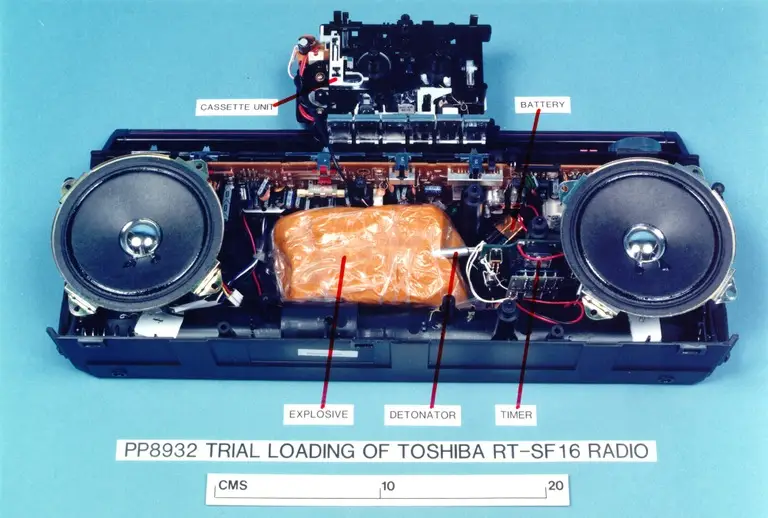
The clothing itself was traced to a shop in Malta, helping investigators map the entire journey of the suitcase carrying the bomb, a Toshiba radio-cassette player packed with explosives, hidden inside a brown Samsonite case that traveled unaccompanied from Malta to Frankfurt before being loaded onto the doomed flight.
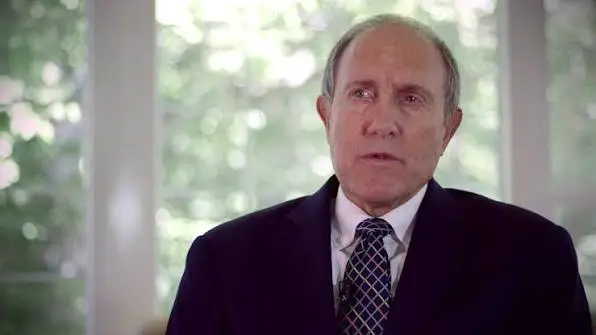
Retired FBI Special Agent Dick Marquise, who led the Bureau's side of the investigation, said the whole case came down to thousands of tiny details being pieced together patiently over time.
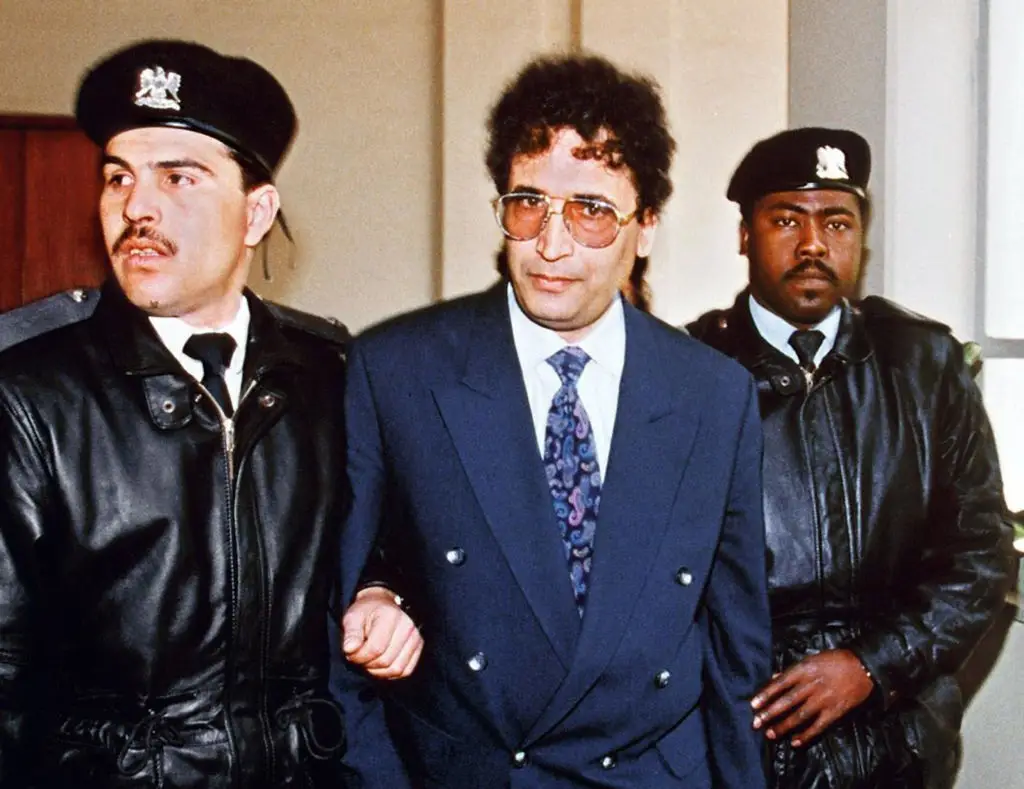
Nearly three years after the bombing, British and American authorities charged two Libyan intelligence operatives: Abdelbaset Ali Mohmed al-Megrahi and Lamin Khalifah Fhimah.
Investigators believed the attack was revenge for US military strikes on Libya and Muammar Gaddafi.
Libya refused to hand the pair over, sparking years of diplomatic wrangling.
Eventually, a compromise was struck, the men would face a Scottish trial, but on neutral ground. In May 2000, the trial opened at Camp Zeist, a former US Air Force base in the Netherlands repurposed as a Scottish courtroom.
After nine months of evidence, al-Megrahi was found guilty of murder and jailed for life. Fhimah walked free.
For a lot of the families, it brought some answers, but never the full picture.
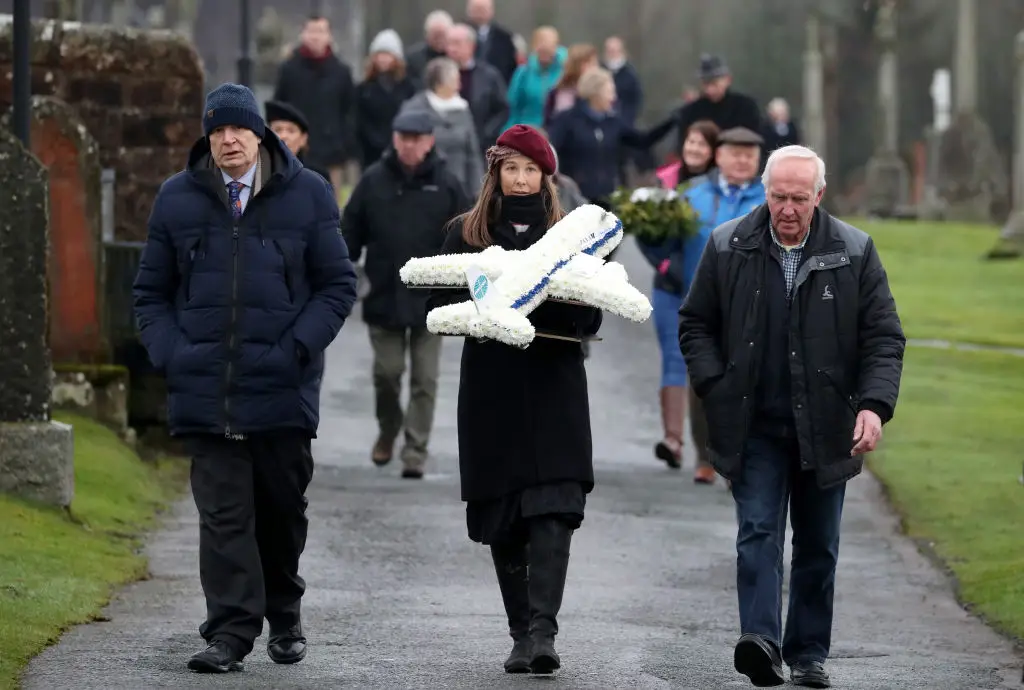
Marquise later admitted his biggest regret was knowing they never got everyone involved, with some suspects already dead and others still believed to be alive.
Beyond the courtroom drama, Lockerbie became a story about ordinary people showing extraordinary kindness. Local volunteers, known as the 'laundry ladies', spent months painstakingly washing and returning victims' belongings to grieving families across the world.
The disaster also reshaped how governments support victims of terrorism, with lessons from the FBI's response to Pan Am 103 later influencing how the US handled the aftermath of 9/11.
The Bombing of Pan Am 103 is now streaming on Netflix.
Topics: Documentaries, Netflix
 Thomas Bamford