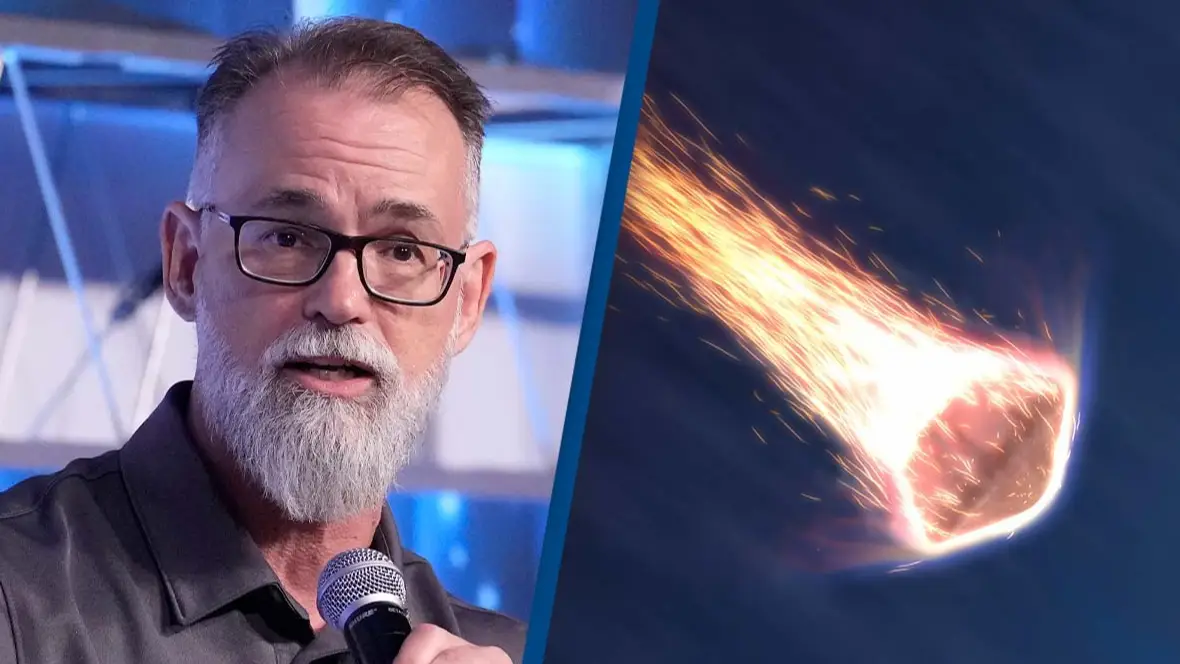
NASA once paid a man $1,000,000,000 to stop an asteroid from crashing into Earth

NASA once paid a man a whopping $1 billion to stop a potentially devastating asteroid from hitting Earth.
With a diameter about the height of the Empire State Building, Bennu is a rock not to be messed with.
Advert
The asteroid is made up up of rocks bound together by gravity.
It is the most dangerous known 'potentially hazardous' asteroid - meaning it comes within about 4.6 million miles of Earth's orbit.
Experts have since determined there's a 1-in-2,700 chance that Bennu will impact Earth between the years of 2175 and 2199.
So while that's fairly good odds nothing catastrophic will happen, scientists definitely don't want to ignore it completely.
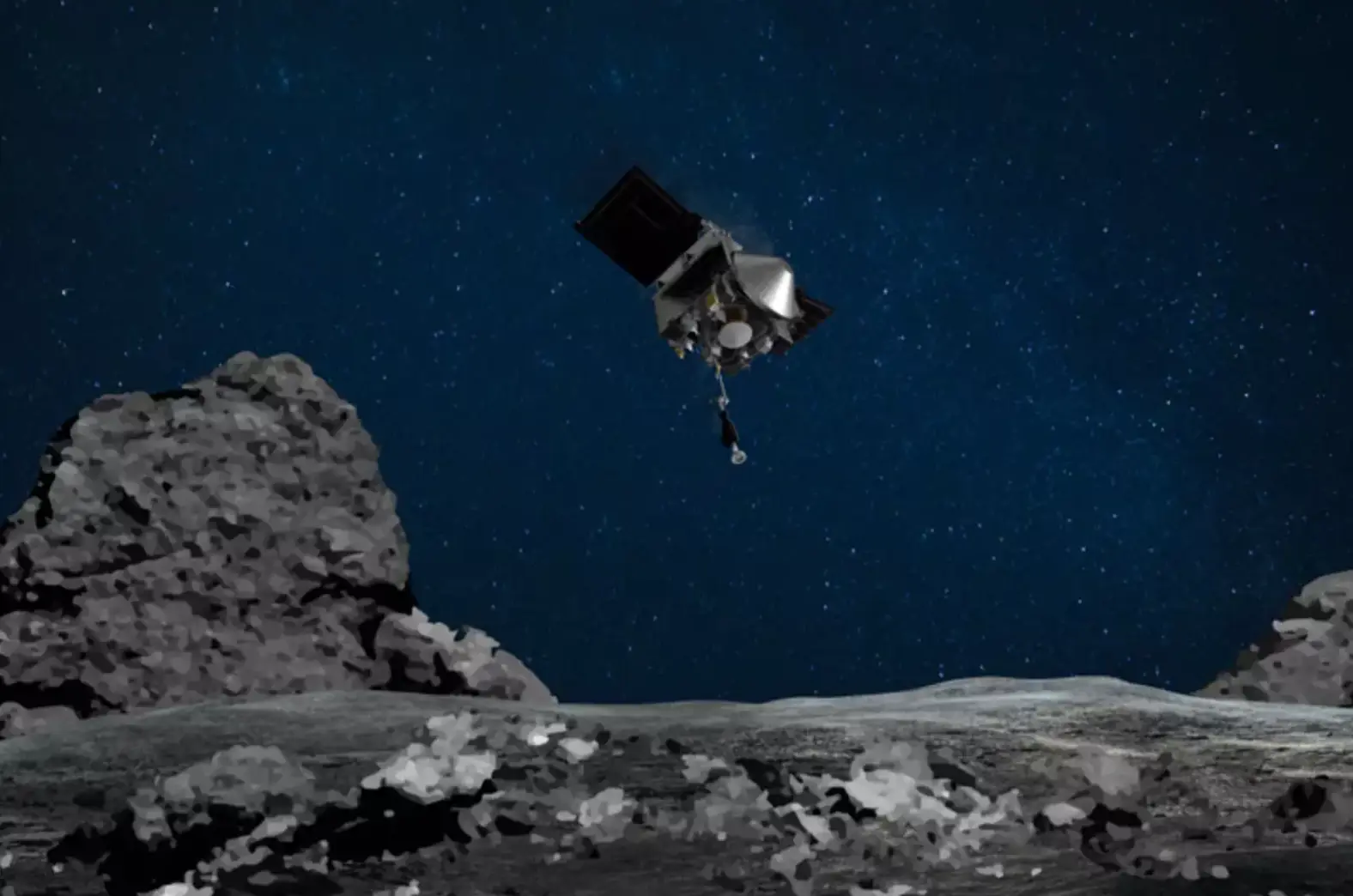
As a result, NASA launched a $1.16 billion mission to essentially stop the asteroid from crashing into Earth, with space expert Dante Lauretta at the helm.
Lauretta told Mail Online: "In 2011, NASA awarded me a billion dollars.
"The mission would come to entail not only sending a spacecraft to the asteroid but bringing a piece of it back to Earth."
In 2016, NASA launched its OSIRIS-REx spacecraft to travel to Bennu.
It arrived at the asteroid in 2018, and collected a sample of rocks and dust from the surface in 2020.
The sample returned to Earth last year, revealing 'incredible' findings from 'dangerous' asteroid.
It was the first ever US space mission to collect a sample from an asteroid.
Lauretta said it was 'a chance to determine whether we should prepare for disaster'.
But what would happen if Bennu crashed into Earth?
Lauretta: "In some respects, the Earth would hardly register such an event: the orbit and axis would remain unperturbed.
"In other respects — arguably more pertinent ones — the consequences would be devastating."

The impact of Bennu crash landing would create a blast 'equivalent to 1,450 megatons of TNT', almost three times as powerful as 'the total energy expended during all nuclear testing throughout history'.
It would leave a crater four miles wide and half a mile deep.
Meanwhile, an earthquake with a magnitude of 6.7 would be triggered, and it would create winds 20 times more powerful than a Category 5 hurricane.
Near the impact zone, 'residential homes would be flattened, [and] the few survivors determined by location and random luck'.
And if that wasn't enough, Lauretta said: "The largest rocks that Bennu sent flying would be the size of 16-story buildings.
"In the aftermath, power outages, food and water shortages, and communication blackouts would last months as the region remained inaccessible."
Sounds fun. But with the sample Lauretta and his team managed to collect, we'll hopefully possess invaluable knowledge to prevent any of this from happening.
 Callum Jones