Experts reveal exact locations where 'city destroying' asteroid could hit Earth seven years from now

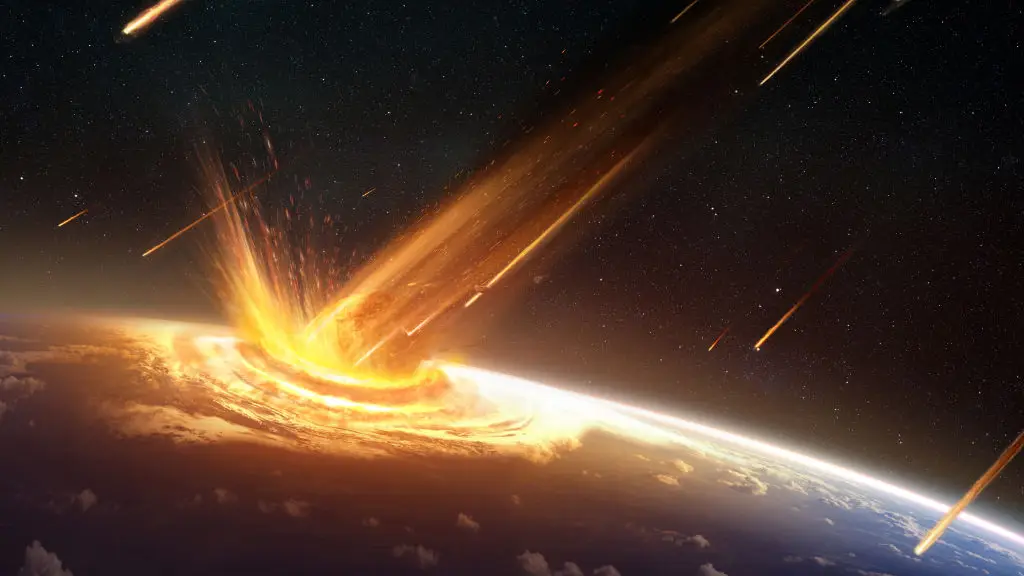
An Earth destroying asteroid that is set to pummel our planet in the upcoming years has had its collision path revealed.
We are always hearing about major events that are likely to destroy our tiny planet, but this one is probably one of the scariest of them all.
According to reports, it is supposed to be as big as the Statue of Liberty, so this '2024 YR4' space rock isn’t something you’d like to encounter.
While it was initially spotted in December, scientist Dr Robin George Andrews warned that even protecting ourselves from its impact could go wrong.
Advert
He explained that firing rockets at it to deflect it from its path could spark the end times.
On X, he referred to the Double Asteroid Redirection Test (DART), the first mission dedicated to investigating and demonstrating one method of asteroid deflection by changing an asteroid’s motion in space through kinetic impact.
He explained that it was a successful mission, but 'it doesn't mean we can use kinetic impactors like it to deflect any asteroid whenever we want'.
Andrews said: "Nobody wants to accidentally 'disrupt' an asteroid, because those components can still head for Earth. As I often say, it's like turning a cannonball into a shotgun spray.
"But we aren't going to see it again until another Earth flyby in 2028. So much could go wrong if we try and hit it with something like DART.
"It may be smaller, or larger. If it's too big, we may not be able to deflect it with one spacecraft. We'd need several to hit it perfectly, all without catastrophically breaking it."
He continued: "And with only a few years down the line, we could accidentally deflect it — but not enough to make it avoid the planet. Then, it still hits Earth, just somewhere else that wasn't going to be hit.
"Maybe 2024 YR4's odd will rise, and we will successfully deflect it in 2028 using a monster-sized spacecraft. Or maybe we'll break an awkward taboo and instead opt to use a nuclear warhead to try to deflect it, which would provide a bigger punch to the asteroid than DART."
Instead, he said we should evacuate.
As for where it’ll go, David Rankin, an engineer with NASA’s Catalina Sky Survey Project, mapped out a 'risk corridor', predicting it to collide anywhere around northern South America, across the Pacific Ocean, southern Asia, the Arabian Sea, and Africa.
That would mean that India, Pakistan, Bangladesh, Ethiopia, Sudan, Nigeria, Venezuela, Colombia, and Ecuador would be at risk for taking the brunt of the impact.
Astronomers also believe that 2024 YR4 would create a mid-air explosion after colliding with us, which would be around 8 million tons of TNT, and affect a 50 kilometer radius around the site.
NASA has also allocated an international team of astronomers to use the James Webb Space Telescope so that we can know more about its dimensions.
So, we would know just how bad it would hurt us when it hits.
Horrifyingly, NASA predicts that it’ll collide with Earth in 2032, with a one-in-43 chance of landing.
 Britt Jones