Six physical health issues NASA astronauts face after nine months stranded on the International Space Station as they return to Earth

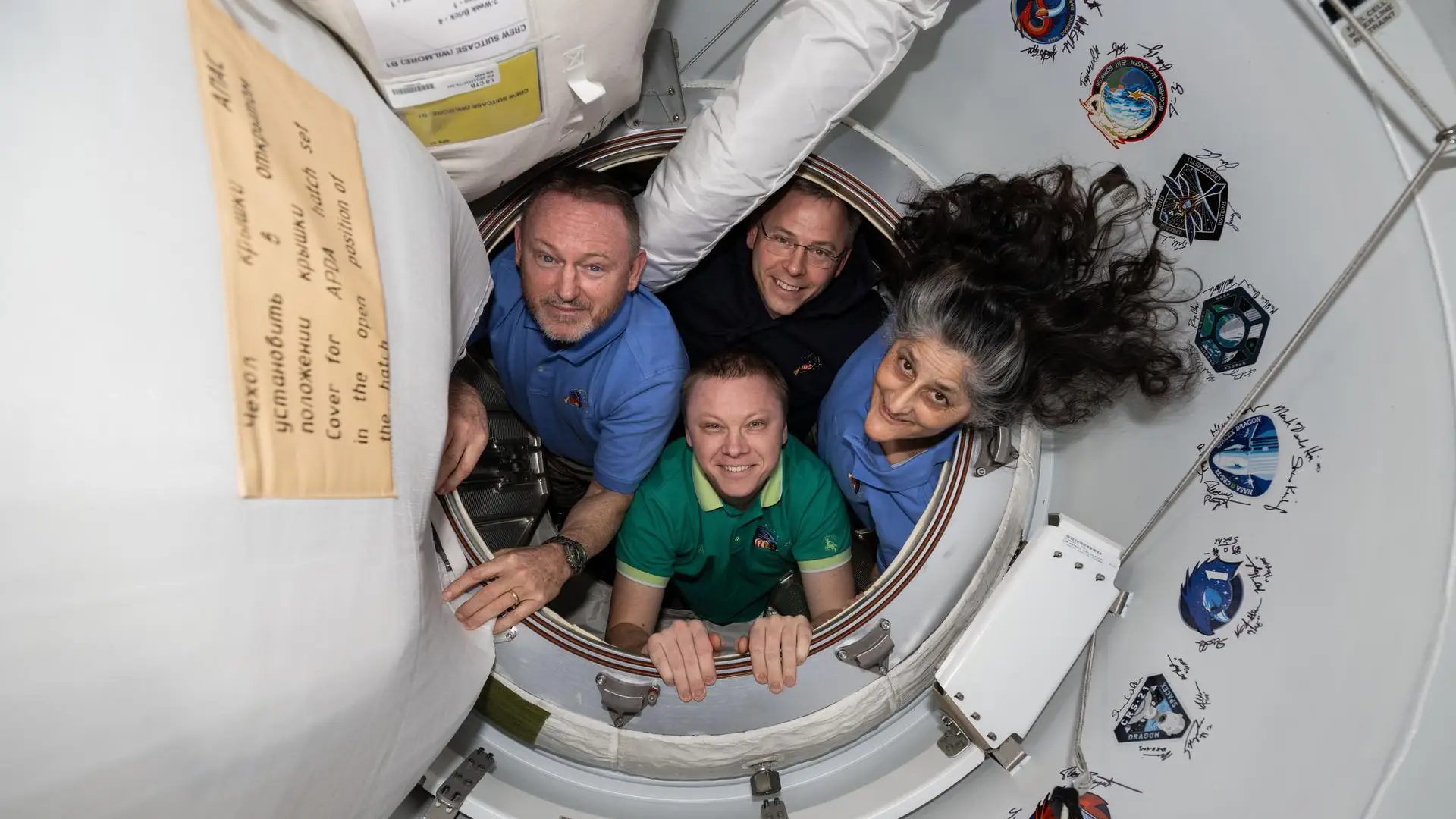
The NASA astronauts who've returned to Earth after a nine-month stint on the International Space Station could face a number of health issues now they're back home.
Sunita 'Suni' Williams and Barry 'Butch' Wilmore initially set out on an eight-day mission to the ISS in June 2024, but their return was delayed after the Boeing spacecraft intended to bring them back was determined to be unsafe.
So, the astronauts had to stay put for nine months, with Elon Musk's space exploration company SpaceX stepping in to supply a Dragon spacecraft to finally transport them home.
Advert
The spacecraft undocked from the ISS' orbiting laboratory at 1.05am on Tuesday (March 18), heading for a targeted splashdown at 5.57 pm off the coast of Florida.
And, for the first time in 286 days, Wilmore and Butch have finally felt the ground underneath their feet - and gravity against their bones!
With that, however, comes with a bunch of potential health worries.
From your bones losing density and decreased muscle mass to the scary effects of radiation, too much time in space can have some detrimental effects to the body.
Brain
Experiencing a lack of gravity when in space can alter the way the brain feeds certain signals.
Williams and Wilmore will have likely experienced space motion sickness and a 'loss of sense of direction' when they first got into space, but will have adjusted during their long stay.
Now, they've got to re-adjust back to life with gravity - and it could take months.
A Research in Vestibular Science report explains how the astronaut's internal balance system will be impacted by being back on the ground, adding: "This change in input disrupts orientation, gaze, balance, and locomotion [movement from one place to another], requiring the central nervous system to recalibrate and adapt.
"Indeed, after a few days, these functional disturbances typically return to baseline...
"However, the longer the duration of space travel, the more intense the disturbances become, and the time required for complete recovery may extend to weeks or months."
Baylor College's Medicine Center adds: "For their safety, returning astronauts are often placed in a chair immediately upon return to Earth."
Bones
Another risk astronauts in a microgravity environment face is loss of bone density. This makes bones more fragile and prone to breaking.
Dr Tess Morris-Paterson, founder and managing director of Astro Perform, put into context the shocking risk of bone density loss in space for UNILAD.
For the first two weeks on the ISS, our bones deteriorate in the same way they would if we stayed home and laid in bed 'all day for two weeks,' Dr Tess explained.
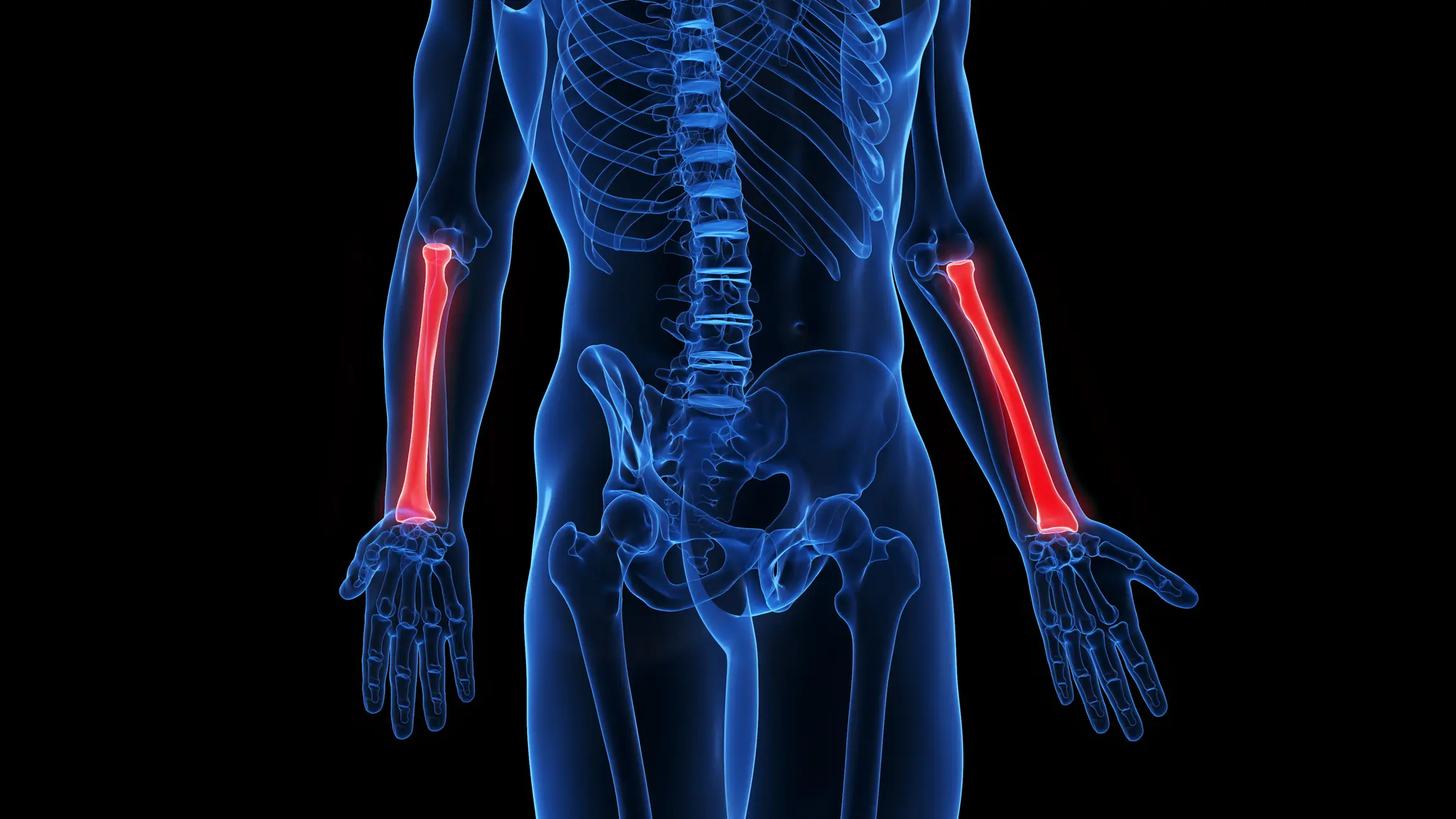
“The spine and pelvis decrease more than other parts of the body, but the trochanter - a small rounded point the femur near its joint with the hip bone - is the worst affected, decreasing 1.56 percent per month," Dr Tess said.
So, over nine months, the astronaut's worst-affected areas could've possibly decreased by up to 14 percent - although they did have a rigorous work-out routine to try and combat this.
Unusually though, now having landed back on Earth, it's the astronaut's 'non-weight bearing bones' - like the radius, a forearm bone connected to the wrist joint - which will take longer to recover, remaining 'below pre-flight levels even six to 12 months after the astronauts return.'
Dr Tess adds that on the ISS astronauts don't absorb as much calcium, so have more of it in their urine. This can lead to a heightened risk of kidney stones.
Skin
Baylor College's Medicine Center explains that astronauts' skin could become more easily irritated as a result of their immune system being 'lowered' while away in space alongside 'microbial growth'.
Elsewhere, people not putting weight on their feet in space can result in the bottom of their feet coming soft and callous-free, with callouses likely to form on the top of their feet from using footholds on the station instead, the center notes.
Radiation
Radiation is a major factor of space travel, with astronauts exposed to 'about 100 times' the amount of radiation compared to the rest of us Earth dwellers.
Baylor College of Medicine warns space radiation poses a number of risks, including 'radiation sickness, central nervous system effects and degenerative diseases."
In addition to this, space radiation causes 'increased lifetime risk of cancer'.
Muscles
If astronauts don't keep up their fitness while in space, their muscle mass can decrease as a result of the gravity taking away the effort needed to move about and use their legs and back.
If muscle mass has decreased in space, this could increase the risk of astronauts having a fall back on Earth and sustaining fall-related injuries.
The eyes are also specific body parts which can find themselves impacted after a long stint in pace.
A common effect on the eyes after being in space for a bit is 'swelling in the back of the eye'.
Mental health
As to be expected, being up on the ISS for nine months is bound to take its toll on astronauts' mental health.
So, Williams and Wilmore may feel the impact of 'The Overview Effect'.
This phenomenon often takes place when astronauts go into space and look down and see Earth from that perspective for the first time.
The experience 'shift[s]... the way astronauts view and think about our planet and life itself,' NASA explains.
Ex-NASA astronaut and author Ron Garan spent 178 days in space and when he looked down at Earth he was hit with a 'sobering realization' of how fragile Earth is.
It had hit him that our planet - and every living thing on it - is being kept alive by a 'paper thin layer'.
"I saw an iridescent biosphere teaming with life, I didn't see an economy, but since our human-made systems treat everything including the very life-support systems of our planet as the... subsidiary of the global economy, it's obvious from the vanish point of space that we're living a lie," he said.
Topics: Space, NASA, Space X, Elon Musk, International Space Station, Science, Health
 Ellie Kemp