unilad homepage
unilad homepage
  • News
    • UK News
    • US News
    • World News
    • Crime
    • Health
    • Money
    • Sport
    • Travel
  • Music
  • Technology
  • Film and TV
    • News
    • DC Comics
    • Disney
    • Marvel
    • Netflix
  • Celebrity
  • Politics
  • Advertise
  • Terms
  • Privacy & Cookies
  • LADbible Group
  • LADbible
  • SPORTbible
  • GAMINGbible
  • Tyla
  • UNILAD Tech
  • FOODbible
  • License Our Content
  • About Us & Contact
  • Jobs
  • Latest
  • Archive
  • Topics A-Z
  • Authors
Facebook
Instagram
X
Threads
TikTok
YouTube
Submit Your Content
Mysterious gravity hole found in the Indian Ocean has scientists baffled by how it was formed
Home>Technology>Space
Published 14:43 31 Jul 2023 GMT+1

Mysterious gravity hole found in the Indian Ocean has scientists baffled by how it was formed

The IOGL in the Indian Ocean has confused scientists for decades about how it was formed but research has now shared a possible answer

Gregory Robinson

Gregory Robinson

google discoverFollow us on Google Discover
Featured Image Credit: Kateryna Kon/Science Photo Library/Getty Images/FrankRamspott/Getty Images

Topics: Science, Environment, Technology

Gregory Robinson
Gregory Robinson

Gregory is a journalist for UNILAD. After graduating with a master's degree in journalism, he has worked for both print and online publications and is particularly interested in TV, (pop) music and lifestyle. He loves Madonna, teen dramas from the '90s and prefers tea over coffee.

Advert

Advert

Advert

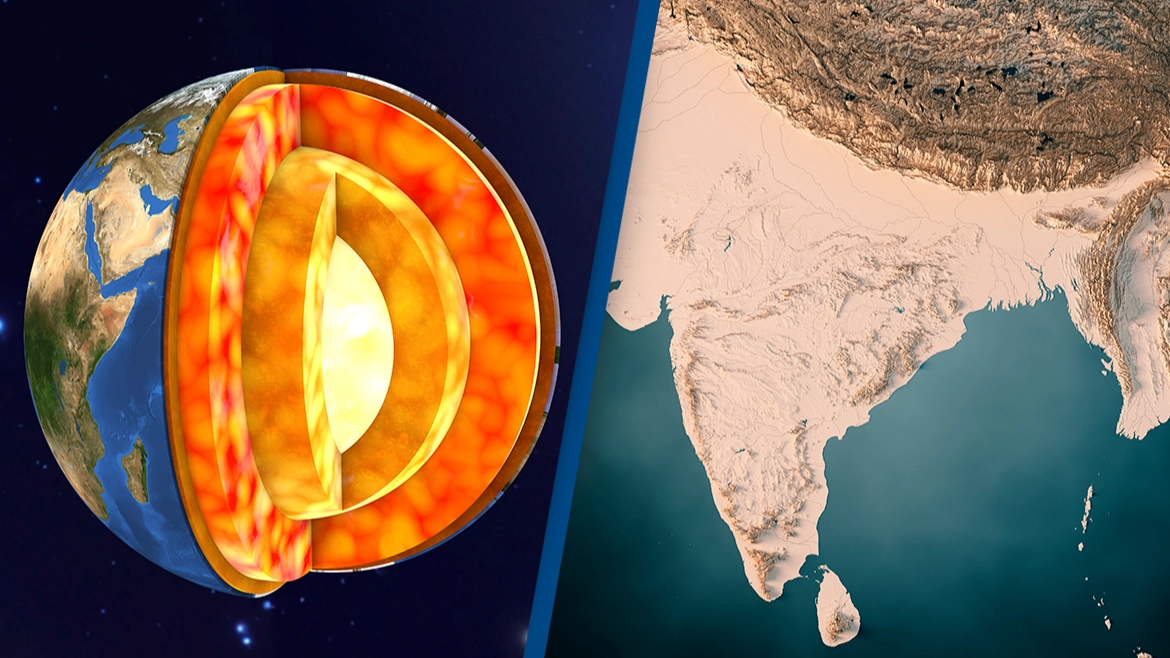
A ‘gravity hole’ in the Indian Ocean has confused scientists for decades about how it was formed but research has now shared a possible answer.

Low-density ‘gravity holes’ can be found all over the planet, including areas under Cuba and the Bahamas. However, the Indian Ocean geoid low (IOGL) - which is located just off India’s southeastern coast and forms a circular depression - has baffled scientists for decades, as it spans 1.2 million square miles and causes a 328-foot dip in sea level.

The anomaly was first discovered by Dutch geophysicist Felix Andries Vening Meinesz in 1948 during a gravity survey from a ship.
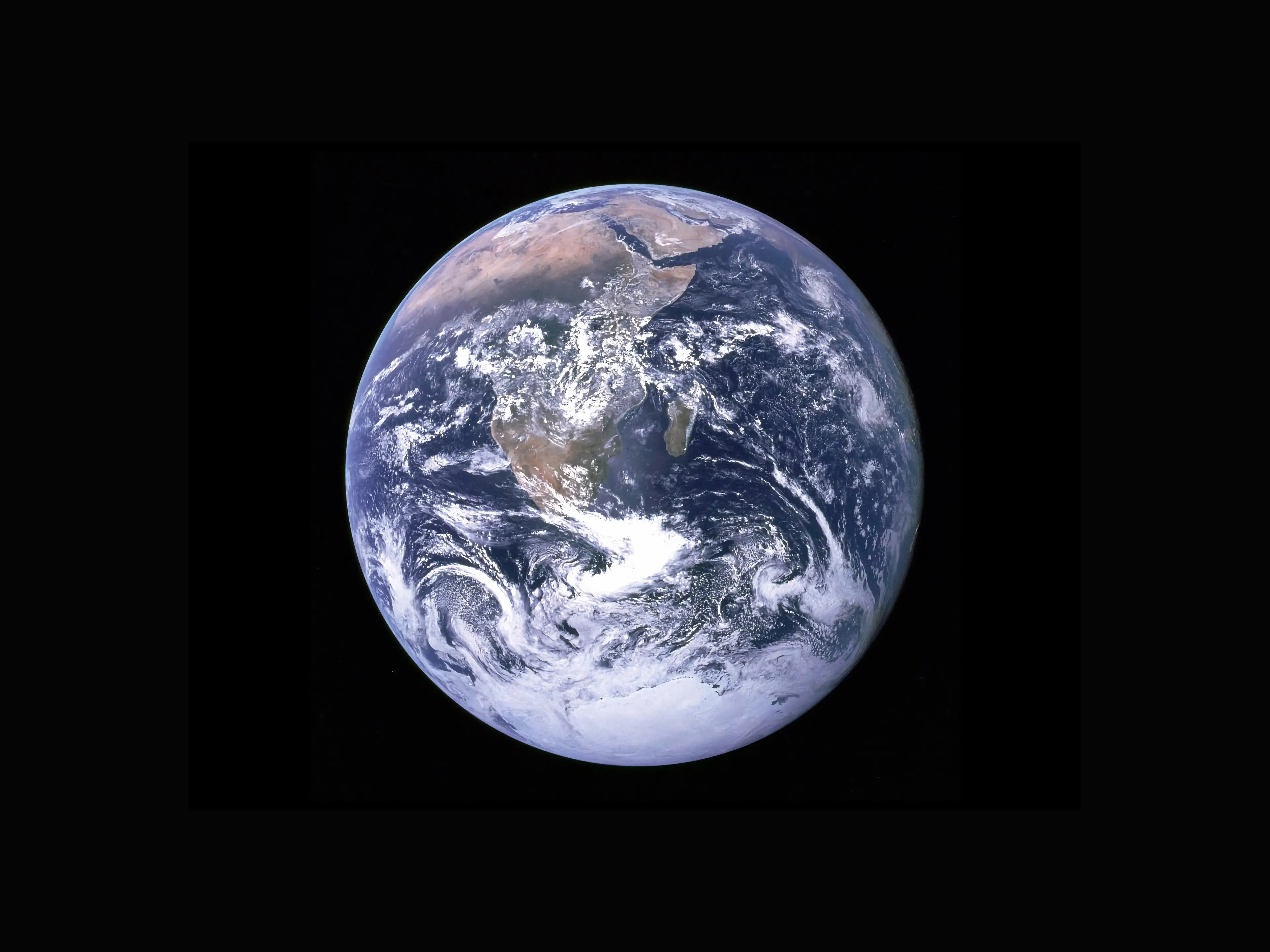
Low-density ‘gravity holes’ can be found all over the planet.
NASA/Unsplash

Advert

‘Gravity holes’ are spots where Earth’s gravitational pull is weaker and geologists have been puzzled by IOGL’s unusual features for a very long time.

However, researchers from the Indian Institute of Science in Bengaluru, India and GFZ German Research Centre for Geosciences have discovered what they believe to be a credible explanation got IOGL’s formation.

It all boils down to plumes of magma coming from deep inside Earth, similar to those in the Earth’s mantle that lead to the formation of volcanoes.

The team came to this hypothesis by using supercomputers to run 19 simulations to recreate the formation of the Earth to see how the area might have formed, going back as far as 140 million years in the past. Researchers published their findings in a study in May this year in the journal Geophysical Research Letters.
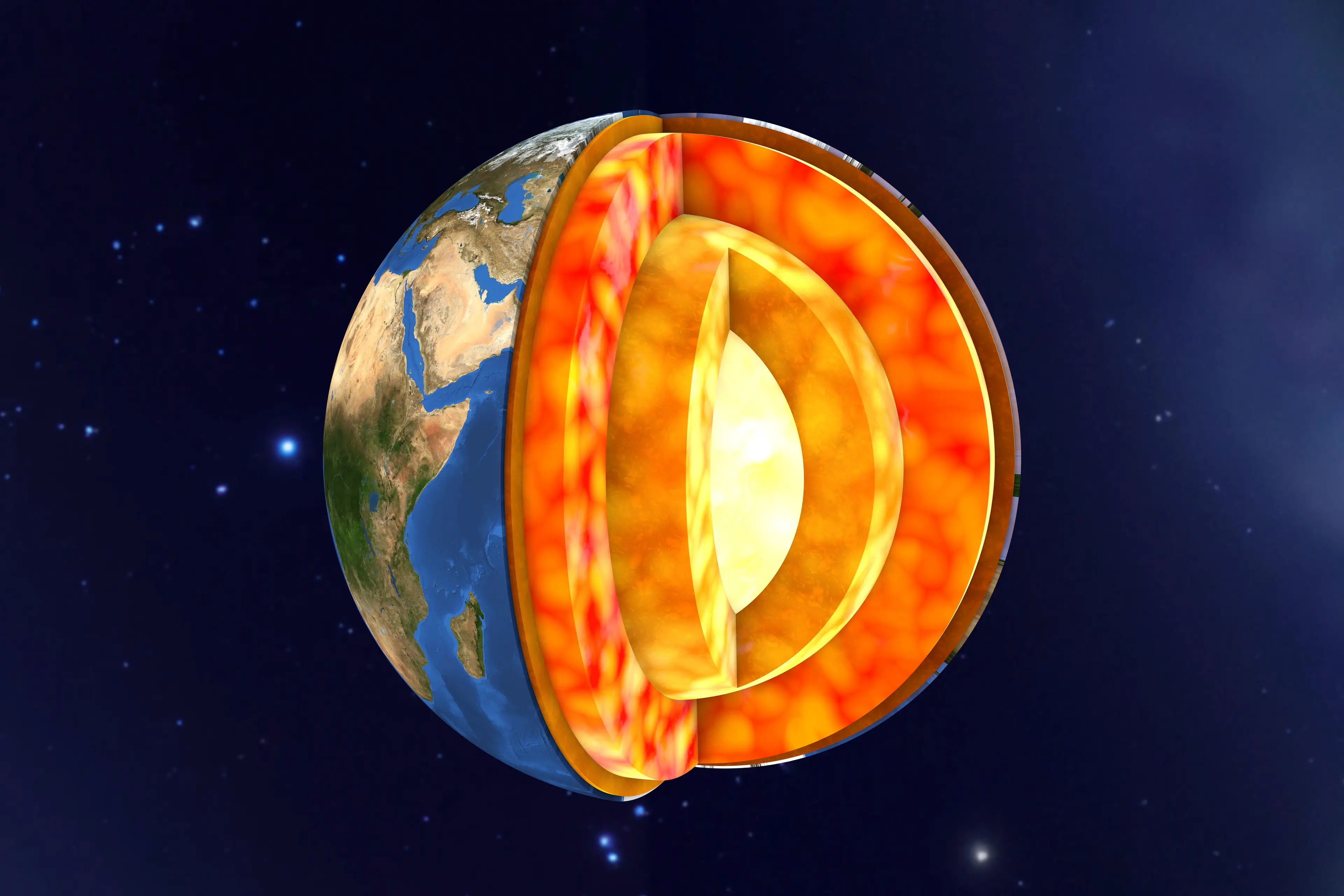
Earth’s mantle lies between the core and the crust.
Kateryna Kon/Science Photo Library/Getty Images

All of the simulations suggested magma plumes exist within the Earth’s mantle. These plumes were formed as a result of the drifting and eventual collision of India’s subcontinent with Asia 40 million years ago, the study’s co-author Attreyee Ghost explains. Estimates suggest IOGL was formed around 20 million years ago.

Despite popular belief, Earth is not a perfect sphere. “The Earth is basically a lumpy potato,” said Ghosh, who is a geophysicist and associate professor at the Centre for Earth Sciences of the Indian Institute of Science.

“So technically it’s not a sphere, but what we call an ellipsoid, because as the planet rotates the middle part bulges outward.”
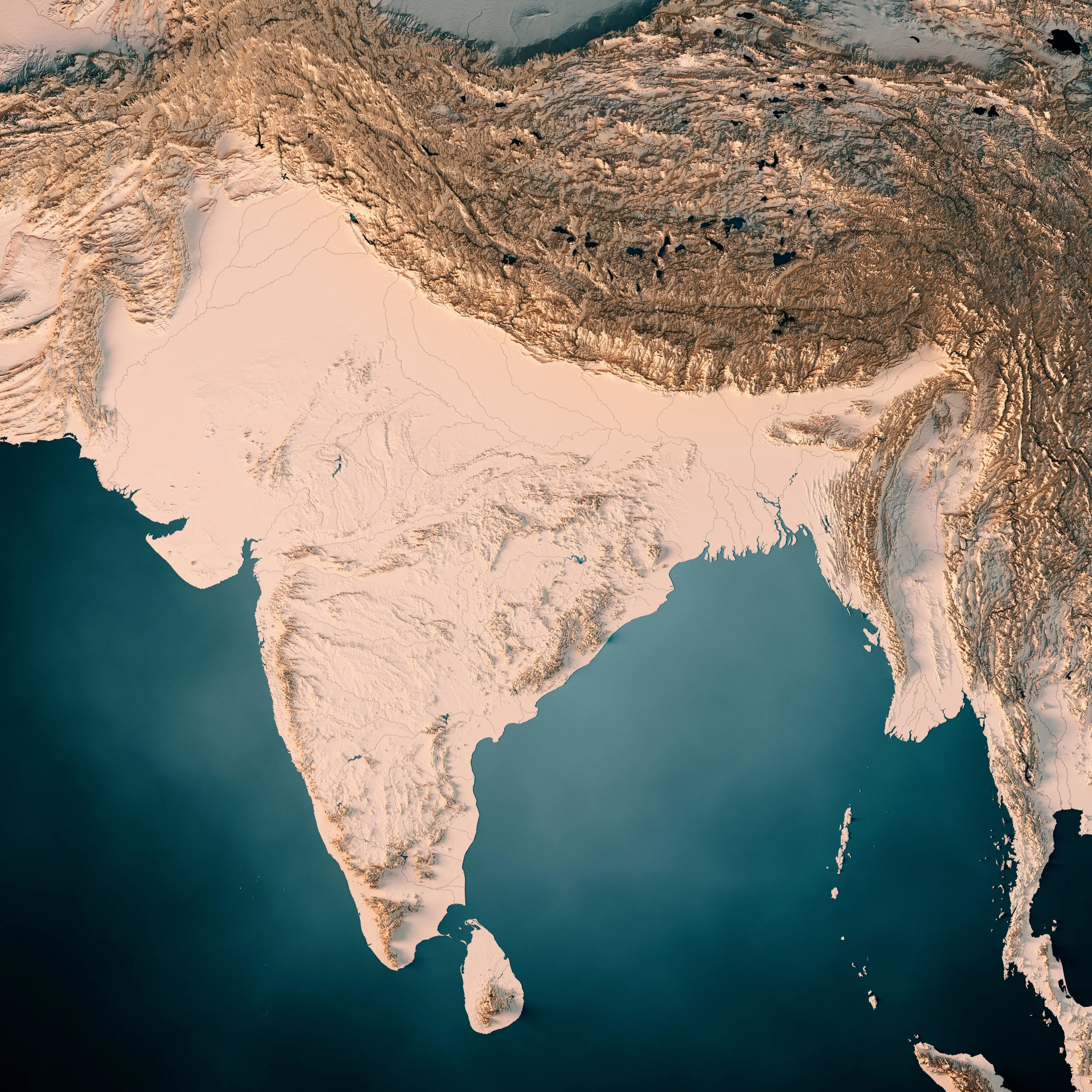
The Indian Ocean.
FrankRamspott/Getty Images

Earth’s density and properties are not homogenous and some areas are more dense than others, which affects our planet’s surface and its gravity, Ghost added.

“If you pour water on the surface of the Earth, the level that the water takes is called a geoid — and that is controlled by these density differences in the material inside the planet, because they attract the surface in very different ways depending on how much mass there is underneath.

“India was in a very different place 140 million years ago, and there was an ocean between the Indian plate and Asia. India started moving north and as it did, the ocean disappeared and the gap with Asia closed."

Choose your content:

a day ago
3 days ago
  • Getty Stock Images
    a day ago

    Security experts share key advice as Instagram DMs are no longer 'private' after huge change

    It's recommended you move 'sensitive conversations' to other platforms

    Technology
  • Justin Sullivan/Getty Images
    a day ago

    AI responds to ChatGPT CEO's warning that the tech will surpass humans by 2030

    Sam Altman said AI could become 'superintelligent' within a matter of years

    Technology
  • Brendan Smialowski - Pool/Getty Images
    a day ago

    Trump forced to ditch his trusty cellphone as he barreled into high-stakes China summit with Xi

    Donald Trump left China today (May 15) following a two-day state trip

    Technology
  • Graham Hughes/Bloomberg via Getty Images
    3 days ago

    'AI godfather' issues grim 10-year warning as he raises concerns about serious risks to humanity

    Yoshua Bengio said that giving AI's rights would be like giving citizenship to 'hostile extraterrestrials'

    Technology
  • Scientists baffled by black hole exuding more energy than the Death Star
  • Scientists warn New Orleans will be underwater by 2100 - and half the city is already below sea level
  • Scientists may have found a secret entrance into Pyramids of Giza after stumbling upon ‘mysterious void’
  • Scientists in Antarctica baffled as they discover mysterious radio signals coming from beneath ice