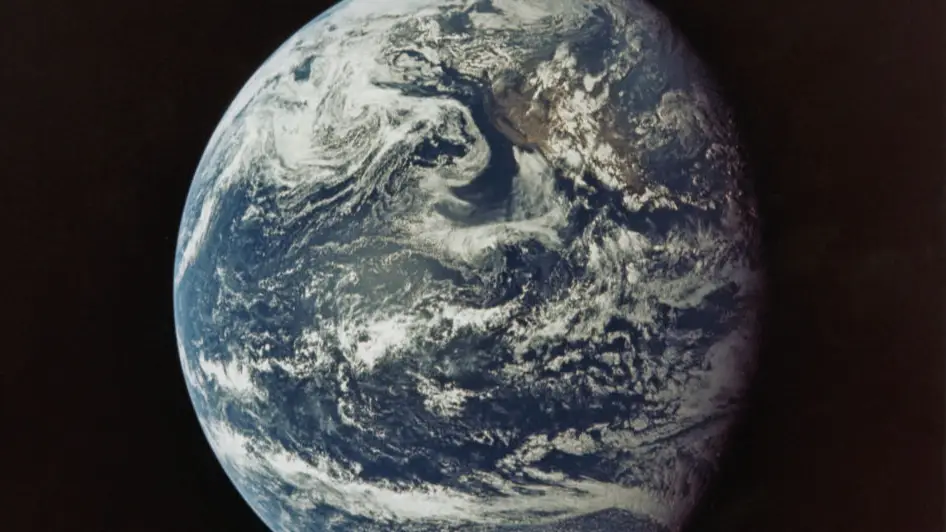
Scientists baffled after discovering Earth has a 'heartbeat' every 26 seconds with no explanation

Apparently the Earth has a 'heartbeat', but scientists have struggled to work out why.
The apparent 'heartbeat' occurs around every 26 seconds - much slower than the average human heart which can beat as many as 100 times a minute.
The phenomenon was first recorded in the early 1960s by geologist Jack Oliver, who suggested that the mini quakes might originate from somewhere in the southern or equatorial Atlantic Ocean.
However, in the 1960s there wasn't the technology available that we have now, so Oliver wasn't able to properly investigate the pulses.
Advert
And the pulses were found once more by Mike Ritzwoller, a seismologist at the University of Colorado, US, and his team some decades later.
Speaking about Oliver being the first to record the Earth's mysterious 'heartbeat', Ritzwoller told Discover Magazine: "Jack didn’t have the resources in 1962 that we had in 2005 - he didn’t have digital seismometers, he was dealing with paper records."

Since the 60s, seismologists like Ritzwoller have tried to work out where exactly the pulses (also referred to as microseisms) are coming from and why they happen.
Garrett Euler is someone else who has tried to piece together the puzzle.
Speaking at the Seismological Society of America conference in 2013, Euler explained that he'd narrowed down the source of the pulse even more to a part of the Gulf of Guinea called the Bight of Bonny.
As to why they happen, he says it comes down to the ocean's waves.
According to Euler, when waves travel across the ocean, the pressure difference in the water might not have much effect on the ocean floor but when it hits the continental shelf - where the solid ground is much closer to the surface - the pressure deforms the ocean floor. This, in turn, causes seismic pulses that reflect the wave action.
However, in a paper published later that year, Yingjie Xia from the Institute of Geodesy and Geophysics in Wuhan, China, suggested the cause was actually volcanoes, not waves.
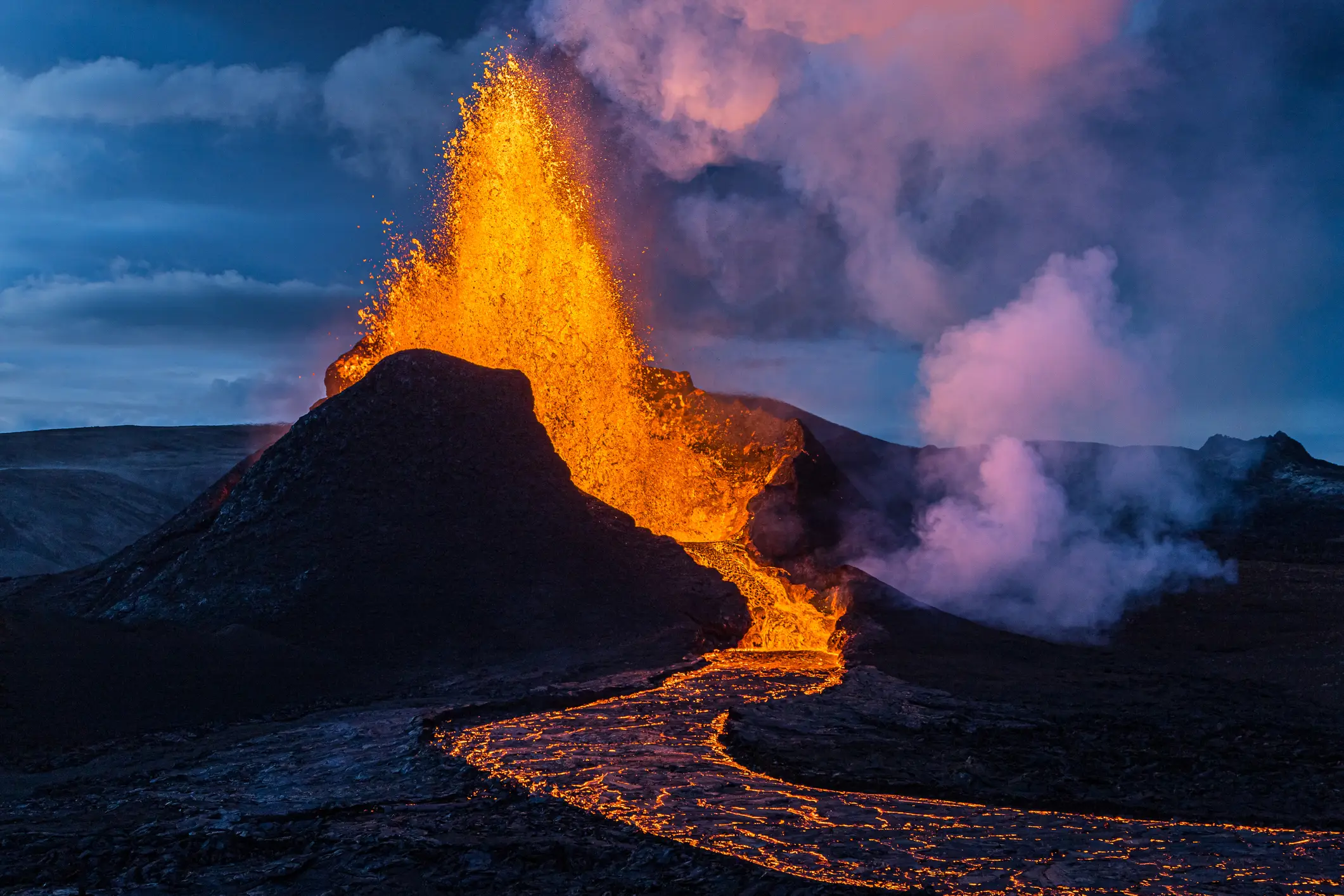
He said the reasoning was because the pulse’s origin was suspiciously close to a volcano on the island of São Tomé in the Bight of Bonny.
Xia also said that there was another place where a volcano causes a microseism similar to this one, the Aso Volcano in Japan.
As to why the mystery remains unsolved, it's thought to come down to the fact that this case isn't a priority for seismologists (even if they are keen to find the answers).
Scientist Doug Wines explained to Discover Magazine: "There are certain things that we concentrate on in seismology.
"We want to determine the structure beneath the continents, things like that. This is just a little bit outside what we would typically study [since] it doesn’t have anything to do with understanding the deep structure of the Earth."
With this in mind, Ritzwoller told the outlet that it might be down to future generations to come up with a conclusion to the Earth's so-called 'heartbeat'.
 Niamh Shackleton