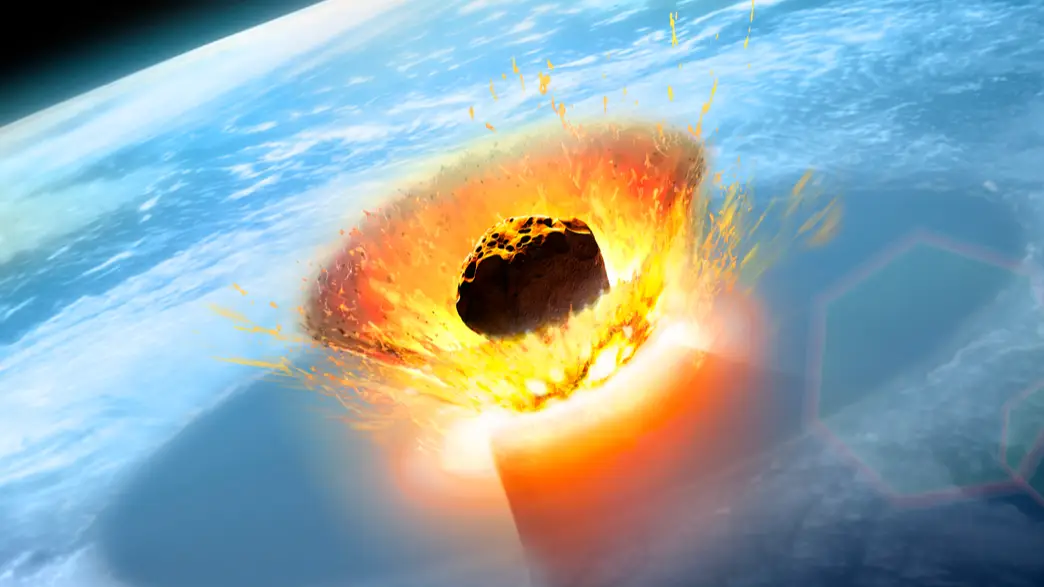
Expert explains why it might be 'too late' to use current technology to 'stop' 'city-destroying' asteroid which could hit earth in 7 years

Science journalist Dr Robin George Andrews has weighed in on asteroid 2024 YR4 and why it may not be possible to 'use a DART-like spacecraft to ram it out the way'.
Dr Andrews took to Twitter in a thread to respond to people claiming NASA's Double Asteroid Redirection Test (DART) spacecraft.
DART spacecraft technology
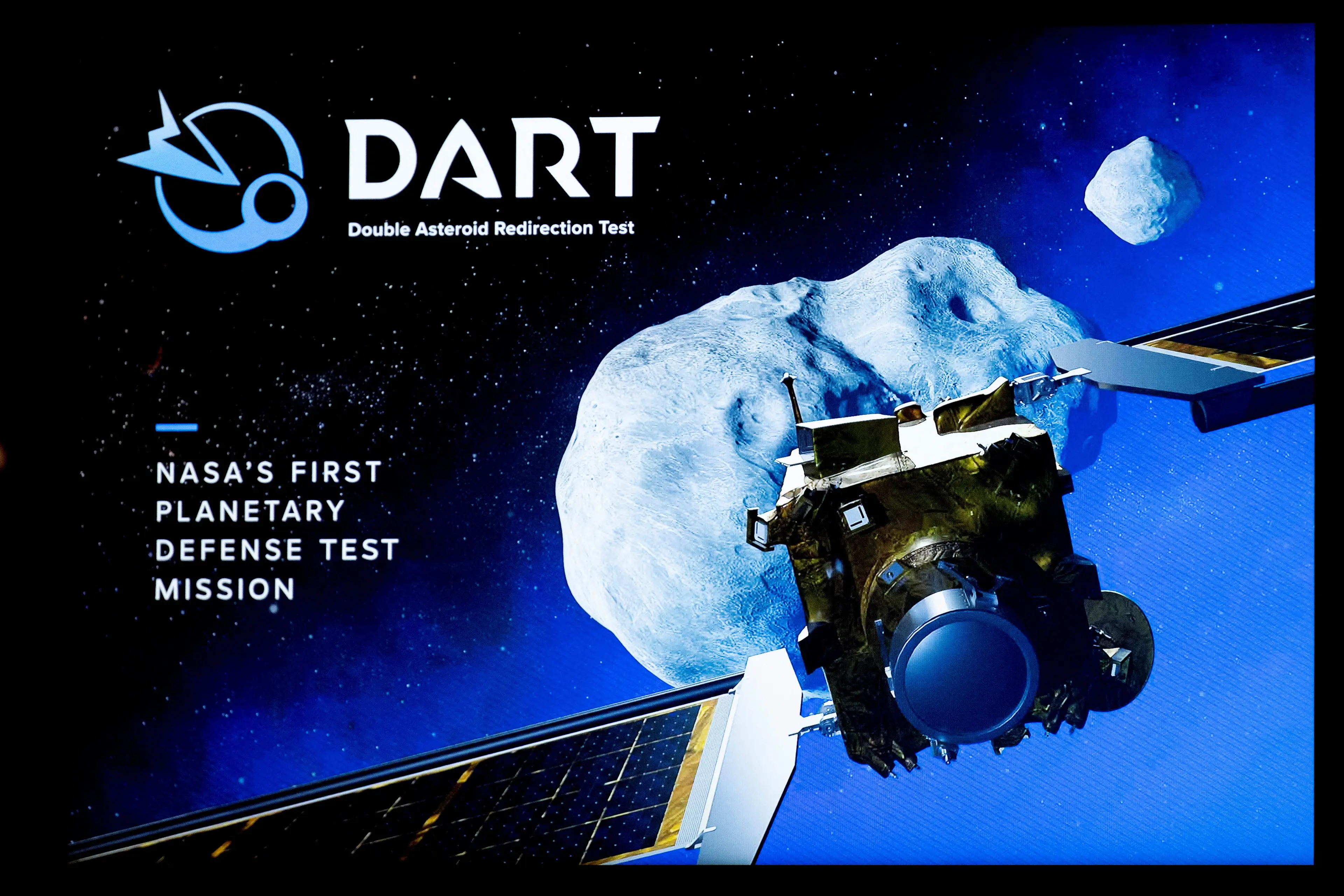
"DART was the first-ever mission dedicated to investigating and demonstrating one method of asteroid deflection by changing an asteroid’s motion in space through kinetic impact," NASA explains.
In September 2022, NASA's DART spacecraft crashed into the asteroid Dimorphos and successfully altered its orbit, marking 'humanity's first time purposely changing the motion of a celestial object and the first full-scale demonstration of asteroid deflection technology'.
Advert
So why wouldn't we be able to use it to prevent asteroid 2024 YR4 from coming into contact with Earth? Well, in his thread, Dr Andrews notes just because DART worked, this 'doesn't mean we can use kinetic impactors like it to deflect any asteroid whenever we want, and that's for several reasons,' first of all that asteroids like Dimorphos 'and smaller, tend to be rubble piles' opposed to 'solid single rocks'.
Why DART might not work for asteroid 2024 YR4
And asteroids which are like 'boulders weakly bound by their own gravity' can end up being shattered if hit 'too hard'.
In DART's case, Dimorphos was hit 'just right' and produced a 'debris-like thrust effect,' but should an asteroid be 'disrupted' and shattered instead?
Well, those fragments could 'still head for Earth'.
"This is chaotic, potentially very destructive—and if DART hit Dimorphos a little harder, it would have broken that asteroid too. You have to be very sure that when you hit an Earthbound asteroid, you are deflecting it, not fragmenting it," Dr Andrews adds.
The second reason? While DART helped shrink Dimorphos' orbit by a whopping 33 minutes, it didn't actually 'move' it that far.
"The change in velocity delivered by the impact was 2.7mm/s," Dr Andrews continues.
But what does this mean?
Dr Andrews reports he's been told it would take '10 years or more to build, plan and execute an asteroid deflection mission' - and with asteroid 2024 YR4 potentially reaching Earth by 2032, well, you can do the math.
"This is because the deflection a kinetic impactor can give an Earthbound asteroid would be tiny. Only over time does the shifted orbit add up enough to ensure it'll miss Earth," he explains.
And in terms of asteroid 2024 YR4, well, given it's smaller than Dimorphos - measuring 40-90m - it wouldn't need as much of a deflection, but there's still a lot of room for error given the next time experts will get a proper look at it is when it flies by Earth in 2028.
Dr Andrews questions: "If it's too big, we may not be able to deflect it with one spacecraft. We'd need several to hit it perfectly, all without catastrophically breaking it. And with only a few years down the line, we could accidentally deflect it—but not enough to make it avoid the planet. Then, it still hits Earth, just somewhere else that wasn't going to be hit."
Thankfully, Dr Andrews notes he's 'not saying a kinetic impactor mission, or missions, couldn't work,' he's just emphasizing 'we don't have much time' and need more information about the asteroid.

"Maybe 2024 YR4's odd will rise, and we will successfully deflect it in 2028 using a monster-sized spacecraft. Or maybe we'll break an awkward taboo and instead opt to use a nuclear warhead to try to deflect it, which would provide a bigger punch to the asteroid than DART," he theorizes.
Ultimately, he resolves the asteroid 'isn't likely to be a problem at all' and will 'probably miss Earth'.
He states: "But if it doesn't, we have to be wary of trying to save the world but accidentally making the problem worse. Maybe we'll just have to get out of the asteroid's way this time."
Topics: Earth, Technology, NASA, Twitter, Space
 Poppy Bilderbeck