SpaceX shares 'insane' footage of Earth's polar regions as Elon Musk announces it's the first time humans have orbited them

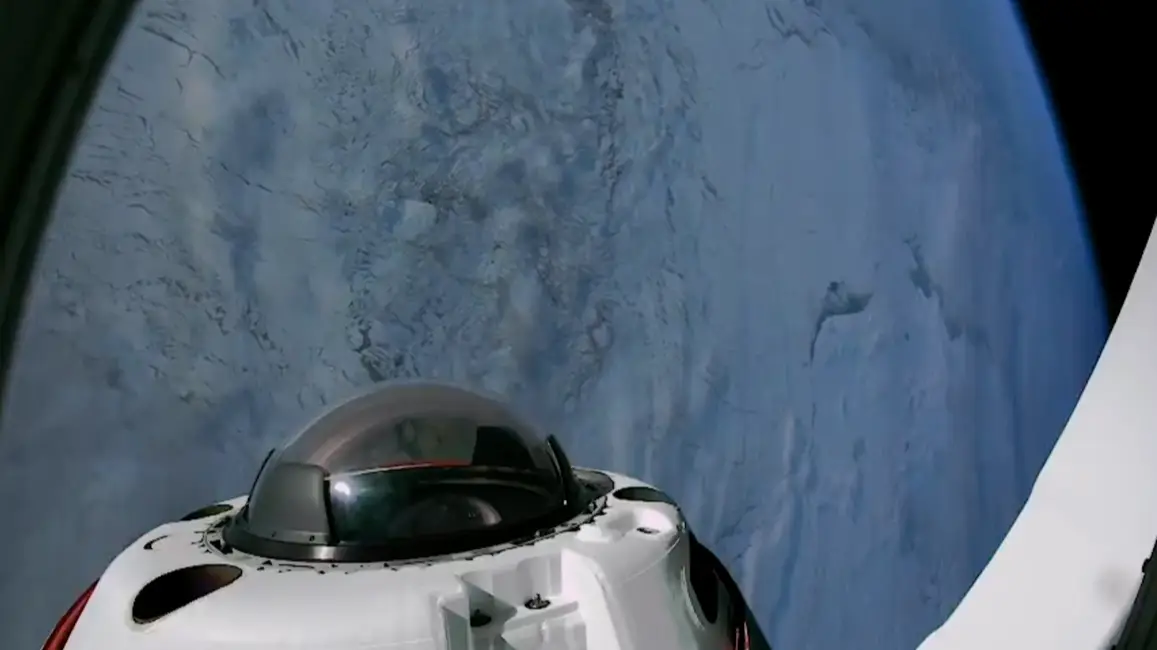
SpaceX's Fram2 mission has successfully shared the 'first views of Earth's polar regions' from its Dragon spacecraft.
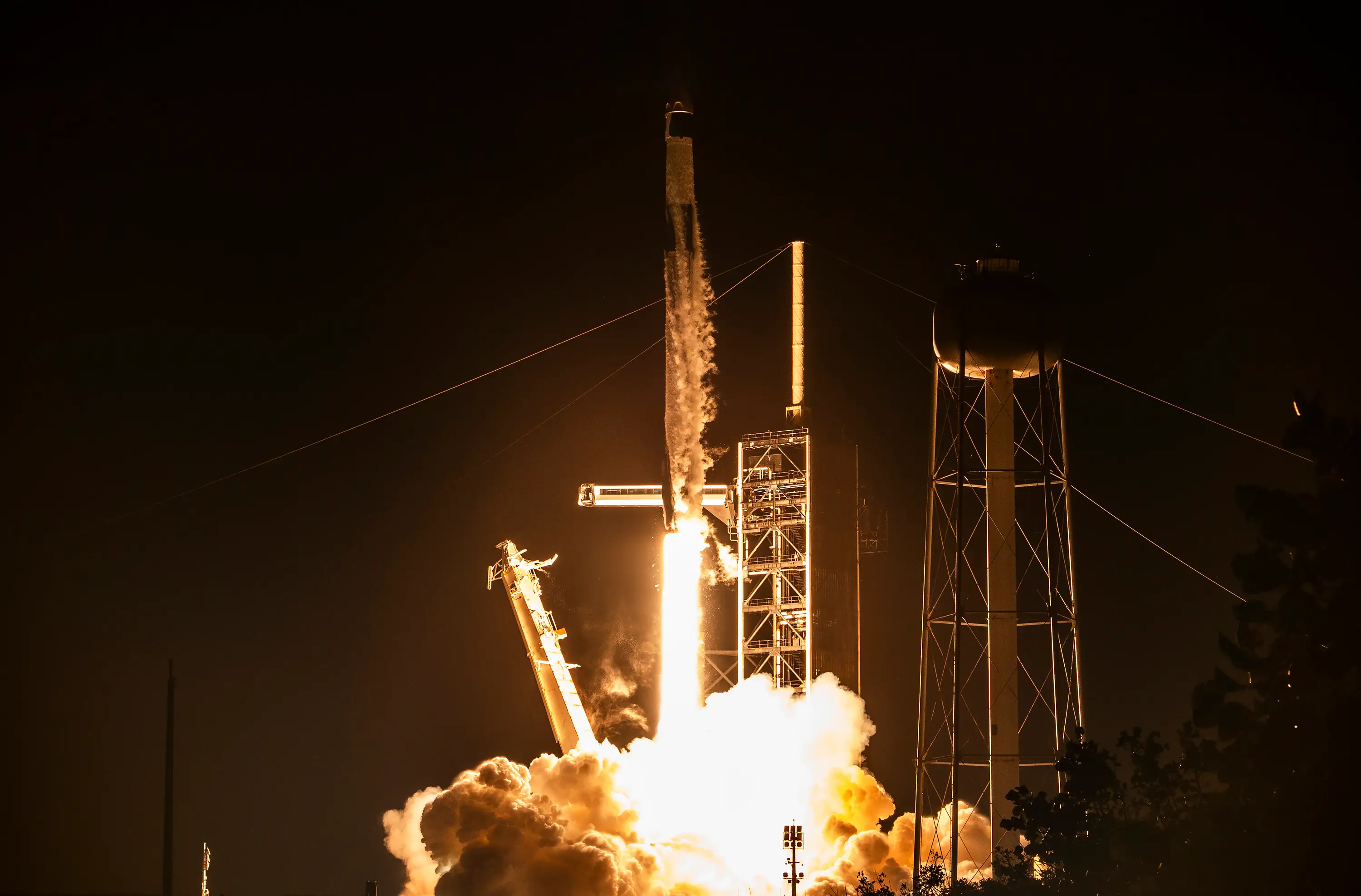
Yesterday (April 1) at around 9:46pm, a Falcon 9 rocket - with a SpaceX Dragon on top - successfully launched from Launch Complex 39A at NASA's Kennedy Space Center in Florida.
Part of SpaceX's Fram2 mission has been in a bid to orbit the Earth from pole to pole and Elon Musk has since confirmed the success of the mission.
Advert
'First views of Earth's polar regions'
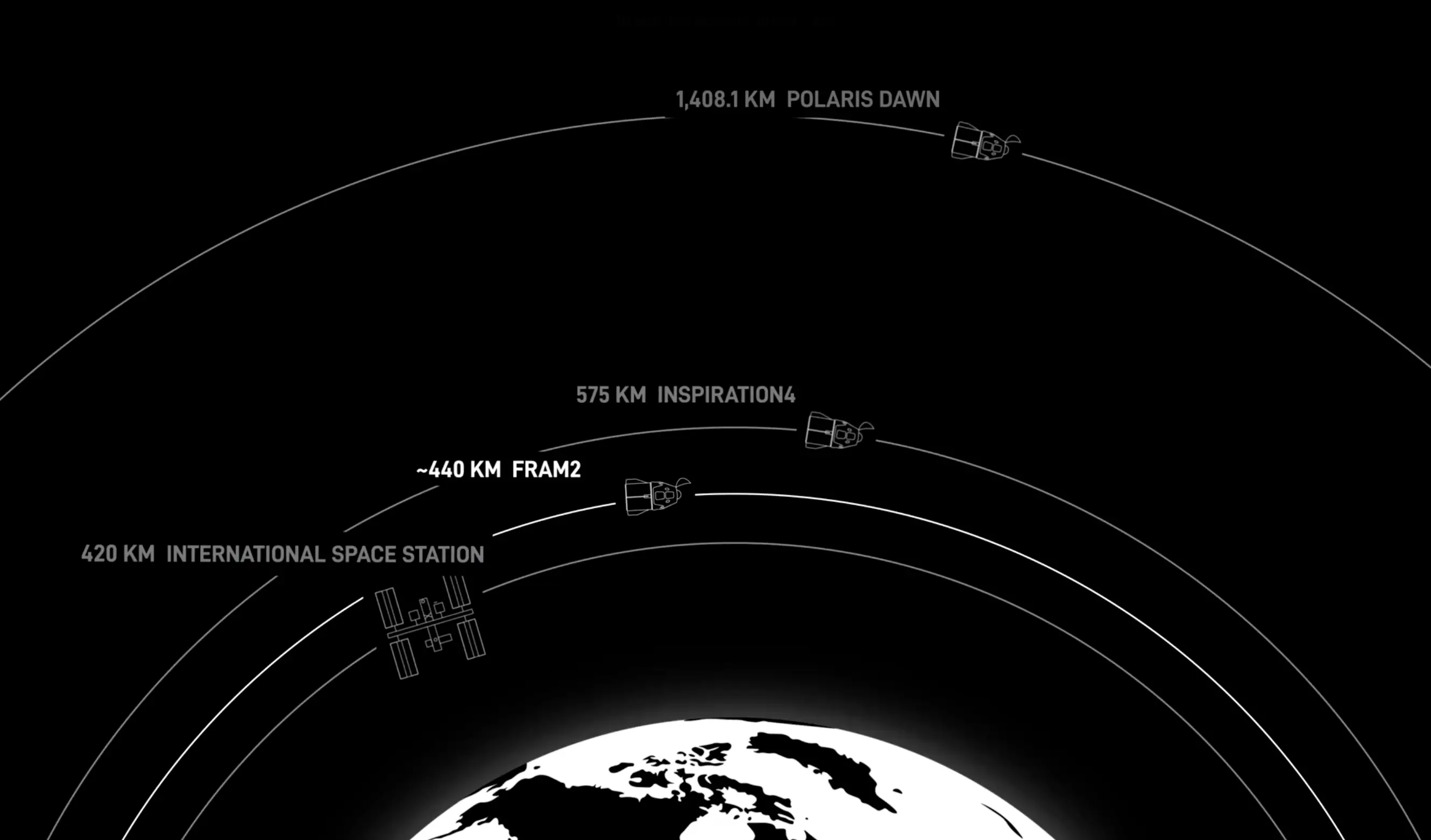
Four private astronauts are on board SpaceX's Dragon spacecraft, set to orbit about 270 miles above Earth as part of a mission estimated as taking around 4-5 days.
During the mission, the team will pass over Earth's North and South poles multiple times each day - Fram2 saying in a release the launch could help 'unlock new possibilities for human spaceflight and provide a deeper understanding about our planet and its polar regions'.
And in a post to Twitter, SpaceX shared the 'first views of Earth's polar regions from Dragon'.
"This is the first time humans have been in orbit around the poles of Earth!" Musk said, retweeting the post.
And it's not taken long for people to weigh in.
Why it's the 'first time' humans have been in orbit around Earth's poles
One Twitter user simply said: "Insane," as another added: "So Earth is not flat?!"
A third joked: "Rough day for the flat earthers."
And a fourth commented: "Why haven't we ever done this before?"
Indeed, why haven't we? Well, most space missions see spacecraft sent up and straight to a space station with the International Space Station (ISS) and China's Tiangong station orbiting with inclinations of 51.6 degrees and 41.5 degrees, Space.com reports.
Missions to these space stations has seen spacecraft reach highest latitudes of Vancouver, Canada and the Auckland Islands in New Zealand.
However, Fram2's mission to the poles will see it orbit with a 90-degree inclination.
The highest ever inclination so far for a crewed flight took place in 1963 and was the Soviet Vostok 6 mission which had an orbit inclination of 65 degrees.
A polar orbit - and the 90-degree inclination it requires - has never been done by now given just how carefully the flight path needs to be considered, alongside more fuel and energy being required and unique launch dynamics.
Radiation rates are also increased when a higher latitude is involved, a 1988 NASA study revealed.
In a press release, Wang said: "After extensive training and dedication from our entire crew, we are honored to continue the legacy of the Fram name in an exciting era of commercial space exploration.
"We are thankful for this opportunity, and we are grateful to SpaceX for making this mission a reality – we are excited to be the first crew to view and capture the Earth's polar regions from low-Earth orbit and support important research to help advance humanity's capabilities for long-duration space exploration."
Topics: Elon Musk, SpaceX, Space, Space X, World News
 Poppy Bilderbeck