Researchers discover 5000-year-old civilization underneath world's largest desert

A civilization has been discovered under the sand dunes of Saudi Arabia thanks to the advances of artificial intelligence.
It has been discovered by a team of researchers at Khalifa University, in Abu Dhabi, after they developed an incredible machine-learning algorithm which assists them trawling through the expanse Rub al-Khali, more commonly known as the 'Empty Quarter'.
It consists of more than 250,000 square miles on the Arabian Peninsula, and is the largest area of continuous sand in the world.
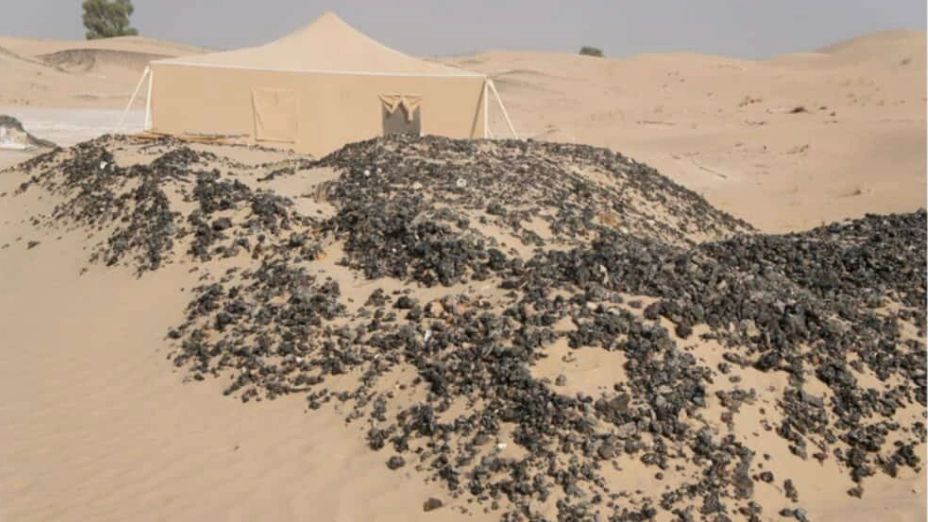
The vast desert is home to the archeology site of Saruq Al-Hadid - which we now understand holds evidence of human activity dating back 5,000 years.
Advert
So how did they manage to uncover such an incredible find?
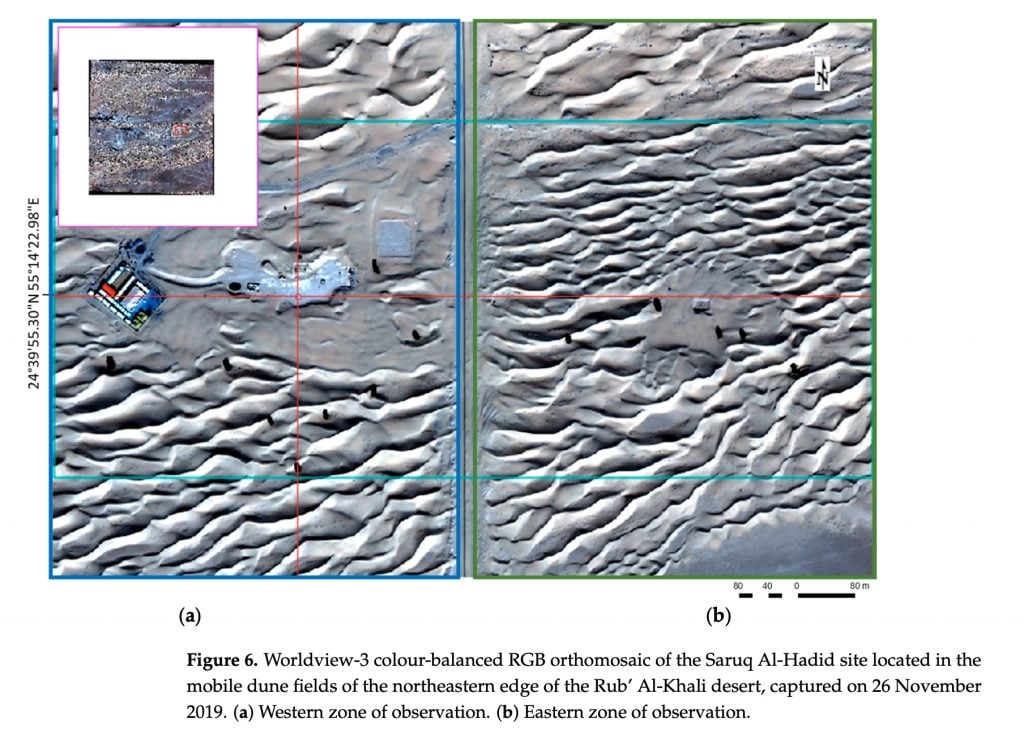
Well, it is with thanks to a new technique developed by the researchers themselves that combine satellite imagery with artificial intelligence to 'automate and improve the detection and mapping of archaeological features in the UAE and other desert regions'.
Head of the college's Environmental and Geophysical Sciences (ENGEOS) Lab Dr Diana Francis explained: “The driving force behind this research was to enable the UAE to discover archaeological sites and features hidden under the sand.
"Given the climate and the fact that much of the country is desert, it was too difficult logistically to inspect the desert from the ground. That’s why satellite data was key. Then, we needed to have technology that can see beneath the sand."
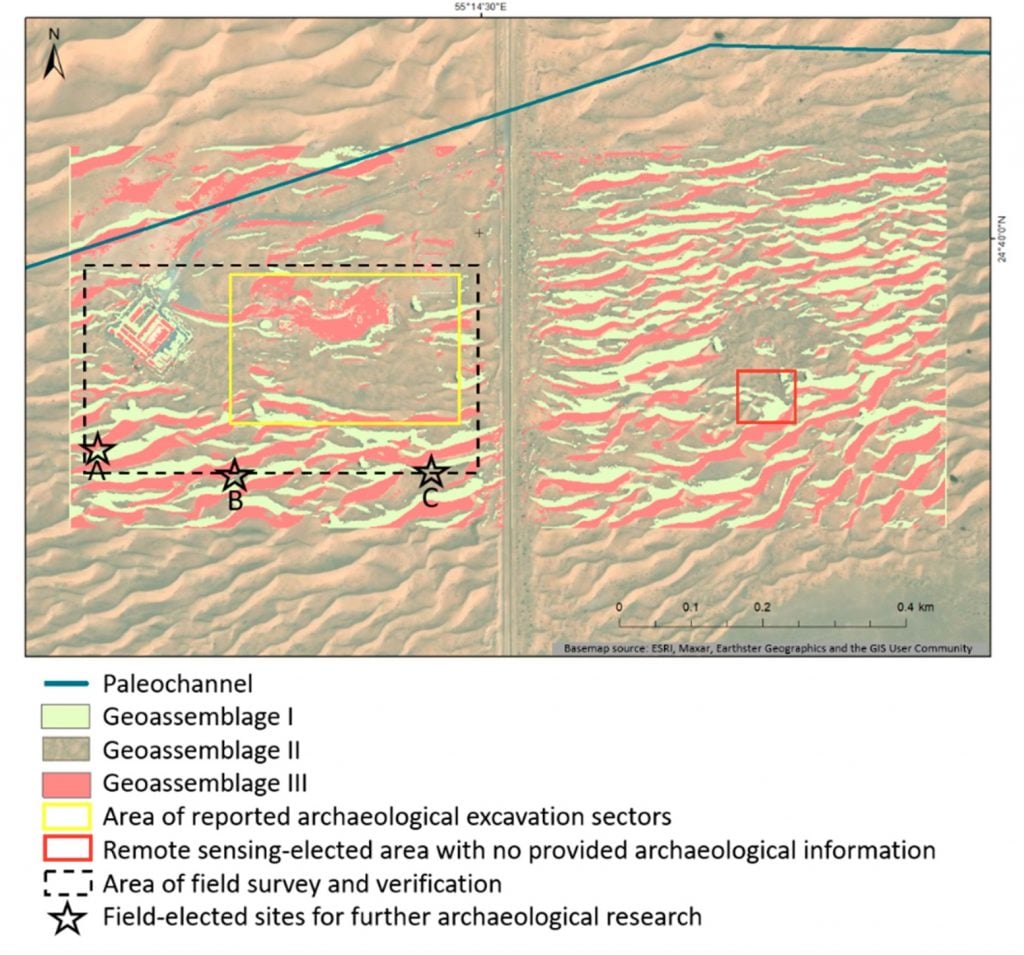
Dubai Culture, the government agency who runs the archeological site, announced its intention to excavate in the areas identified by the Khalifa University team last year.
The authors of the study now anticipate that 'techniques developed here could be adapted to better serve archaeological research in larger areas and similar environments, thereby illuminating the past and guiding future studies'.
Dr Francis added: "This research represents a proof-of-concept on how SAR imagery and machine learning can guide archaeological searches in a desert environment.
"The methods we developed work for all arid regions and it’s my hope we can apply it to the whole of the UAE and then take it to other desert areas in the region. These areas are still unexplored but we know they have cultural history."
Along with Francis, Charfeddine Cherif, Research Associate, and Dr. Steve Griffiths, Professor of Practice and SVP Research and Development, collaborated with Prof. Kosmas Pavlopoulos and Dr. Haifa Ben-Romdhane, Sorbonne University Abu Dhabi, and Dr. Hosni Ghedira, Mohamed bin Zayed University of Artificial Intelligence worked on the study.
Their paper was published in Geosciences.
Topics: Technology, Science, History, Environment
 Joe Yates