iPhone users warned to delete concerning iCloud email that puts them at risk

Apple customers are being alerted to a rising tactic being used by cyber criminals to gain access to their iPhone devices, as well as their banking details and other private information.
This scamming trend involves exploiting your iCloud storage to convince you to hand over your personal data, after which criminals will attempt to empty your bank accounts with the information provided to them.
Reports of scams from some of Apple's 1.8 billion users have led consumer watchdogs to warn the public about this rising trend in cyber scams, which usually begins with a message informing you that your iCloud storage is full - a not uncommon experience for iPhone users.
People who are worried that their treasured personal images and videos may be deleted as a result of their storage filling up may be tempted to enter their private details and secure their treasured memories, after all, the email is from 'The iCloud Team'.
Advert

However, users who click on the link in the official-sounding email will then be taken to another real-looking website where they are invited to enter their card details to upgrade their iCloud account, with an offer to add 50GB of storage 'for free' to those who sign up.
Anyone who enters their details on this link are essentially handing all of their personal data over to these scammers, including their private banking information. And these emails are common, with even a UNILAD staff member receiving one in recent days.
Consumer champions Which? shared a warning to the public on social media after a spike in this style of phishing scam, saying: “Every Apple user needs to know about this nasty scam doing the rounds.
“These sneaky fake emails that look like they’re from iCloud and threaten you with claims that ‘all your photos will be deleted.'”
While some of these scams can be easy to spot right away due to poor spelling or dodgy looking email addresses, many scammers are now deploying more complicated strategies to access people's private information.
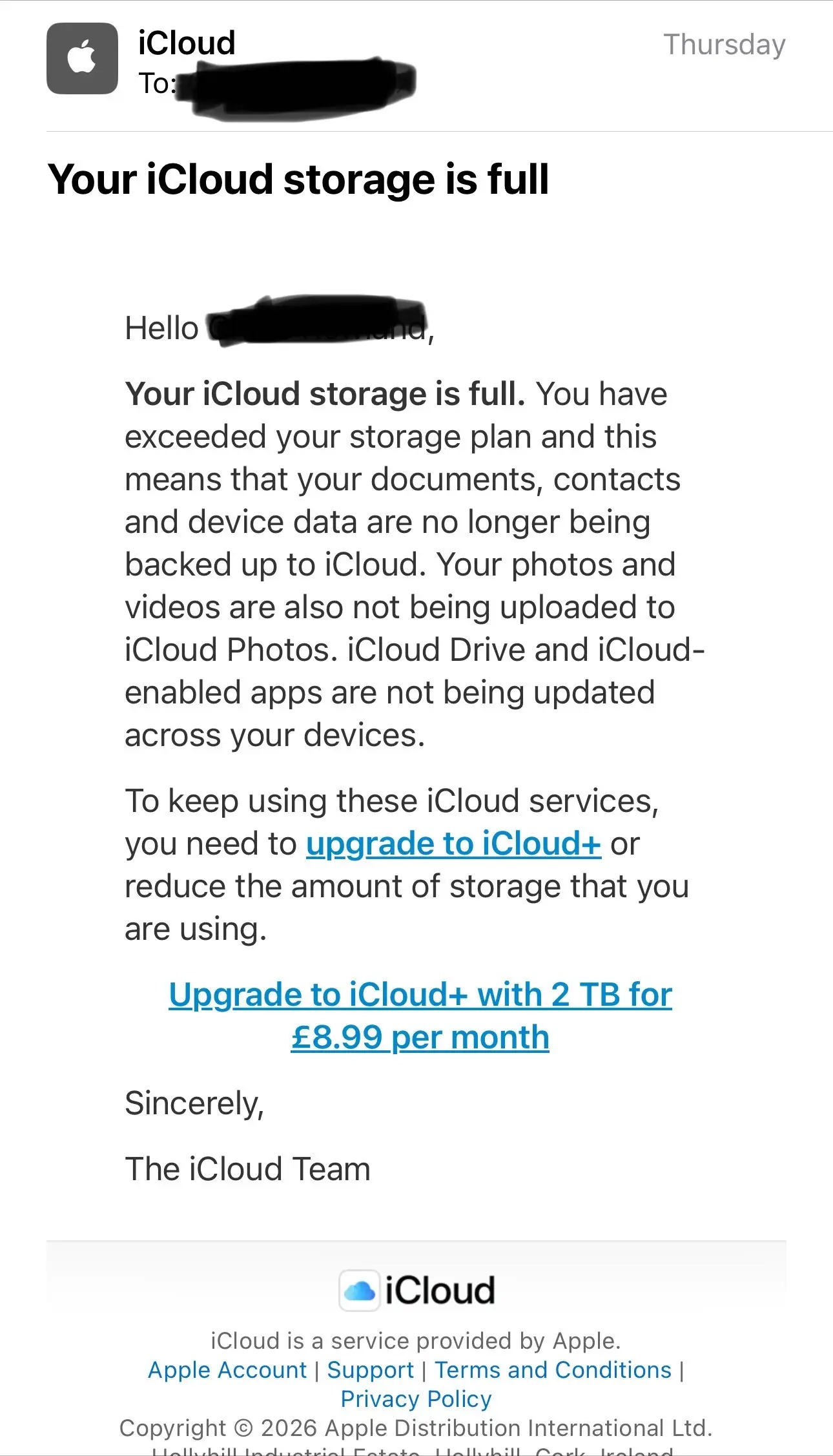
This includes spoofing their email address to appear like an official one, as well as using all the usual copyrights and trademarks to make their correspondence appear authentic. But if in doubt, never enter financial information after being prompted to by a text or email.
Often, they will create a false sense of urgency to push you towards entering your banking details without thinking it through properly first. In this growing scam, the email will often state things claiming you're 'at risk of losing your photos, videos and important files,' if you don't pay up.
Or, they will imply a financial incentive to taking up their offer immediately, with messages to 'upgrade today to keep your precious files and memories safe', with a huge time-limited discount attached to their threat to push you into handing over your details.
Others claimed that they had received emails claiming that their iCloud information was out-of-date and would need to be updated to continue using Apple services. No legitimate company will contact its customers like this.
Many in the comments had received this exact scam recently and were worried about the volume of scams coming their way, causing one to remark 'going digital has made being mugged so much easier for the mugger.'
 William Morgan