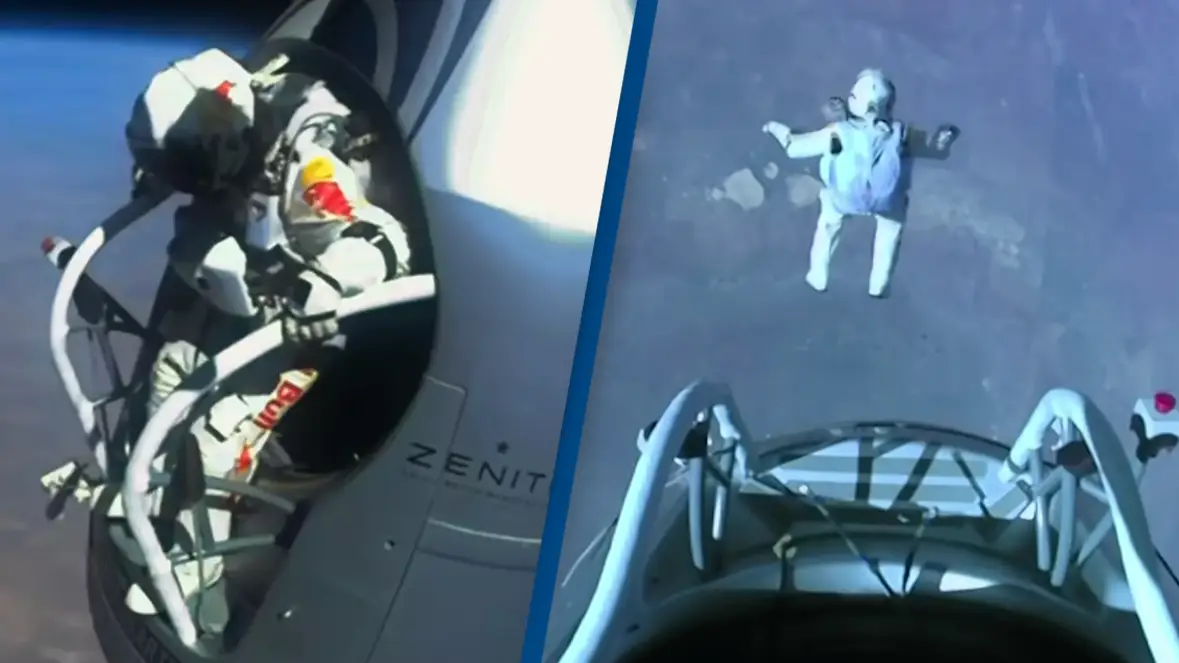
How daredevil stuntman survived fall after jumping from space to Earth at 850mph

A daredevil stuntman broke the sound barrier when he jumped from the edge of space back down to Earth in 2012.
In 2012, Australian skydiver Felix Baumgartner wanted to create a world record.
He went on to make history for traveling faster than the speed of sound. And he did so while free-falling from space.
Advert
On October 14, he traveled to 38,969.4 meters above Earth and jumped, free-falling for over 36,000 meters before parachuting the remaining distance.
If the thought of that makes your stomach churn, you're not alone.
Incredibly, Baumgartner set a world record for the first human to break the sound barrier in free-fall, highest free-fall parachute jump and achieved the fastest speed in free-fall.
You might also be left wondering how he managed to survive such a feat.
It was six years of planning, training and a special pressure suit that made the mission possible.
Of four people who'd attempted to jump in such suits before, only two lived - so the odds weren't exactly reassuring...
Baumgartner's pressure suit had been specially designed to give more flexibility while still giving as much protection as a full spacesuit.
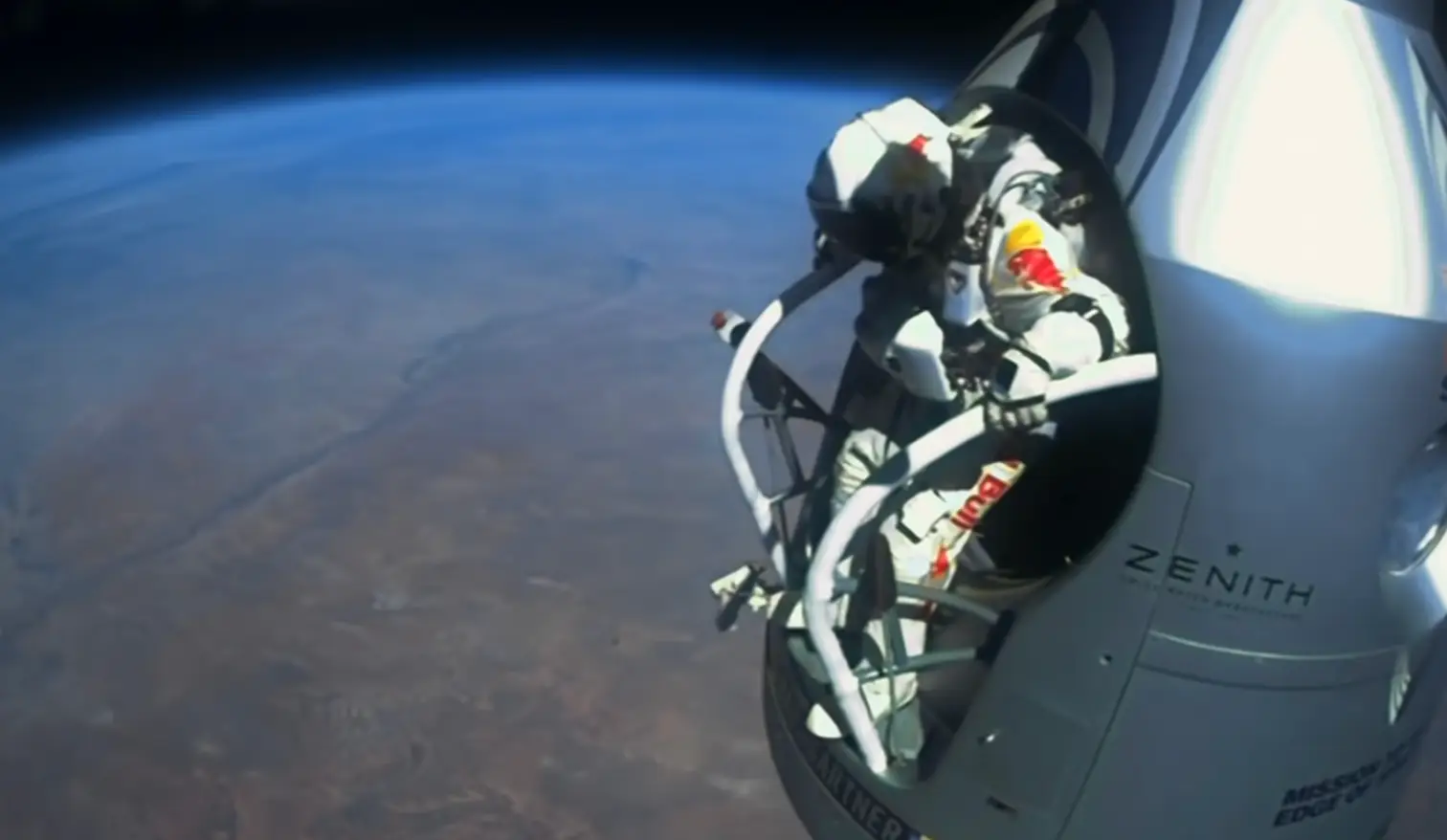
It kept him warm, safely pressurized and supplied with oxygen, which was key to keeping him alive.
He ascended to the edge of space in a pressurised capsule, quite literally putting his life in the suit from the minute the pod's acrylic door swung open and his body was exposed to the near-vacuum of space.
Engineer Mike Todd broke down how the suit worked, explaining: "There's actually four layers to this suit. The outer coverall... is made out of Nomex, which is a fire-retardant material.
"The inner portion of the suit… One of the things that we have is something we call link-netting, and what link-netting does is it retains the torso shape of the body."
He continued: "Inside the link-netting we actually have the bladder material, which is made out of Gore-Tex, which actually vents the moisture out of the inside of the suit to the atmosphere, but it maintains pressure."
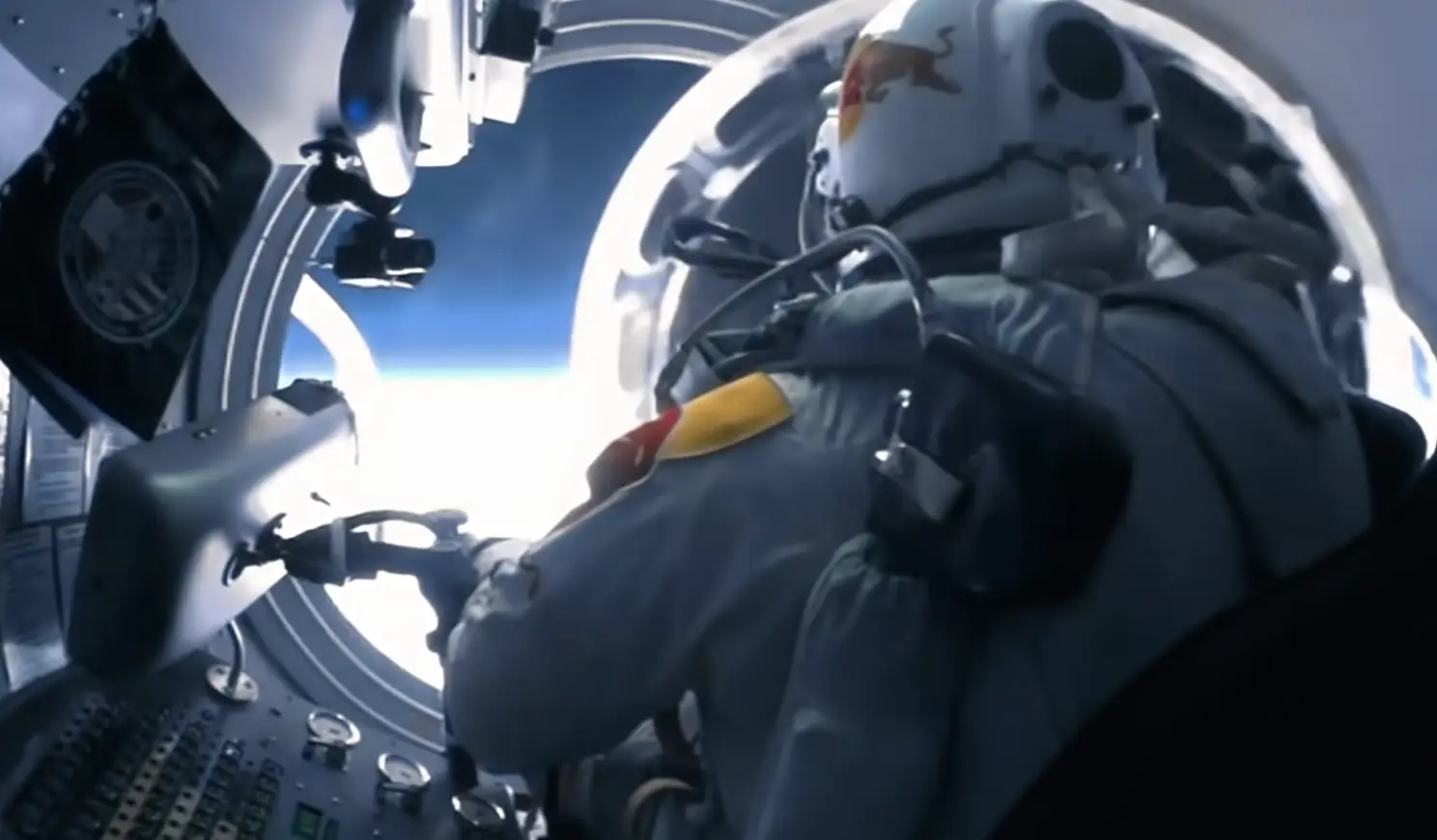
The design made the suit slightly easier to skydive in than a 'traditional' pressure suit - while maintaining that all-important pressure - however, it was still restrictive.
In fact, Baumgartner said was like 'breathing through a pillow'.
The stuntman first jumped from 15,000ft when he began training. It was then the team discovered a potentially fatal issue.
The restrictive design of the suit saw him mistake his parachute cord for one which 'cut him away' from his main parachute.
This prompted a redesign to make the cord easier to access.
And fortunately, the real run was a success. It's a good job too, as it was broadcast to millions across the globe, albeit with a slight delay in case the worst happened.
Baumgartner admitted he felt very little as he broke the sound barrier because his insulated suit softened external sounds and forces.
It took him a mere nine minutes and nine seconds to land back on our planet, in New Mexico.
Incredibly, despite Baumgartner's achievement, one of his records was broken two years later by computer scientist, Alan Eustace.
He fell from 41,422 meters, breaking Baumgartner's record for the highest free-fall parachute jump.
 Ellie Kemp