unilad homepage
unilad homepage
  • News
    • UK News
    • US News
    • World News
    • Crime
    • Health
    • Money
    • Sport
    • Travel
  • Music
  • Technology
  • Film and TV
    • News
    • DC Comics
    • Disney
    • Marvel
    • Netflix
  • Celebrity
  • Politics
  • Advertise
  • Terms
  • Privacy & Cookies
  • LADbible Group
  • LADbible
  • SPORTbible
  • GAMINGbible
  • Tyla
  • UNILAD Tech
  • FOODbible
  • License Our Content
  • About Us & Contact
  • Jobs
  • Latest
  • Archive
  • Topics A-Z
  • Authors
Facebook
Instagram
X
Threads
TikTok
YouTube
Submit Your Content
Scientist claims NASA landing on Mars may have accidentally killed life
Home>Technology>NASA
Updated 18:34 18 Nov 2024 GMTPublished 18:35 18 Nov 2024 GMT

Scientist claims NASA landing on Mars may have accidentally killed life

Was there life lurking on Mars all along?

Gregory Robinson

Gregory Robinson

google discoverFollow us on Google Discover
Featured Image Credit: Heritage Space/Heritage Images/Getty Images/NASA/Getty Images
Gregory Robinson
Gregory Robinson

Gregory is a journalist for UNILAD. After graduating with a master's degree in journalism, he has worked for both print and online publications and is particularly interested in TV, (pop) music and lifestyle. He loves Madonna, teen dramas from the '90s and prefers tea over coffee.

Advert

Advert

Advert

The search for life on Mars has fascinated scientists for decades, but was a serious set-back decades ago?

This is a theory a scientist has put forward, alleging that NASA may have unintentionally destroyed life on the Red Planet in the 1970s.

Astrobiologist Dirk Schulze-Makuch, from the Technische Universität Berlin, believes this might have happened.

Advert

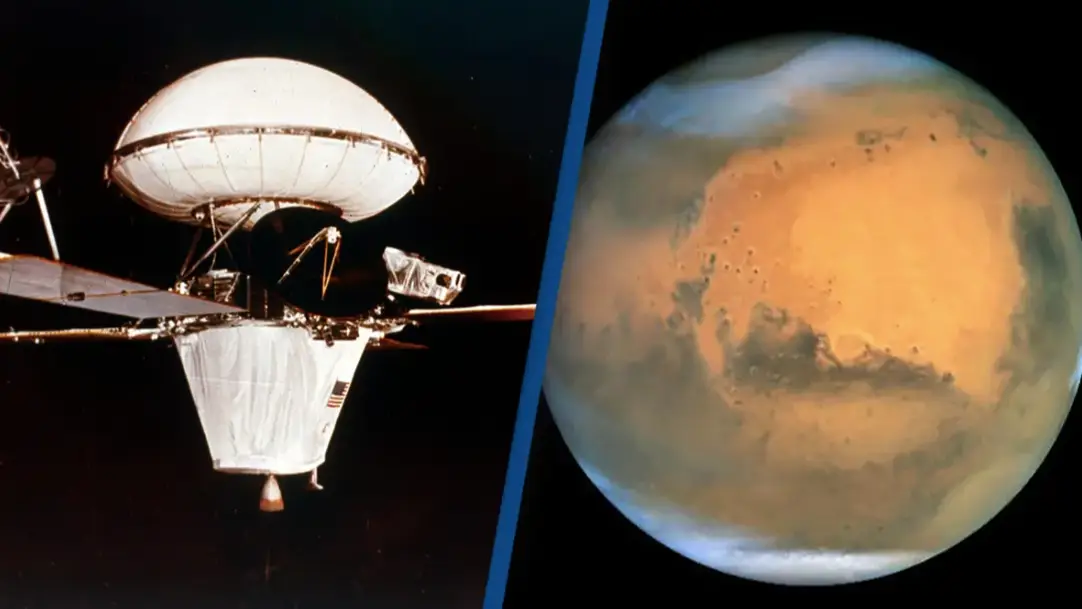
In 1976, NASA’s Viking 1 mission involved two spacecraft that landed on the surface of Mars to conduct experiments involving mixing water and nutrients with samples collected from the planet’s soil.

It was believed at the time that life on Mars would function in a similar way as it does on Earth by relying on liquid water to survive.

Despite the findings apparently hinting at the possibility of life on Mars, Space.com reports that the results from this study were likely a false positive.
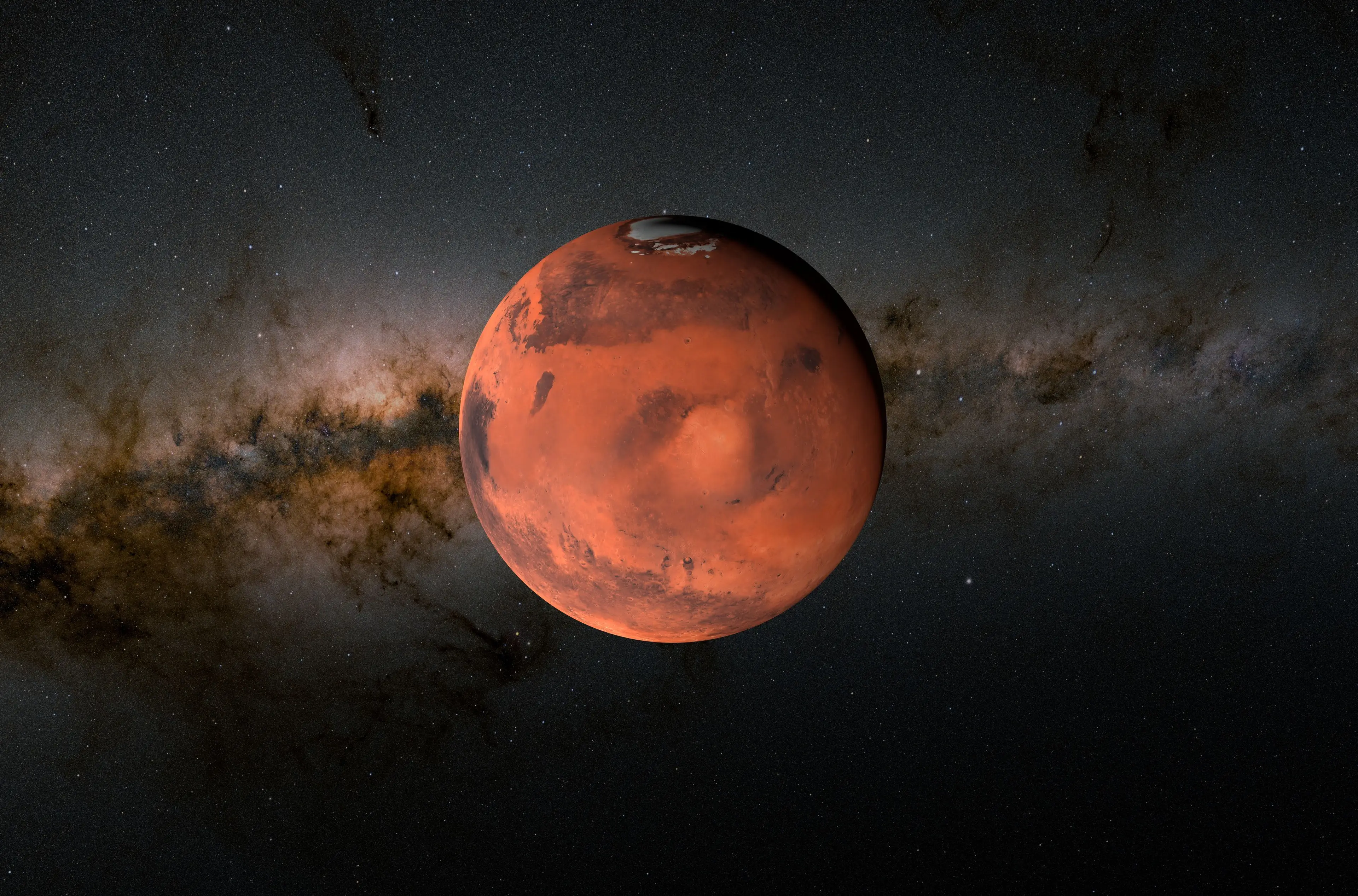
The astrobiologist believes the experiment might have killed life on Mars (NEMES LASZLO/SCIENCE PHOTO LIBRARY / Getty Images)

Schulze-Makuch suggests the experiments from NASA’s Viking 1 might have found life on Mars and unintentionally killed it with its water-based experiments.

The expert argues life on Mars may rely on salt deposits in a similar way to organisms that live in the driest locations on Earth, such as microbes in Chile’s Atacama Desert.

In a commentary piece for the journal Nature, Schulze-Makuch wrote: "In hyperarid environments, life can obtain water through salts that draw moisture from the atmosphere.

"These salts, then, should be a focus of searches for life on Mars."

"The experiments performed by NASA’s Viking landers may have accidentally killed Martian life by applying too much water.”

The hypothesis goes against NASA scientists made in the 1970s that life needs liquid water in order to survive.
Humans want to find life on Mars (Cokada / Getty Images)

Schulze-Makuch added: "If these inferences about organisms surviving in hyperarid Martian conditions are correct, then rather than ‘follow the water,’ which has long been NASA’s strategy in searching for life on the Red Planet, we should in addition follow hydrated and hygroscopic compounds — salts — as a way to locate microbial life.

The space expert also put forward an idea of using simple table salt to create a brine in which ‘certain bacteria thrive’. This concept could be roughly applied to life on Mars as well.

When speaking to Space.com, he said: “The main salt on Mars appears to be sodium chloride. Which means this idea could work.”

NASA, and Elon Musk, are pushing forward with plans to land humans on Mars as the search for aliens continues.

Choose your content:

a day ago
3 days ago
  • Getty Stock Images
    a day ago

    Security experts share key advice as Instagram DMs are no longer 'private' after huge change

    It's recommended you move 'sensitive conversations' to other platforms

    Technology
  • Justin Sullivan/Getty Images
    a day ago

    AI responds to ChatGPT CEO's warning that the tech will surpass humans by 2030

    Sam Altman said AI could become 'superintelligent' within a matter of years

    Technology
  • Brendan Smialowski - Pool/Getty Images
    a day ago

    Trump forced to ditch his trusty cellphone as he barreled into high-stakes China summit with Xi

    Donald Trump left China today (May 15) following a two-day state trip

    Technology
  • Graham Hughes/Bloomberg via Getty Images
    3 days ago

    'AI godfather' issues grim 10-year warning as he raises concerns about serious risks to humanity

    Yoshua Bengio said that giving AI's rights would be like giving citizenship to 'hostile extraterrestrials'

    Technology
  • NASA scientist claims to have found evidence of ‘Non-Human Intelligence’ in our skies
  • NASA scientist claims they've discovered the Star of Bethlehem
  • NASA reveals significant new evidence that shows potential signs of previous life on Mars
  • ChatGPT user claims it may have 'saved their life' after doctors dismissed ‘aggressive cancer’ symptoms as ‘mild infection’