unilad homepage
  • News
  • Film and TV
  • Music
  • Tech
  • Features
  • Celebrity
  • Politics
  • Weird
  • Community
  • Advertise
  • Terms
  • Privacy & Cookies
  • LADbible Group
  • LADbible
  • SPORTbible
  • GAMINGbible
  • Tyla
  • UNILAD Tech
  • FOODbible
  • License Our Content
  • About Us & Contact
  • Jobs
  • Latest
  • Archive
  • Topics A-Z
  • Authors
Facebook
Instagram
X
Threads
TikTok
YouTube
Submit Your Content
NASA simulation reveals terrifying reality of what it would be like going through a black hole

Home> Technology> NASA

Published 19:29 7 May 2024 GMT+1

NASA simulation reveals terrifying reality of what it would be like going through a black hole

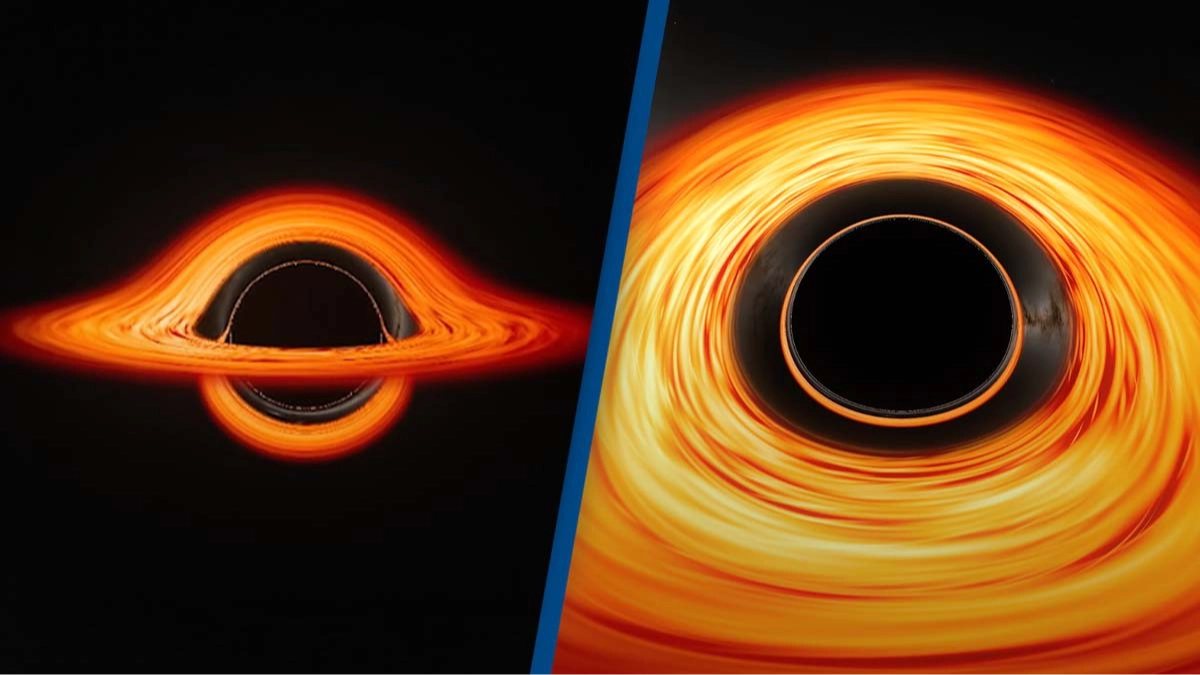
You may have wondered what exactly would happen if you fell into a Black Hole, and now NASA has simulated what it might look like

Kit Roberts

Kit Roberts

google discoverFollow us on Google Discover
Featured Image Credit: NASA

Topics: News, NASA, Science, US News, World News, Space

Kit Roberts
Kit Roberts

Kit joined UNILAD in 2023 as a community journalist. They have previously worked for StokeonTrentLive, the Daily Mirror, and the Daily Star.

Advert

Advert

Advert

An expert at NASA has shared what it might look like to fall into a black hole.

It's a question which many of us have asked ourselves and, hopefully, none of us will ever know the answer to from direct experience.

But just in case you were wondering there is now a video put together by an astrophysicist which gives an impression of how it might look.

Advert

That is of course assuming that you would be able to see what was going on amidst the weird process of 'spaghettification' where an object being sucked into the black hole would be 'stretched' out indefinitely.

Astrophysicist Jeremy Schnittman at NASA’s Goddard Space Flight Center worked on the video.

It shows what it might look like when someone passed the black hole's event horizon.

This is effectively the point of no return where the gravitational pull of the black hole becomes too strong for their to be any hope of escape.
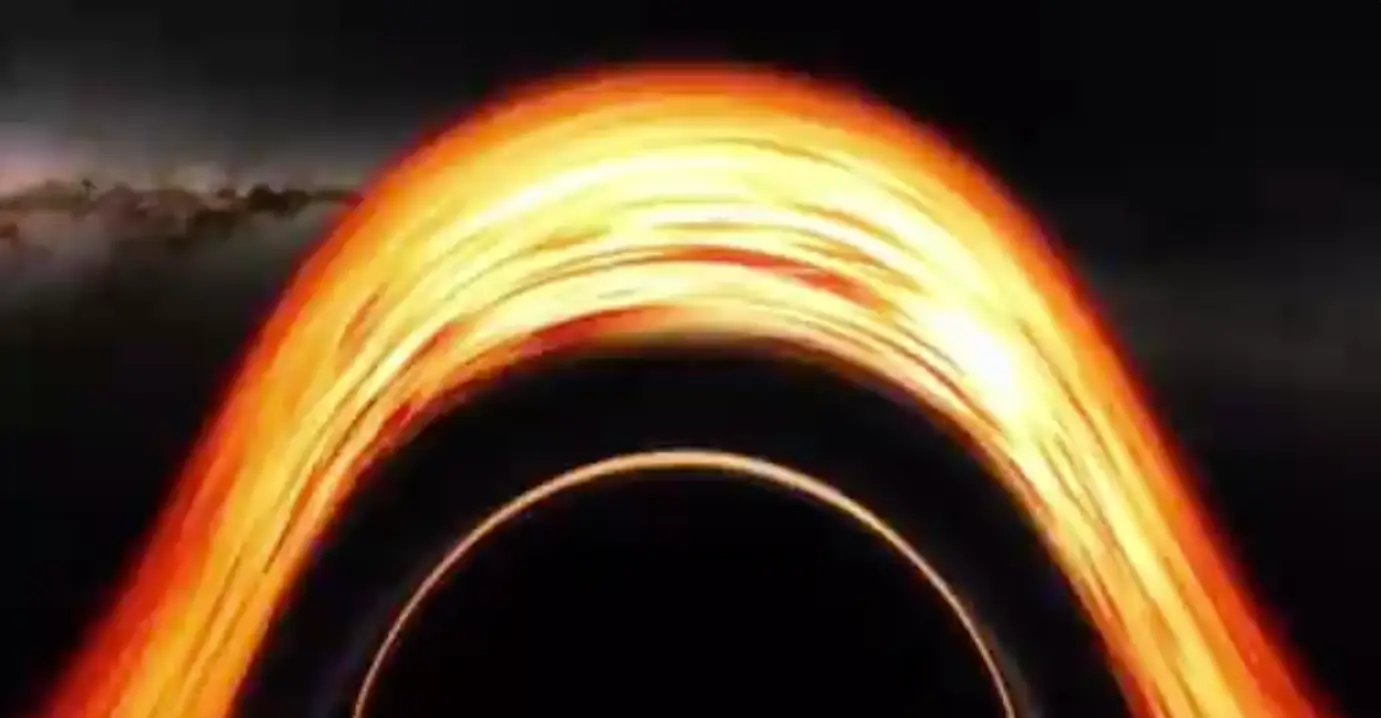
Scream if you wanna go faster... (NASA)

Schnittman spoke about the video, explaining why he decided to make it.

He said: “People often ask about this, and simulating these difficult-to-imagine processes helps me connect the mathematics of relativity to actual consequences in the real universe."

In the end there were two scenarios that Schnittman decided to emulate in his videos, which he made using a NASA supercomputer.

He explained: "I simulated two different scenarios, one where a camera — a stand-in for a daring astronaut — just misses the event horizon and slingshots back out, and one where it crosses the boundary, sealing its fate.”

The gravitational pull over the event horizon is so strong that nothing can escape its pull - not even light.

Schnittman explained which sort of black hole would be the best to fall into.
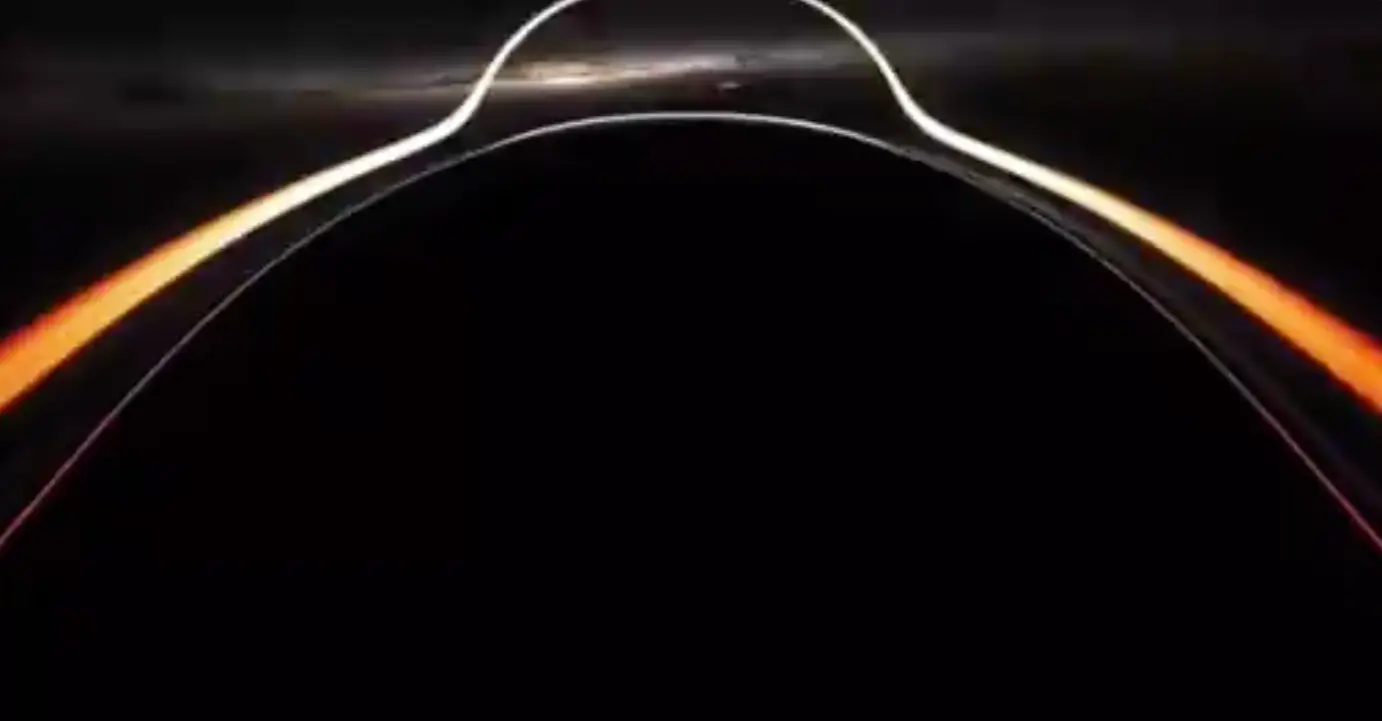
Things aren't looking great. (NASA)

And just to be clear, we don't mean because you might survive, more that the end would be quicker.

He said: “If you have the choice, you want to fall into a supermassive black hole. Stellar-mass black holes, which contain up to about 30 solar masses, possess much smaller event horizons and stronger tidal forces, which can rip apart approaching objects before they get to the horizon.”

Not only that but you might even experience time differently if you were to get close enough to a black hole.

To an observer you might appear to never pass the event horizon even though you had.

And if you went on a trip where you were sling-shotted round by gravity then you would come back younger.

Don't get your hopes though, as it would only be by around 36 minutes.

Choose your content:

16 hours ago
a day ago
2 days ago
  • Bill Ingalls/NASA/Getty Images
    16 hours ago

    Artemis II astronauts are preparing families 'for crew loss' if they lose contact with Earth

    Canadian Space Agency astronaut Jeremy Hansen has told his family they will 'be okay'

    Technology
  • Miguel J Rodriguez Carrillo / AFP via Getty Images
    a day ago

    What will happen to NASA's Artemis II crew's bodies during 10 days in space

    There are three bodily functions that are more impacted than others during space travel

    Technology
  • Getty Stock Images
    a day ago

    US sees giant fireballs in skies sparking concern about city-killing asteroid

    The American Meteor Society said the increase in sightings warrants 'serious investigation'

    Technology
  • Getty Stock Image
    2 days ago

    NASA scientist claims to have found evidence of ‘Non-Human Intelligence’ in our skies

    Scientists may finally have answered the old age question of whether there is extraterrestrial life

    Technology
  • Terrifying NASA simulation reveals biggest known black holes and the largest could devour our galaxy
  • Scientists left baffled after discovering lone black hole floating through space
  • Terrifying simulation shows what would happen if humans spent just five seconds on Uranus
  • US sees giant fireballs in skies sparking concern about city-killing asteroid