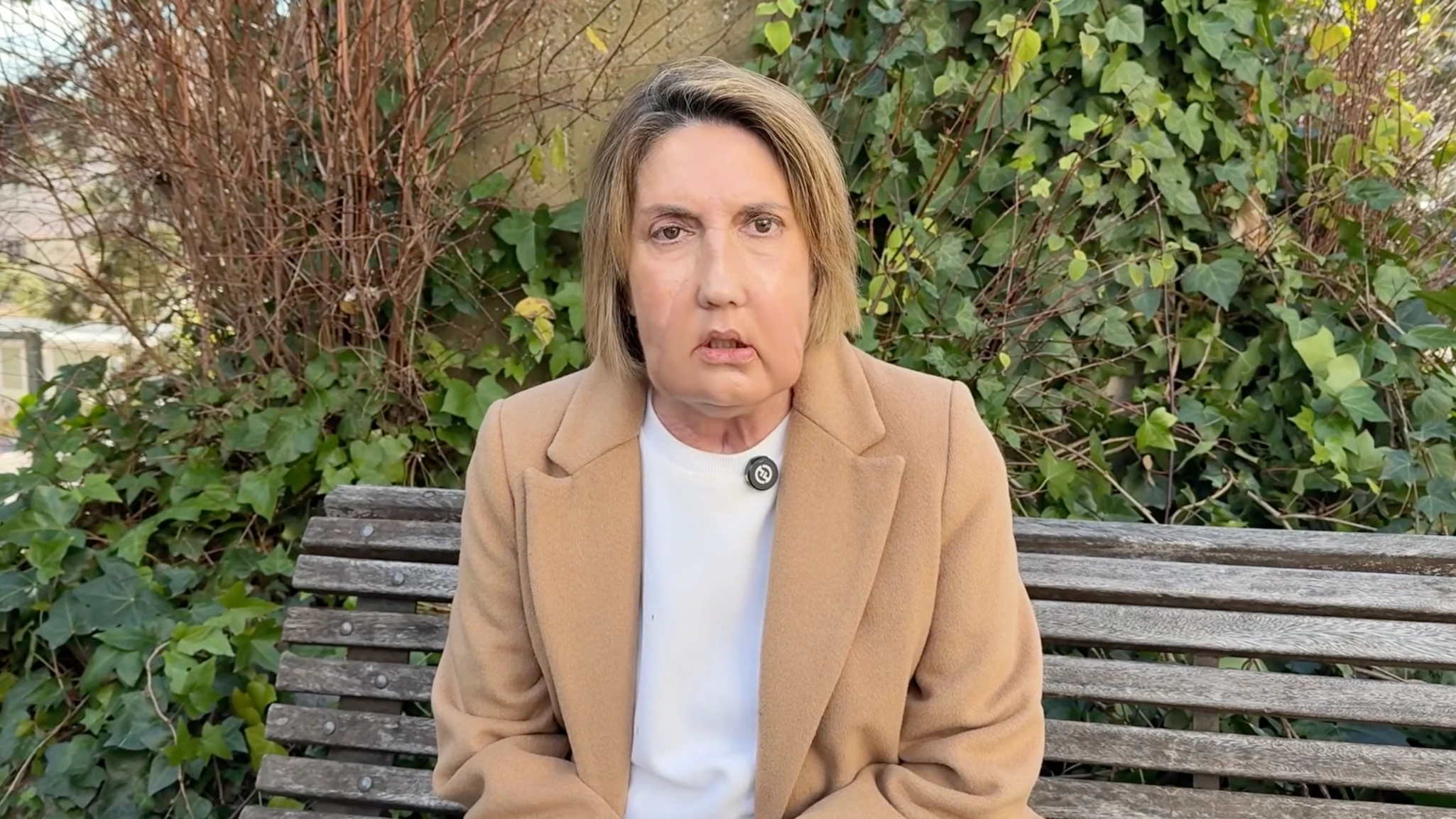
Woman receives face transplant after donor requested assisted dying

Warning: This article contains discussion of assisted dying which some readers may find distressing.
Surgeons in Spain have successfully given a woman a whole new face, after an assisted dying patient in the country agreed to donate hers before opting to end her life.
The pioneering surgery was just one of 54 that have been carried out around the world since the expertise to conduct full facial transplants was first developed in 2010, with the operation involving up to 100 professionals over the course of 24 hours.
Now, after undergoing months of complex rehabilitative therapy and psychiatry to accept her new face, Carme is able to present herself to the world and speak with someone else's mouth.
Advert
She required a type I face transplant (which is the central part of the face) after a facial infection from a bite turned into necrosis.
But that is only thanks to the generosity of an unidentified woman using Spain's euthanasia law to end her own life, who agreed to donate her face as well as her organs after being identified as a match for Carme.
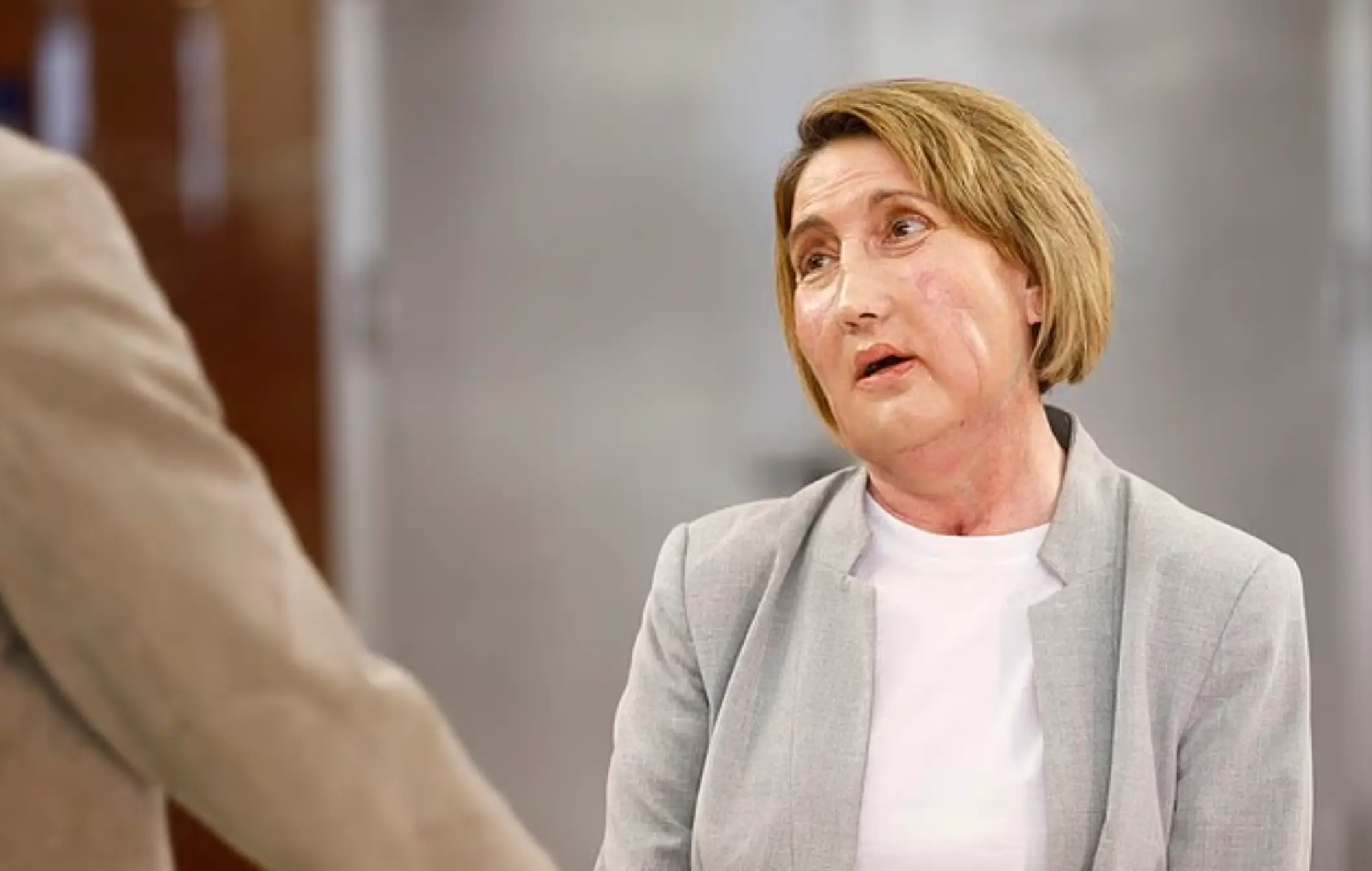
The donor underwent the surgery to remove her face before going through the assisted dying protocol, that was legalized in Spain in 2021. This case of a euthanasia patient's face being used in a transplant is the first of its kind in the world.
Dr Elisabeth Navas, Medical Coordinator of Donation at Vall d’Hebron University Hospital, one of the few specialist centers for these pioneering procedures, explained: "Donors and their families always perform an immense act of generosity and altruism, but this case also demonstrates a level of maturity that leaves one speechless.
"Someone who has decided to end their life dedicates one of their last wishes to a stranger and gives them a second chance of this magnitude."
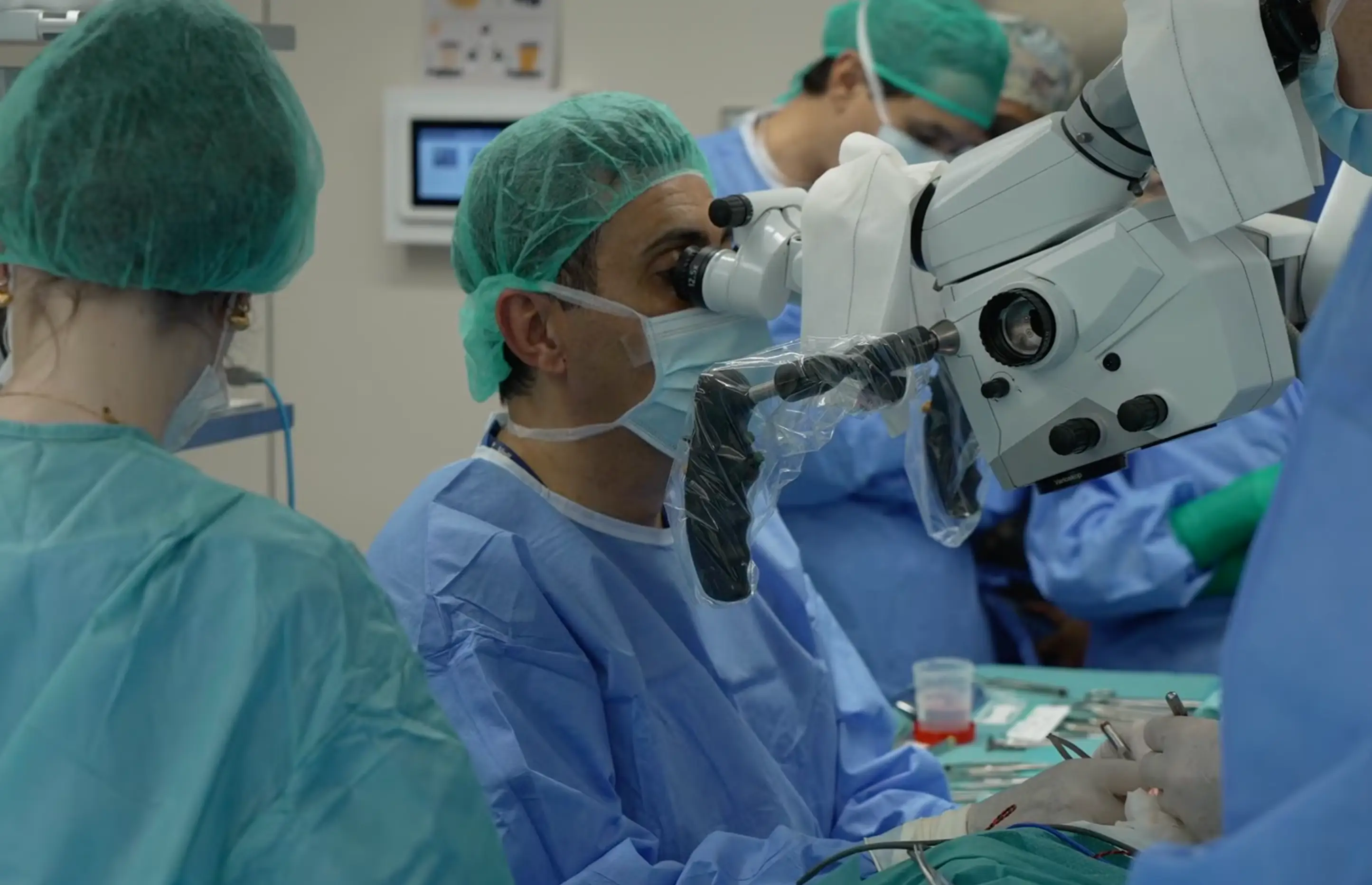
The transplant involved a full day of complicated and cutting-edge surgical techniques, with the hospital's practiced plastic surgeons transplanting a large section of composite tissue from the center of the donor's face.
This technique involves reconstructing and connecting the three dimensional web of nerves, veins, and muscles that joins your tissue together into a functional face - a painstaking and expert approach that only a handful of surgeons have carried out.
Dr Joan-Pere Barret i Nerín, plastic surgery head at the Barcelona hospital, added: "Face transplantation is a functional surgery, carried out when a patient has lost areas of the face, such as the orbicular facial muscles and eyes, which cannot be restored through standard Plastic Surgery techniques.
"These are patients with severe facial disfigurement due to disease, burns, trauma or congenital defects affecting basic vital functions."
For the procedure to work, patient and donor need to share a sex, blood type and, importantly, have a similarly shaped face.
Once a match based on this criteria has been found, the recipient is further tested for psychological and cognitive issues that might make the transformative surgery an issue after the patient has a new face.
But once these hurdles have been cleared, a CT scan is carried out on both donor and recipient so that surgeons have a clear reference before they remove one person's face and put it on someone else.
Then, after the surgery, the patient has to spend a considerable amount of time in hospital to undergo immunotherapy to ensure that their new face is not rejected and to eventually learn how to move their mouth and other parts of their face.
Dr Daniela Issa, head of rehabilitation, said: "Initially, the patient’s face is in a hypotonic phase, without movement, because the nerve connections are not yet established. We work with the face to stimulate innervation, using tools such as mirrors, different textures, images of the patient to recall movements and visual perception of the face."
Now, after receiving the face of a euthanasia patient, Carme is able to see herself in her reflection once again.
She said: "When I'm looking in the mirror at home, I'm thinking that I'm starting to look more like myself."
For advice, support, and more information, you can contact Dignity in Dying via their website or email them at [email protected]. For more state resources, you can also contact End of Life Choices Oregon or Patient Choices Vermont.
Additionnally, if you or someone you know is struggling or in crisis, help is available through Mental Health America. Call or text 988 to reach a 24-hour crisis center or you can webchat at 988lifeline.org. You can also reach the Crisis Text Line by texting MHA to 741741.
 William Morgan