
Everyone's saying the same thing as Oxford reveals word of the year for 2025

The Oxford English Dictionary's word of the year has been revealed and everyone on the internet is saying the same thing about it.
Oxford University Press - publisher of the Oxford English Dictionary - decides on its annual word or expression 'based on the ethos, mood or preoccupations of the past twelve months'.
Editors at the organisation track potential candidates as they emerge throughout the year, while looking at how often they're used and compare this with other language data.
Basically, it's term that they say will have most likely have a 'lasting cultural significance'.
Advert
However, last year's phrase of the year, 'brain rot', certainly surprised many - and to be honest, this year's is even more surprising.
The makers of the dictionary revealed on Monday (December 1) that 'rage bait' is 2025's phrase of the year.
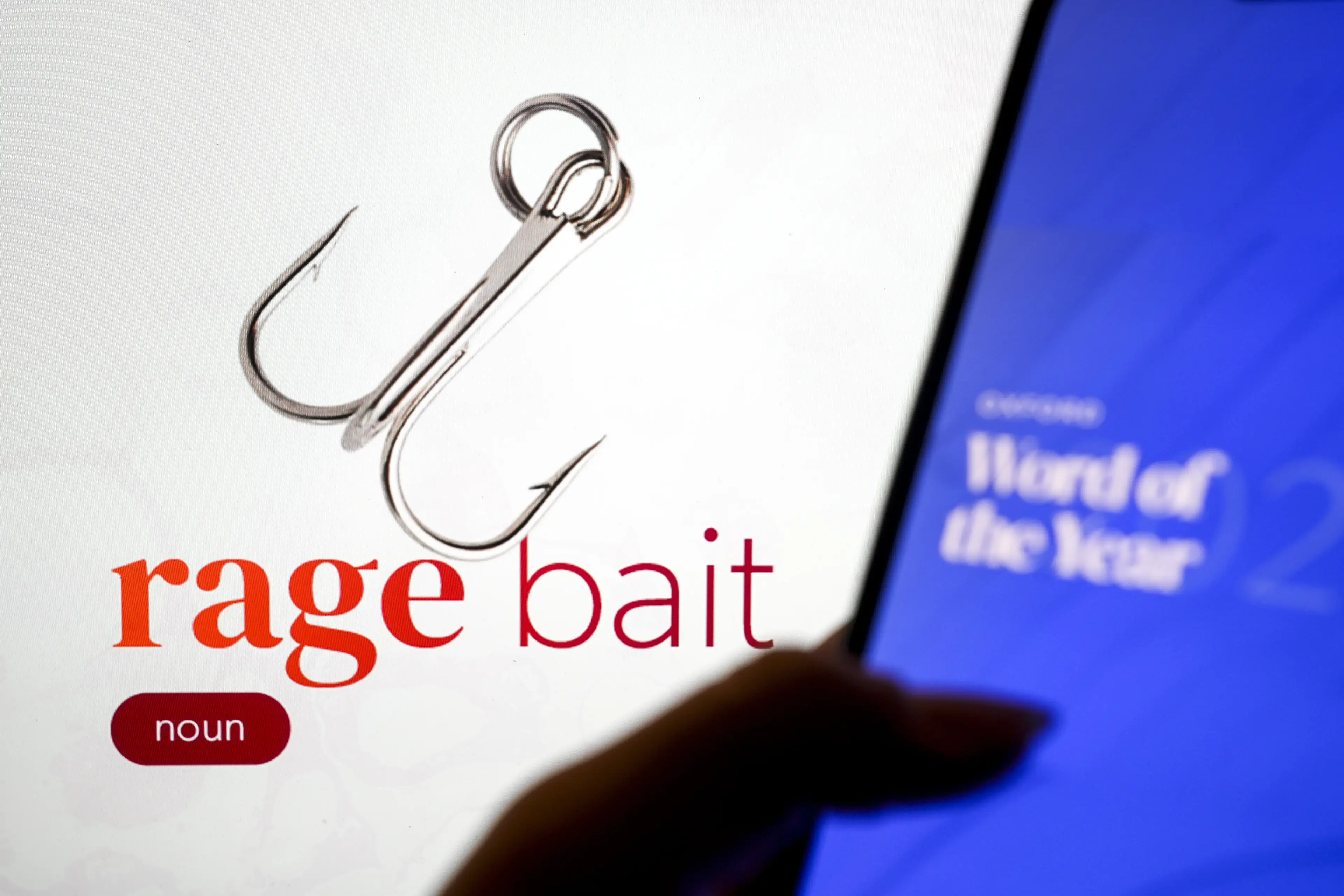
Oxford University Press defines the term as 'online content deliberately designed to elicit anger or outrage by being frustrating, provocative, or offensive, typically posted in order to increase traffic to or engagement with a particular web page or social media account'.
The dictionary's publisher said: "With 2025’s news cycle dominated by social unrest, debates about the regulation of online content, and concerns over digital wellbeing, our experts noticed that the use of rage bait this year has evolved to signal a deeper shift in how we talk about attention—both how it is given and how it is sought after—engagement, and ethics online.
"The word has also increased threefold in usage in the last 12 months, according to our language data."

Many have flocked to social media sites such as X (formerly known as Twitter) following the announcement to have their say.
Some have suggested Oxford University Press' choice as rage bait itself, as one person penned: "Oxford is definitely ragebating with this word choice."
A second added: "Oxford announcing 'rage bait' as word of the year is the most rage bait thing ever," while a third remarked: "It being word of the year itself is rage bait to many I'm sure."
In a press release, Oxford University Press noted the emergence of rage bait as a standalone term highlights the 'flexibility of the English language'.
Some will point out the similarity between the term rage bait and the more well known 'clickbait', though they are different.
Andrea Jones, who runs a marketing podcast, told the BBC: "A hook reflects what's in that piece of content and comes from a place of trust, whereas rage-baiting content is designed to be manipulative."
Topics: News, Books, UK News, Education, Social Media, Twitter
 Callum Jones