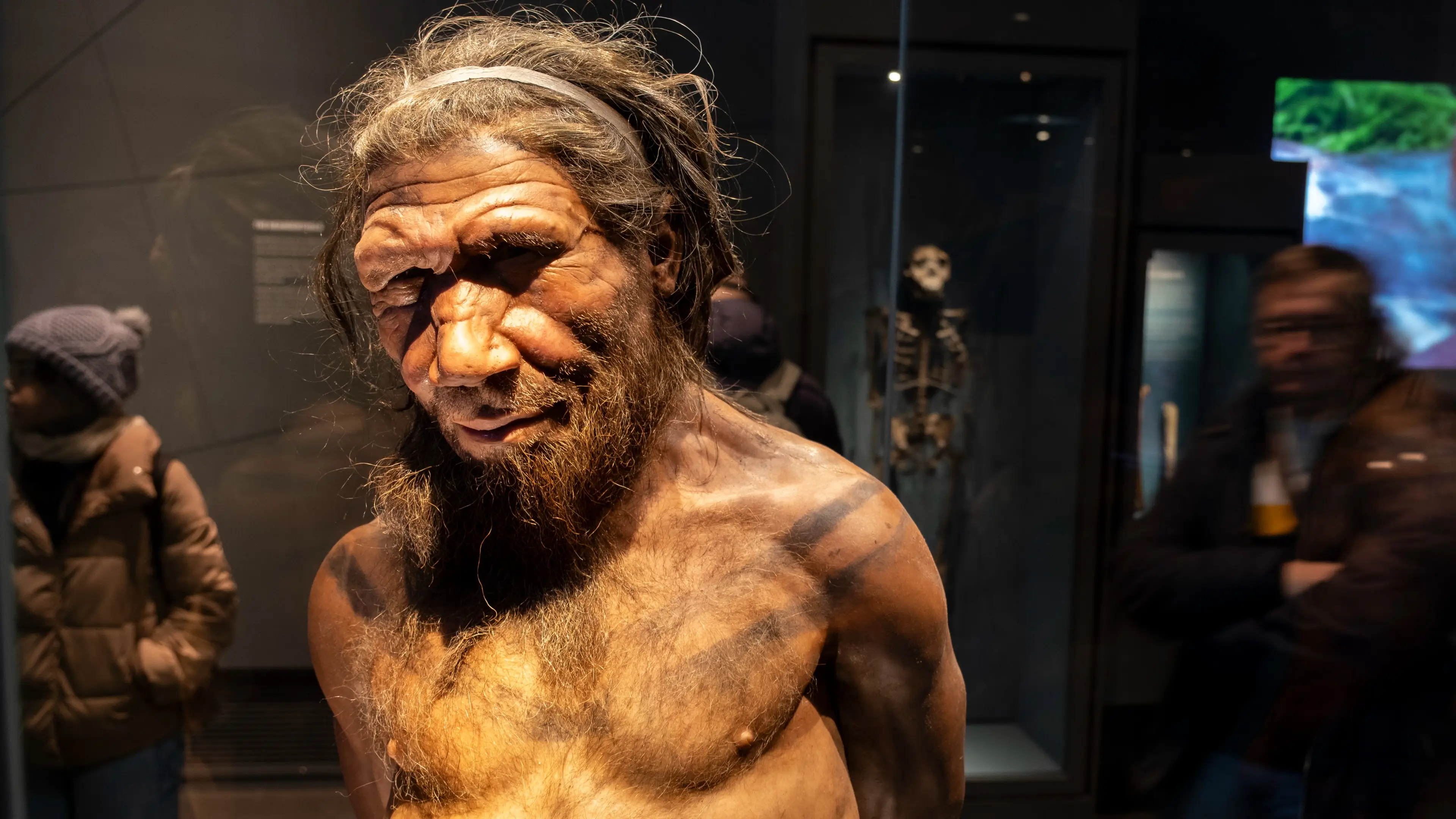
Scientists claim Neanderthals never truly went extinct because of one shocking reason

The last time a distinct human species other than our own walked the Earth was likely some 40,000 years ago, when most archaeological evidence of the heavy-browed Neanderthals appears to disappear completely.
But a growing mountain of scientific evidence appears to explain where they went and if they even vanished at all, thanks to the major leaps forward in genetic analysis over the past 15 years.
Rather than being clubbed to death by our hunter-gatherer ancestors deep in the mists of time, a new mathematical model supports the increasingly popular idea that Neanderthals in fact walk among us - by being us.
This is in part because genetic analysis has shown that all non-African modern humans have anywhere between one and four percent of Neanderthal DNA as part of their genetic code, meaning that at some point before 40,000BC, us Homo Sapiens were making love, not war, with the Neanderthal population.
Advert
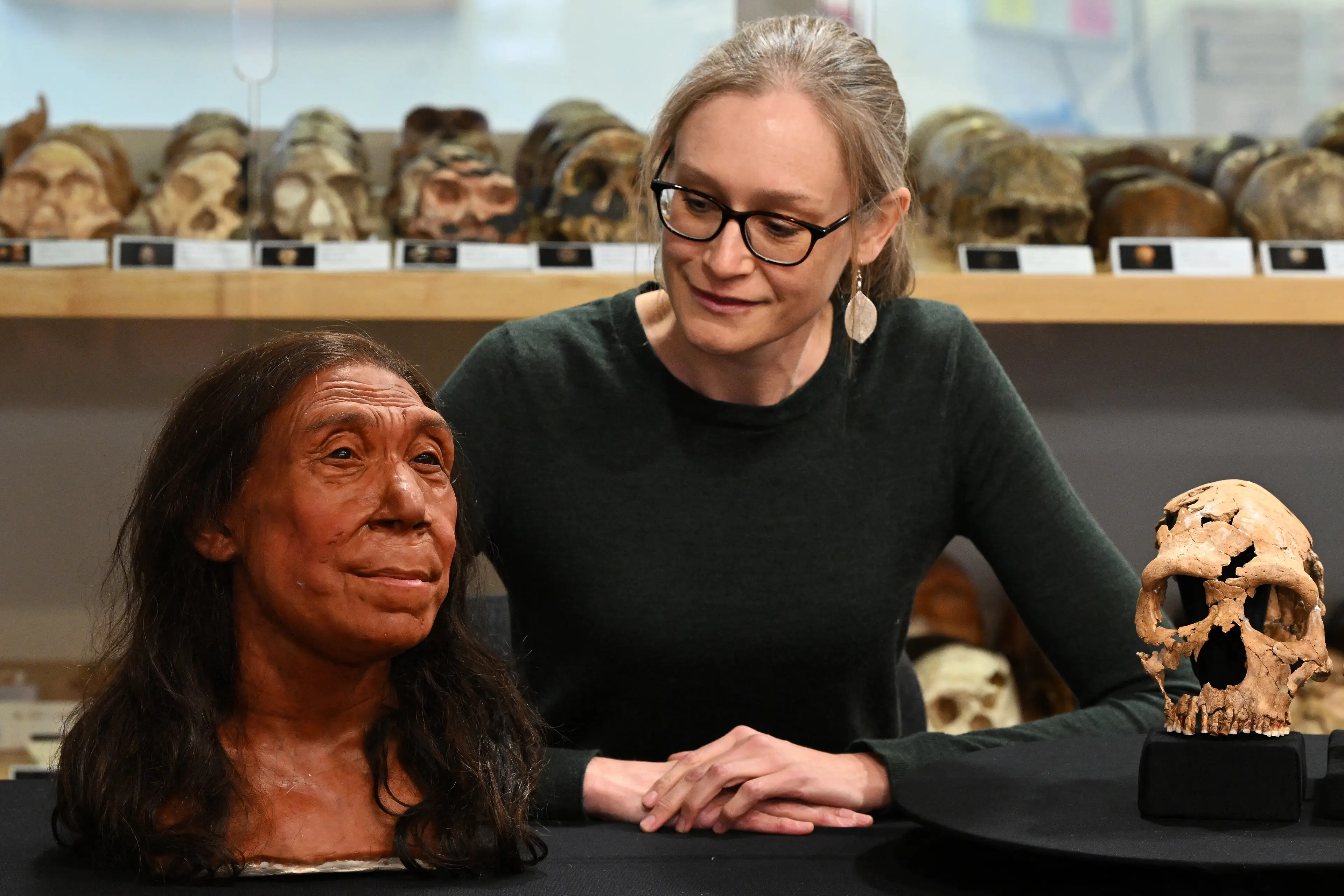
For many decades, archaeologists and anthropologists assumed that the best explanation for the disappearance of our stout biological cousins was our well documented history of warfare and murder, which has been the norm for human civilisation since at least the birth of modern agriculture, around 12,000 years ago.
Another assumption that has fallen apart after rigorous sample collection and genetic analysis is that Homo Sapiens only left the African continent around 60,000 years ago.
The level of DNA mixture and other parts of the fossil record indicates that there could have been repeated events where groups of Homo Sapiens entered Eurasia from as far back as 200,000BC, before the final expansion.
Yet, the new mathematical model analysis published in reputable science journal Nature last week, appears to show how our two populations intermixed over the course of thousands of years in a lengthy 'love affair' that ultimately wiped out the distinct groups of Neanderthals who existed across the Eurasian continent, through folding them into our own.
Computational chemist Andrea Amadei from the University of Rome Tor Vergata and his colleagues from across the region argued that their study provides a 'robust explanation for the observed Neanderthal demise,' some 40,000 years ago.
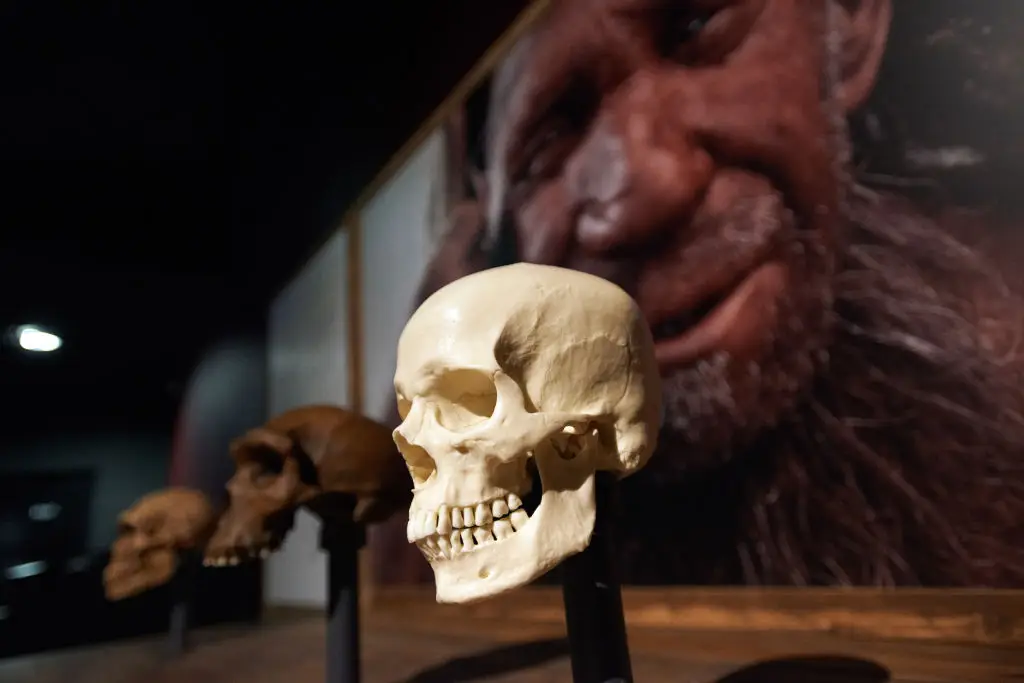
Due to the extreme distance in time from that period, little accurate information about the reproductive rates of Neanderthals, or much else at all of their existence, is known to science. Instead, the team used hunter-gatherer reproduction rates to calculate the rate at which these populations were replaced.
Their findings suggested that the typically small communities of Neanderthals would have experienced repeated genetic dilution from Homo Sapiens, who appeared to be frequently interbreeding with the other human species. This would likely have happened more rapidly if those Neanderthal genes helped some Homo Sapiens to expand further into the colder north of our planet.
While the model provides a 'robust' explanation for how the Neanderthals gradually disappeared from the Earth through inter-human breeding, it does not exclude many of the other pressures that their populations likely experienced 40,000 years ago.
This includes changes in the climate that they would have struggled to adapt to, increased competition for the slowly dwindling numbers of large prey like the mammoth, and their lack of genetic diversity from living in small isolated communities.
But with up to four per cent of their genetic code still existing within us today, as well as growing evidence that we shared a unique love of art and community, the most likely explanation for their disappearance appears to be that they never left in the first place.
Topics: History, Science, World News
 William Morgan