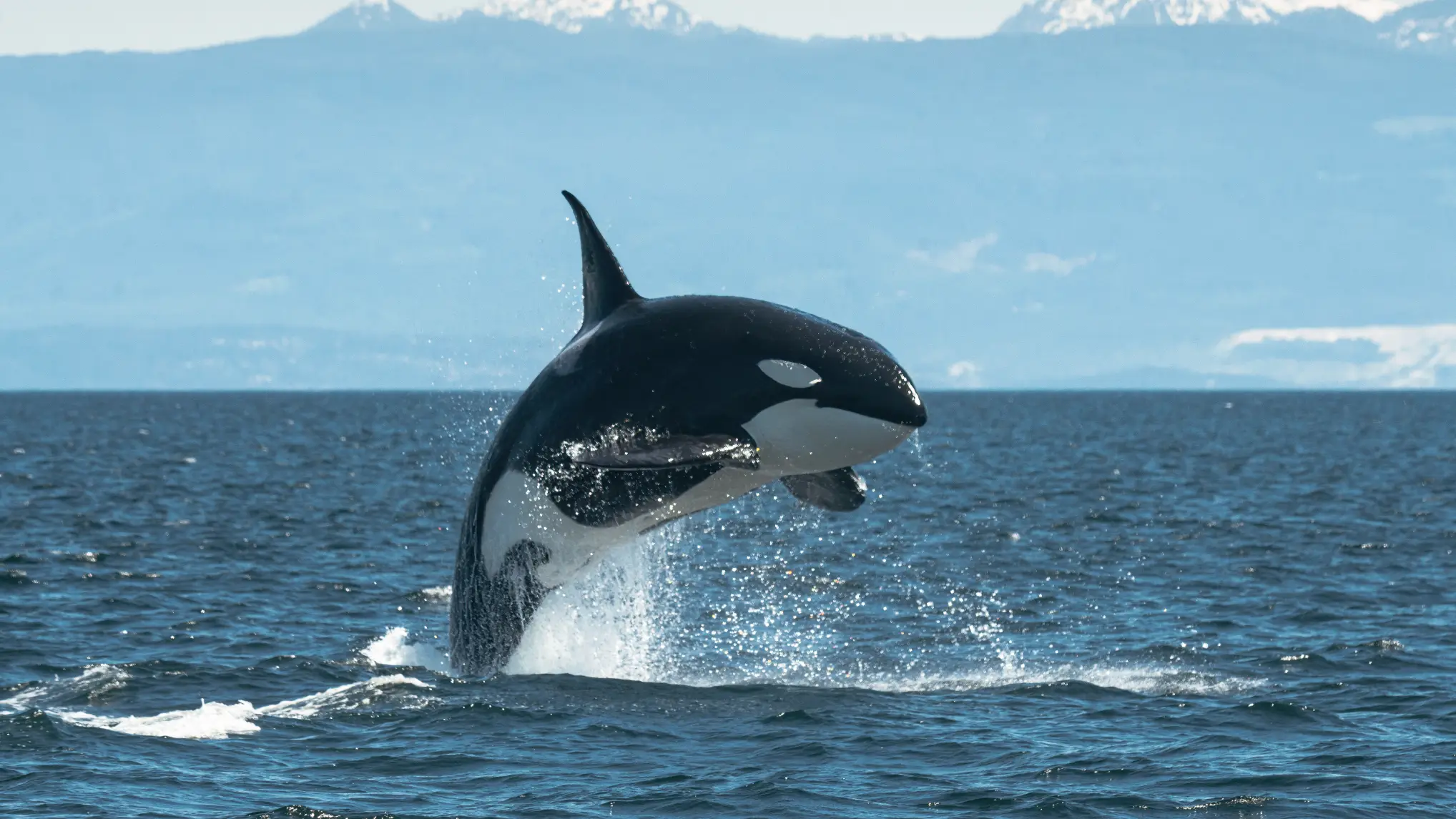
Scientists left baffled as they discover Orcas speaking new language that’s never been heard before

Orcas attacking yachts have been found to have an entirely new language never seen by scientists before.
Killer Whales, which are technically the largest member of the oceanic dolphin family, are the apex predator in the oceans, hunting everything from herrings to Blue Whales and even Great White Sharks, while having no natural predators themselves.
Seemingly nothing is safe from orcas, with their intelligence and immense physical power and speed making them terrifyingly effective hunters.
In recent years, this has included yachts being targeted by one particular pod of orcas, sparking viral social commentary about the super-rich.
Advert
The pod near Gibraltar was led by a matriarch known as White Gladis, and all were in relative silence for normally very vocal orcas.
Orcas are highly social, typically living in female-led pods, where they are highly vocal in communicating with each other.

Because orcas are so intelligent, they have sophisticated vocalizations which scientists have observed to be different depending on the orca population.
Not only that, but neighbouring populations sometimes even have similarities, suggesting dialects, and posing the fascinating question of whether they would be mutually intelligible to different groups of orcas.
They're not the only species to have this either, as Sperm Whales, which have the largest brain of any animal, also show 'dialects'.
But now scientists have identified a new dialect in the very pod that was going after yachts, comparing it to discovering a new language.
Renaud de Stephanis is a marine biologist, and told The Times: “We’ve been studying these orcas for 30 years.
“Until now they were thought to be very silent. But now we’ve learnt that their calls are totally, totally different to any others.
"From a cultural conservation point of view, that’s just amazing.
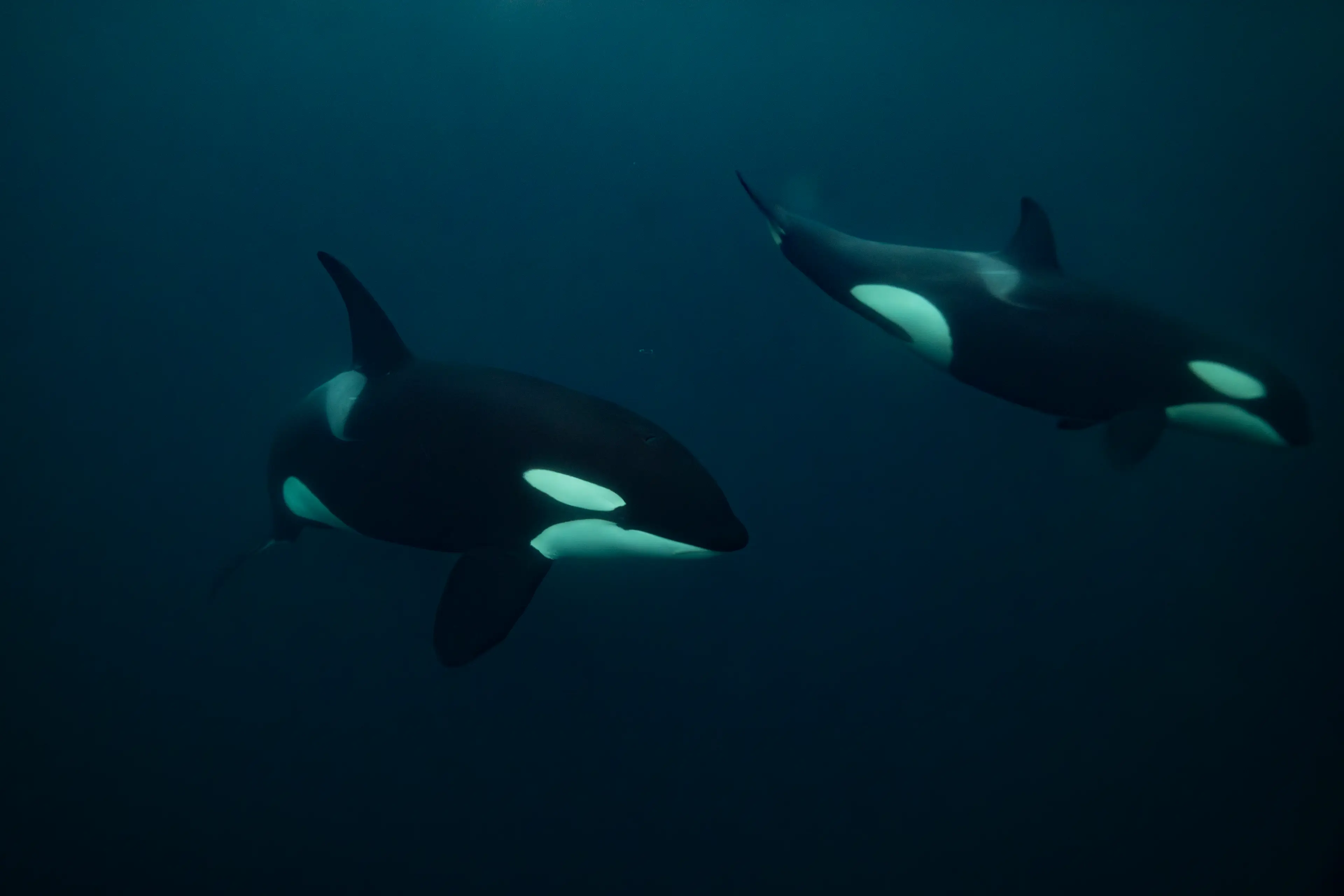
"It’s like suddenly finding a new [human] language in the middle of Europe.”
But just how different are these orcas from other populations?
De Stephanis explained that the difference is massive, and implied it would be highly unlikely to be mutually intelligible.
“It’s like the difference between Arabic and Latin,” he said.
A study on the orcas was published in the Journal of Marine Science and Engineering, and identified the calls as being used by around 40 orcas who range from the Strait of Gibraltar to the Atlantic coast of Iberia, and even as far as the English Channel on occasion.
Only around 15 of these are involved in attacking yachts, which consisted of around 700 interactions involving several sailing boats sinking.
In the wild, orcas have never been observed to fatally attack a human, though orcas held in captivity have killed people.
Topics: News, Animals, World News
 Kit Roberts