'Lost city' hidden 2,300 feet below the ocean could provide vital details on Earth's history

Hidden more than 2,300 feet beneath the surface of the Atlantic Ocean lies a landscape unlike anything else found on the planet.
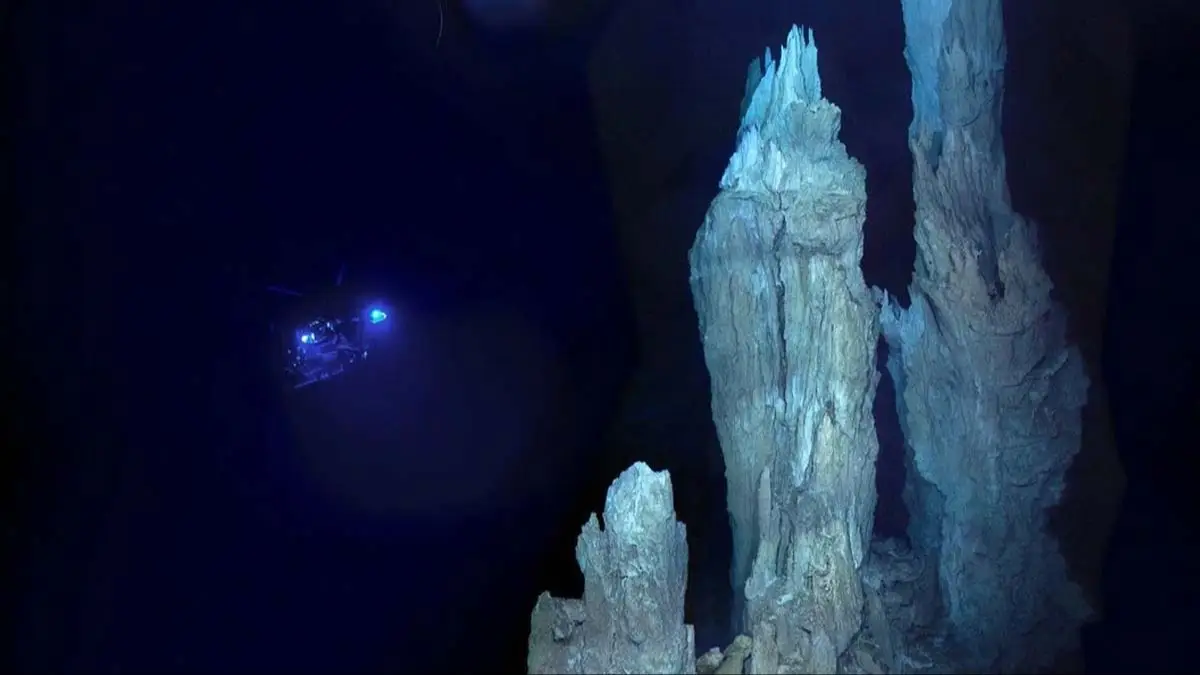
Close to the summit of an underwater mountain west of the Mid-Atlantic Ridge, a jagged collection of towers rises out of the darkness.
Their pale, creamy walls glow an eerie blue under the lights of remotely operated vehicles sent down to explore them.
Some of the formations are barely the size of a toadstool, while the largest stands at a staggering 60 meters, nearly 200 feet, tall.
What is The Lost City?
This otherworldly site is known as the Lost City, and scientists believe it could hold answers to one of humanity's biggest questions: how life on Earth actually began.
Advert
First discovered by researchers in 2000, the Lost City Hydrothermal Field is the longest-lived venting environment ever found in the ocean.
For at least 120,000 years, possibly far longer, mantle rock pushing up from deep within the Earth has reacted with seawater, releasing hydrogen, methane and other gases into the surrounding water.
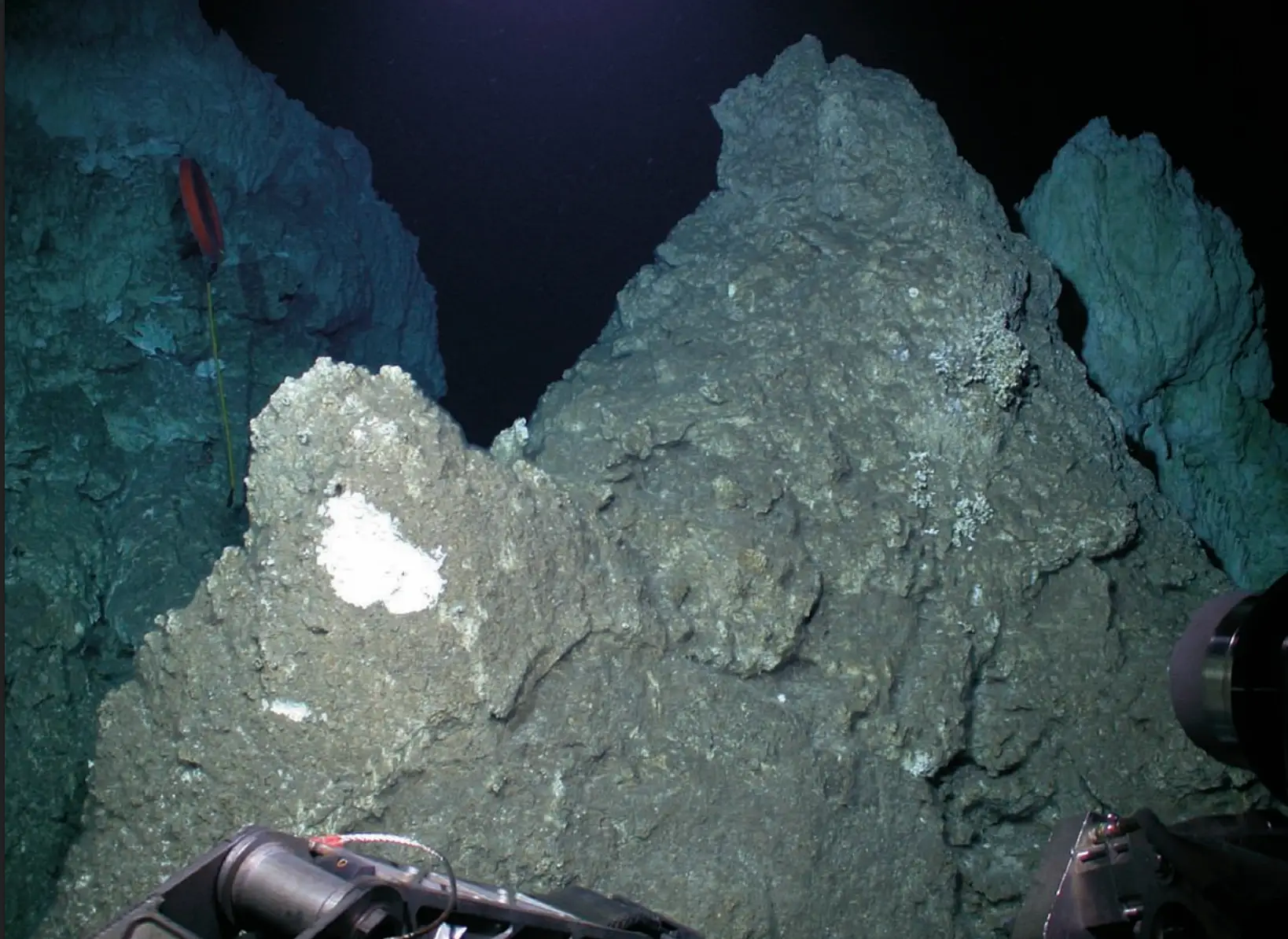
Despite the seemingly harsh conditions, the site is far from lifeless. Hydrocarbons produced in the vents feed unusual microbial communities that survive without any oxygen at all.
Chimneys venting gases as hot as 40°C are home to dense populations of snails and crustaceans, while larger creatures like crabs, shrimp, sea urchins and eels also make occasional appearances.
Researchers say site could hint at life beyond Earth
What makes the Lost City particularly significant is how its hydrocarbons are formed. Unlike most environments, they aren't created using sunlight or atmospheric carbon dioxide, but through chemical reactions taking place directly on the deep seafloor.
Since hydrocarbons are considered building blocks of life, scientists believe similar conditions could theoretically support life elsewhere in the solar system.
Microbiologist William Brazelton previously told The Smithsonian that this type of ecosystem could plausibly exist on other worlds entirely. "This is an example of a type of ecosystem that could be active on Enceladus or Europa right this second," he said, referring to two of the icy moons orbiting Saturn and Jupiter.
"And maybe Mars in the past."
The Lost City differs significantly from black smokers, another type of underwater volcanic vent often discussed as a possible origin point for life. While black smokers rely on heat from magma and produce mostly iron and sulfur-rich minerals, the Lost City's vents generate up to 100 times more hydrogen and methane, and its calcite structures are far larger, suggesting they've remained active for a much longer stretch of time.
Calls grow to protect the site from deep-sea mining
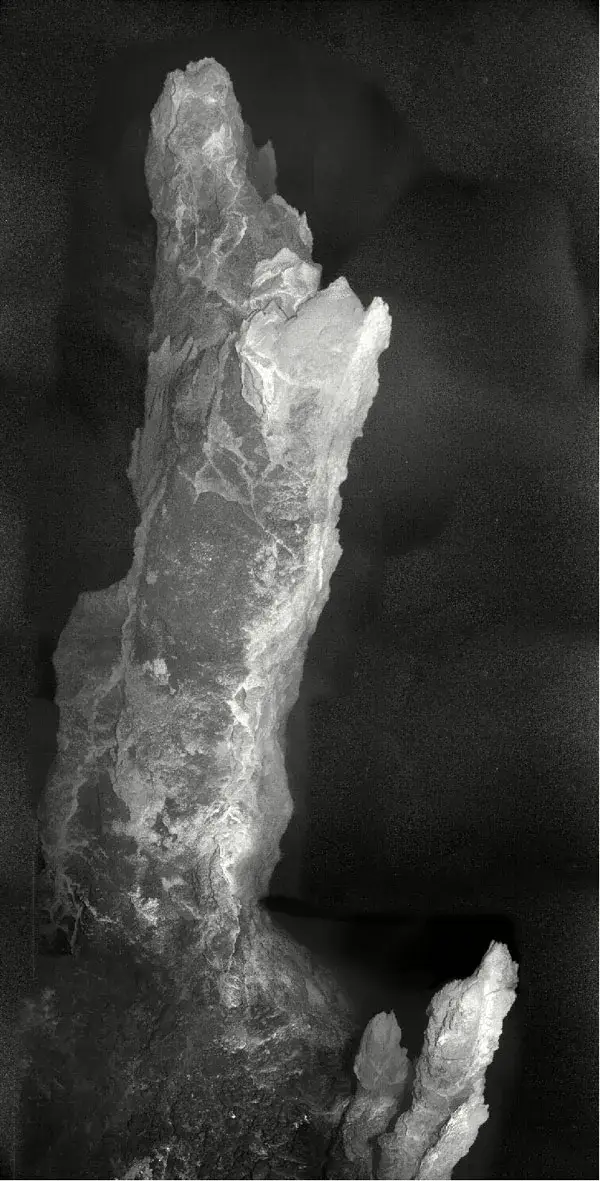
The tallest of the Lost City's formations has been named Poseidon, after the Greek god of the sea. Nearby, researchers from the University of Washington have described a cliffside area where fluid "weeps" out to form delicate, finger-like carbonate growths.
However, the site's future isn't guaranteed. In 2018, Poland was granted rights to mine the surrounding deep sea, raising concerns among scientists that nearby disturbances could send damaging plumes drifting over the fragile habitat, even though the thermal field itself holds no mineable resources.
As a result, some experts are now pushing for the Lost City to be officially listed as a World Heritage site, in hopes of preserving a structure that has quietly existed for tens of thousands of years before humans ever knew it was there.
Topics: Science, Environment, Climate Change, History
 Thomas Bamford