• News
  • Film and TV
  • Music
  • Tech
  • Features
  • Celebrity
  • Politics
  • Weird
  • Community
  • Advertise
  • Terms
  • Privacy & Cookies
  • LADbible Group
  • LADbible
  • SPORTbible
  • GAMINGbible
  • Tyla
  • UNILAD Tech
  • FOODbible
  • License Our Content
  • About Us & Contact
  • Jobs
  • Latest
  • Topics A-Z
  • Authors
Facebook
Instagram
X
Threads
TikTok
YouTube
Submit Your Content
Unknown structure discovered under sand near Great Pyramid of Giza in significant breakthrough for researchers

Home> News> World News

Published 12:19 13 May 2024 GMT+1

Unknown structure discovered under sand near Great Pyramid of Giza in significant breakthrough for researchers

Archaeologists working in Egypt found the structure without ever breaking ground

Emily Brown

Emily Brown

Featured Image Credit: Rasit Aydogan/Anadolu via Getty Images / Archaeological Prospection

Topics: Science, World News

Emily Brown
Emily Brown

Emily Brown is UNILAD Editorial Lead at LADbible Group. She first began delivering news when she was just 11 years old - with a paper route - before graduating with a BA Hons in English Language in the Media from Lancaster University. Emily joined UNILAD in 2018 to cover breaking news, trending stories and longer form features. She went on to become Community Desk Lead, commissioning and writing human interest stories from across the globe, before moving to the role of Editorial Lead. Emily now works alongside the UNILAD Editor to ensure the page delivers accurate, interesting and high quality content.

Advert

Advert

Advert

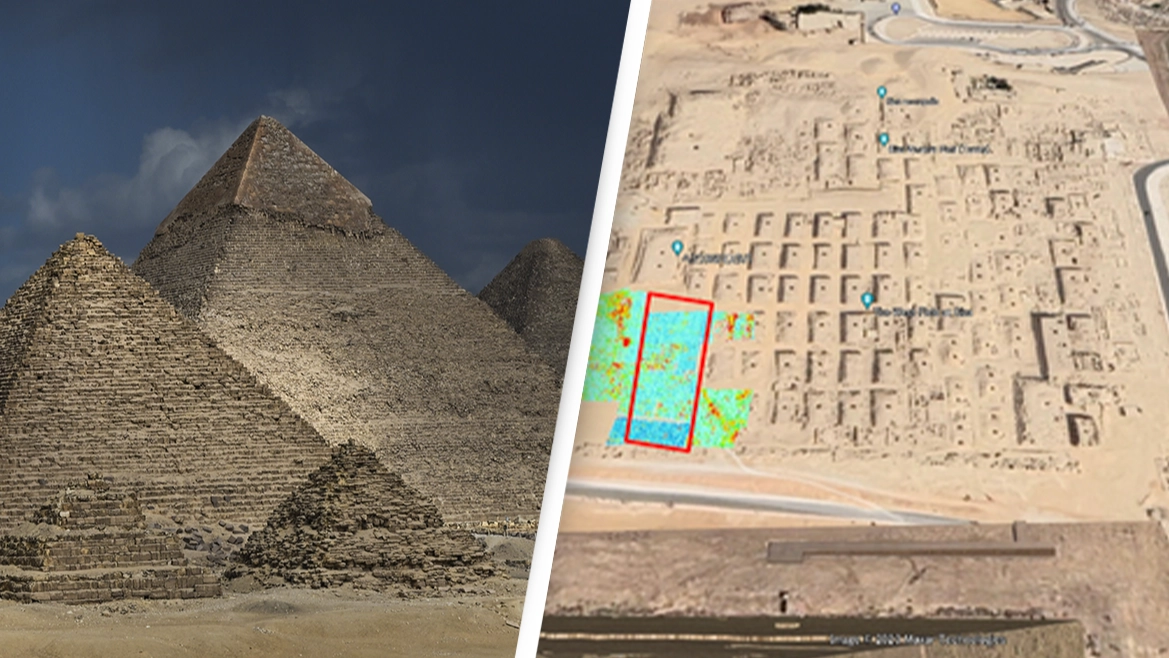
Archaeologists in Egypt may have made a breakthrough in research thanks to the discovery of an unusual structure hidden under the ground near the Great Pyramid of Giza.

Centuries after the pyramids were first built, the discoveries by those working at the site just keep coming.
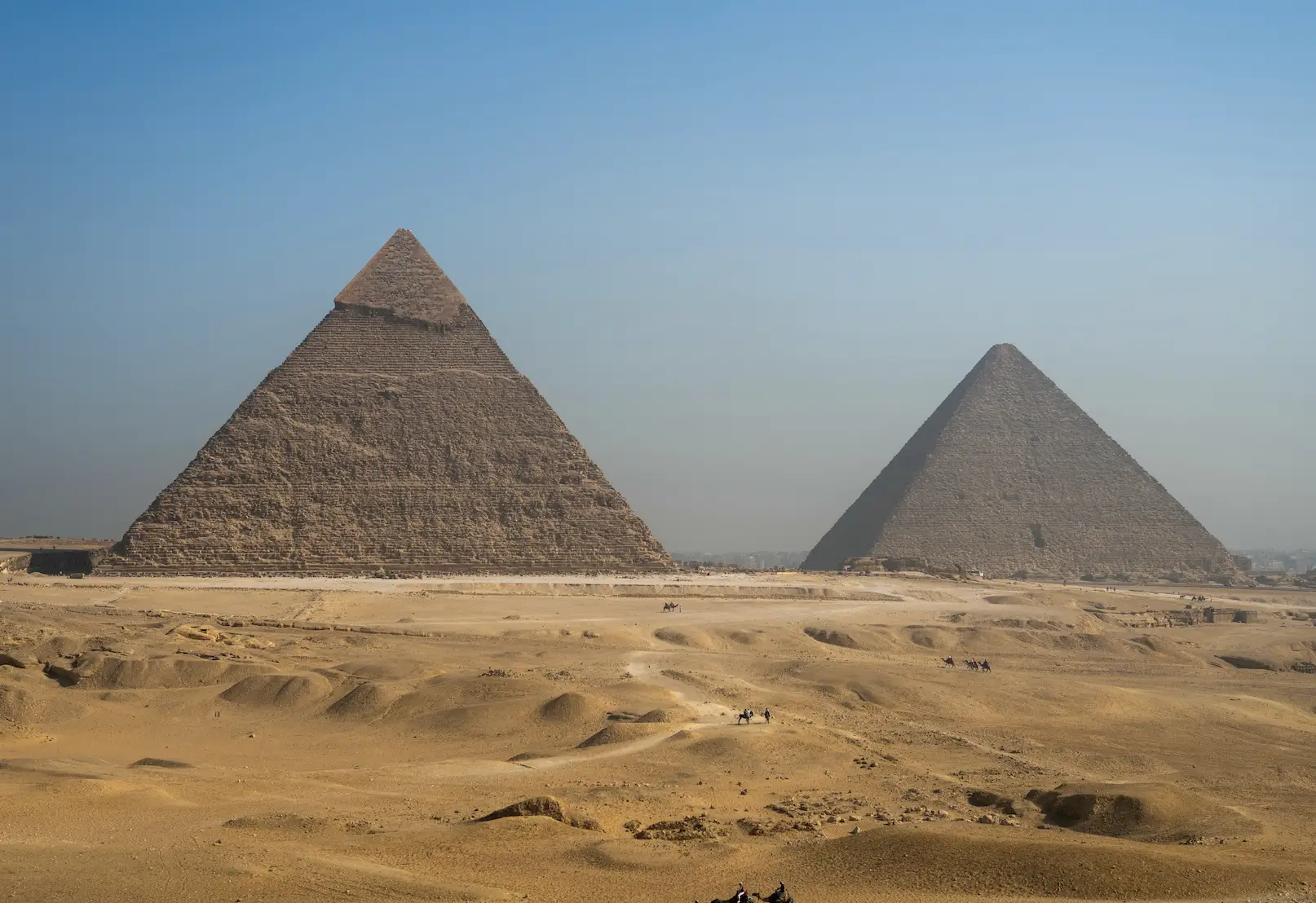
Research began on a new area in 2021. (JEWEL SAMAD/AFP via Getty Images)

The recent findings were detailed in a report published on 5 May by researchers from Egypt’s National Research Institute of Astronomy and Geophysics, as well as Japan’s Higashi Nippon International University and Tohoku University.

Advert

Located between one-and-a-half and six-and-a-half feet below the surface of the Western Cemetery, adjacent to the Great Pyramid of Khufu - also known as the Great Pyramid of Giza - the structure forms an unusual L-shape and measures roughly 33 by 49 feet.

Unlike the pyramids rising from above the ground, the structure is completely filled with sand, leading researchers to believe it may have been filled after it was constructed.

The mysteries don't stop there, as beneath the structure, at a depth between about 16 and 33 feet, is what the team described as a 'highly electrically resistive anomaly' measuring about 33 by 33 feet.
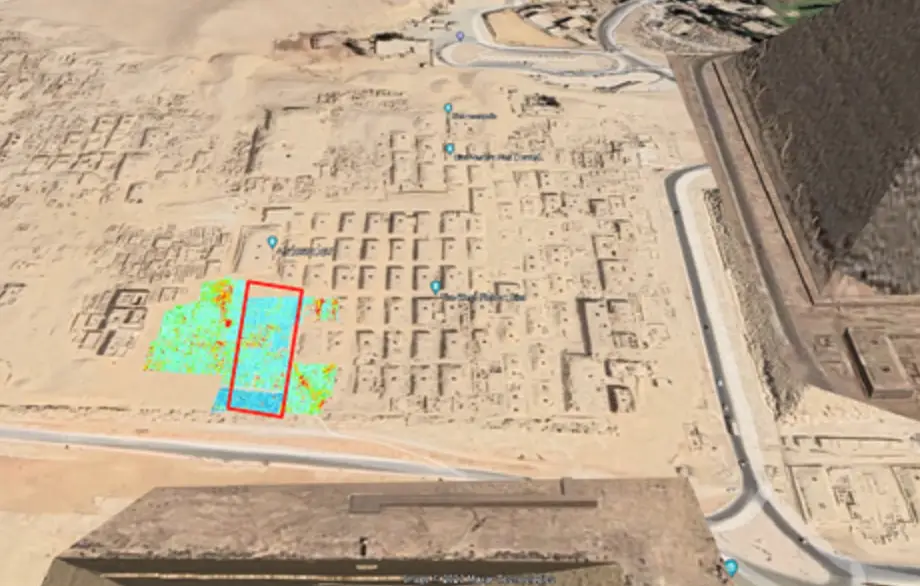
The structure is located near the Western Cemetery. (Google Maps/Archaeological Prospection)

Advert

According to the researchers, 'electrically resistive material in a sand dune can be a mixture of sand and gravel, including sparse spacing or air voids within it'.

The placement of the structure in the Western Cemetery is helping to form some of the theories about it, as the area is home to the tombs of King Khufu’s family members, who are buried above burial shafts.

However, the area where the new structure has been found seemed to be empty of tombs, instead appearing simply as a patch of sand.

"There are no significant remains above ground in this area, but is there really nothing below the ground?," the team asked in their report.

Advert

"No underground investigations have previously been carried out."
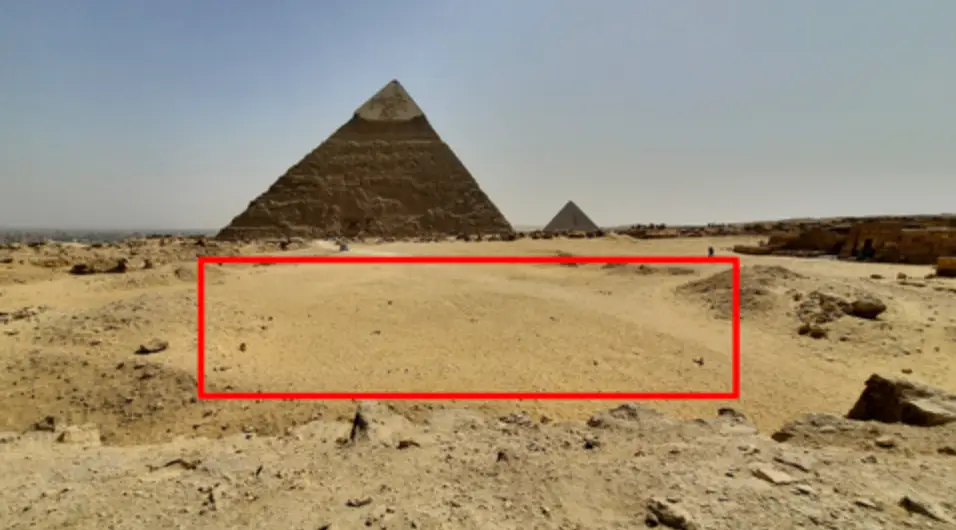
The structure was filled in after being built. (Archaeological Prospection)

Using ground-penetrating radar (GPR) and electrical resistivity tomography (ERT), the researchers mapped the area and have hypothesized that the upper structure 'could be vertical walls of limestone or shafts'.

Below, the archeologists believe there could be a tomb - though they've stressed that a 'more detailed survey would be required in order to confirm this possibility'.

Advert

The research began in 2021 and has been published in the journal Archaeological Prospection, where the team shared their thoughts on the significance of the finding.

“We believe that the continuity of the shallow structure and the deep large structure is important,” they wrote.

The true significance, however, will not be revealed until further research has been carried out.

Choose your content:

4 mins ago
an hour ago
2 hours ago
  • colewalliser/TikTok
    4 mins ago

    Jennifer Lopez savagely called out online after 'rude' interaction at Golden Globes goes viral

    JLo has been dragged all over social media

    Celebrity
  • Peter Dazeley/Getty Images)Peter Dazeley/Getty Images
    an hour ago

    'Mounjaro penis' explained as man claims weight loss drug added '3 inches' to his manhood

    The drug allegedly has an unusual effect on one particular part of the body

    News
  • X
    an hour ago

    Shocking detail in incident report from Renee Nicole Good's injuries after being shot by ICE agent

    Renee had just dropped off her six-year-old son before she was killed

    News
  • Robert Kamau/GC Images via Getty Images
    2 hours ago

    Rihanna's blunt five-word response to bodyguard after he left her to get hit by a door

    The singer left social media commenters debating the moment

    Celebrity
  • Mysterious structure spotted near Egypt's pyramids on Google Maps sparks bizarre theories
  • Archaeologists claim they discovered Santa Claus' 'original burial site' in major breakthrough
  • Global study reveals shocking number of adults qualify for weight loss injections
  • Million-year-old skull could rewrite entire timeline of human evolution according to researchers