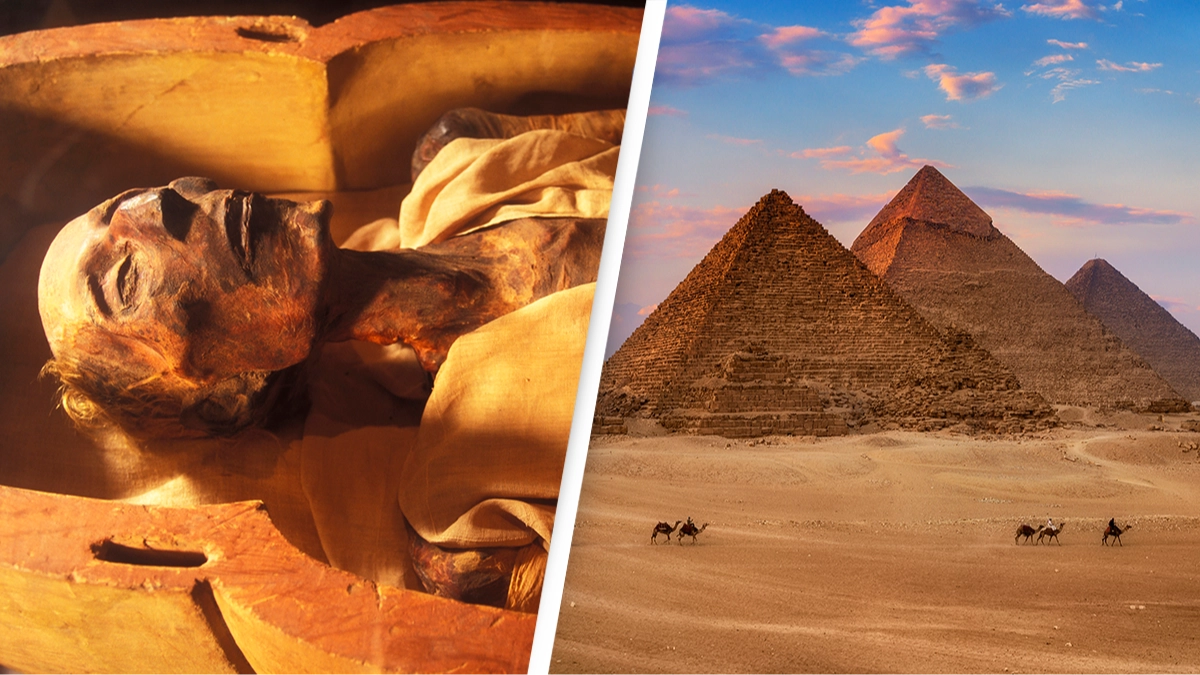
Egypt's most powerful pharaoh unearthed more than 3,000 years after his death

Archaeologists have unearthed the lost sarcophagus of an Ancient Egyptian pharaoh.
However, this is not just any pharaoh, but possibly one of the most powerful and widely known pharaohs from Ancient Egypt.
Advert
This is Ramesses II, also known as Ramesses the Great, and is probably the most well-known pharaoh after Tutankhamun.
But while Tutankhamun is know more for his tomb than his reign, Ramesses II could not be more different.
That's because he was one of the most powerful and influential pharaohs to rule in Ancient Egypt.
His reign lasted from 1279 to 1213BC, when Ancient Egypt was at the height of its imperial power.
Many gargantuan statues of the ancient pharaoh still exist, and these give us an indication of how powerful Ramesses was.
His influence was so great that subsequent pharaohs even referred to him as 'The Great Ancestor'.
Archaeologists and historians know that when he died, Ramesses was originally buried in a golden coffin.
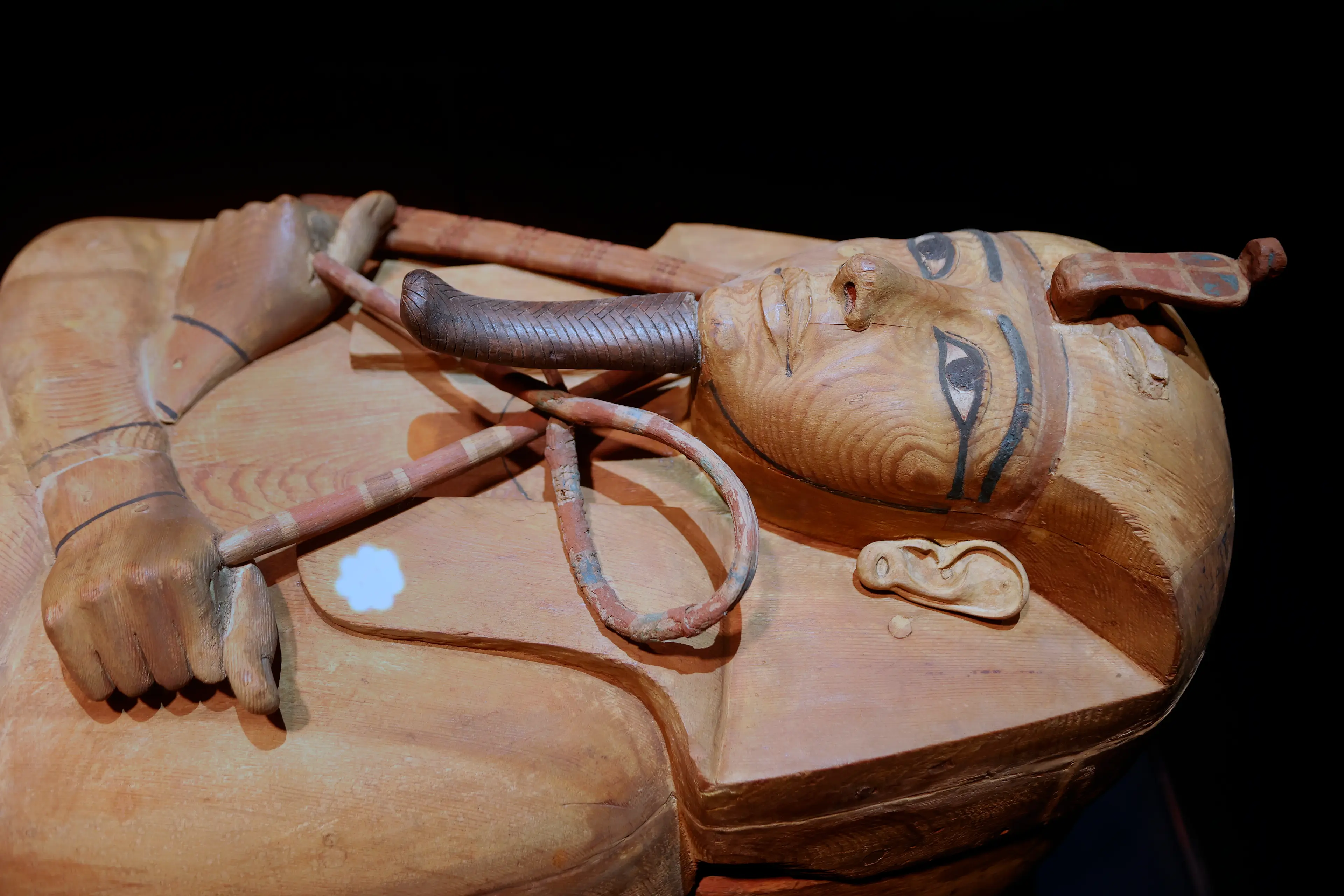
However, this was stolen in antiquity and he was re-interred in an alabaster sarcophagus that was later destroyed.
But now archaeologists have found a sarcophagus that they think may once have contained the mortal remains of Egypt's greatest pharaoh himself.
It was found under the floor in a religious centre and contained the mummified remains not of Ramesses himself, but of a high priest.
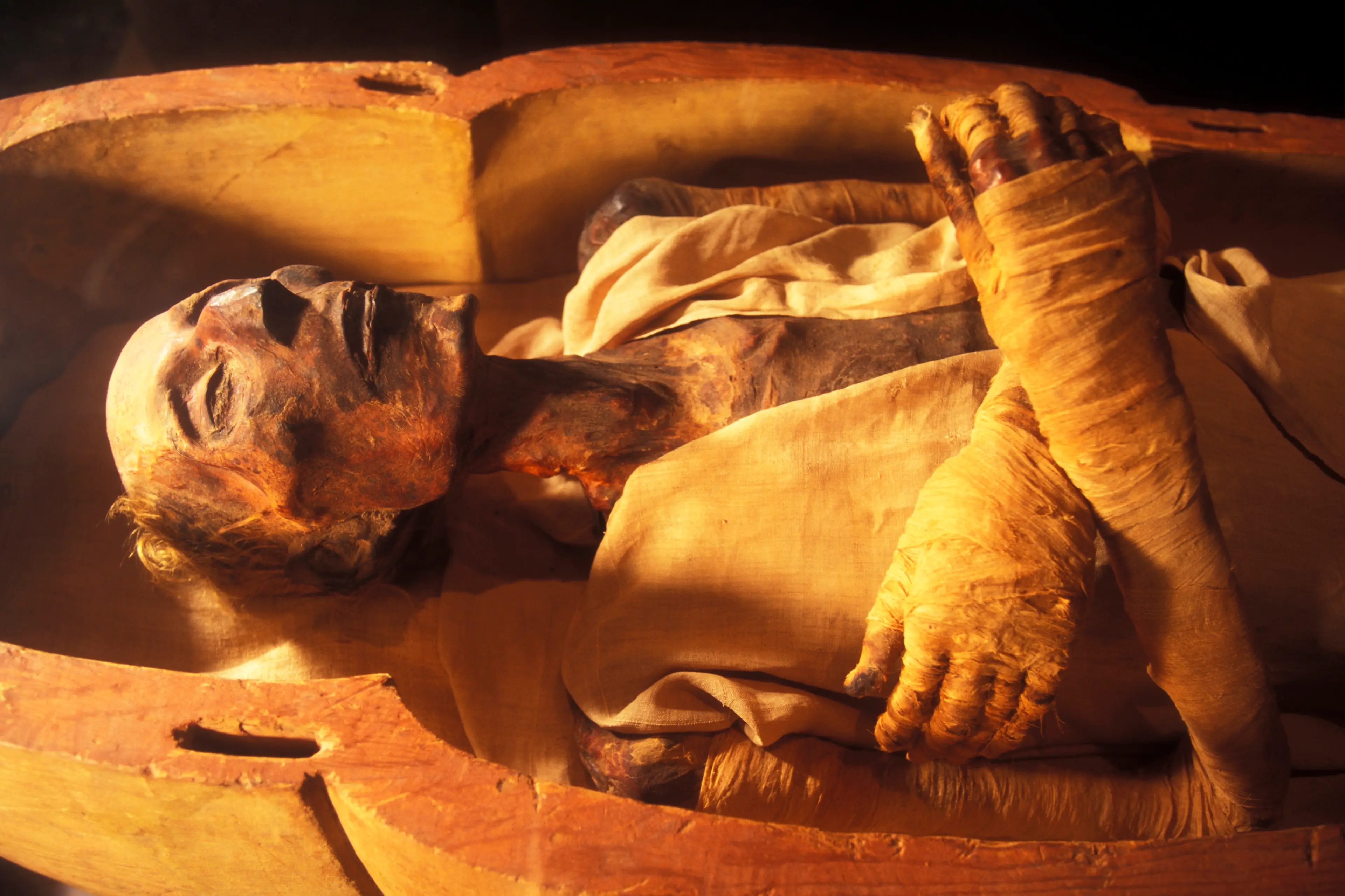
But if you were wondering, the mummified remains of the pharaoh were rediscovered in 1881 in an ordinary wooden coffin.
But this new discovery tells us more about the journey he went on, as well as the burial practices in Ancient Egypt.
Specifically, it indicates that it was a practice to reuse some of the materials used in burial, even for the very greatest.
Frédéric Payraudeau is an egyptologist who teaches at the Sorbonne in France, described the discovery of the coffin.
He said: 'When I read these results, I was overcome with doubt. I asked my American colleague if I could re-study the file, which he accepted given the complexity of this case.
"My colleagues believed that the cartouche preceded by the word 'king' designated the high priest Menkheperre who governed southern Egypt around 1000 BC.
"However, this cartridge actually dated from the previous engraving and therefore designated its first owner."
And, of course, this first owner turned out to be Ramesses.
Payraudeau said: "The royal cartouche contains the coronation name of Ramses II, which is specific to him, but this was masked by the condition of the stone and by a second engraving, added during the reuse."
He added: "This discovery is new proof that at this time, the Valley of the Kings was the subject not only of looting but also of the reuse of funerary objects by subsequent sovereigns."
Topics: History, News, World News, Egypt
 Kit Roberts