unilad homepage
unilad homepage
  • News
    • UK News
    • US News
    • World News
    • Crime
    • Health
    • Money
    • Sport
    • Travel
  • Music
  • Technology
  • Film and TV
    • News
    • DC Comics
    • Disney
    • Marvel
    • Netflix
  • Celebrity
  • Politics
  • Advertise
  • Terms
  • Privacy & Cookies
  • LADbible Group
  • LADbible
  • SPORTbible
  • GAMINGbible
  • Tyla
  • UNILAD Tech
  • FOODbible
  • License Our Content
  • About Us & Contact
  • Jobs
  • Latest
  • Archive
  • Topics A-Z
  • Authors
Facebook
Instagram
X
Threads
TikTok
YouTube
Submit Your Content
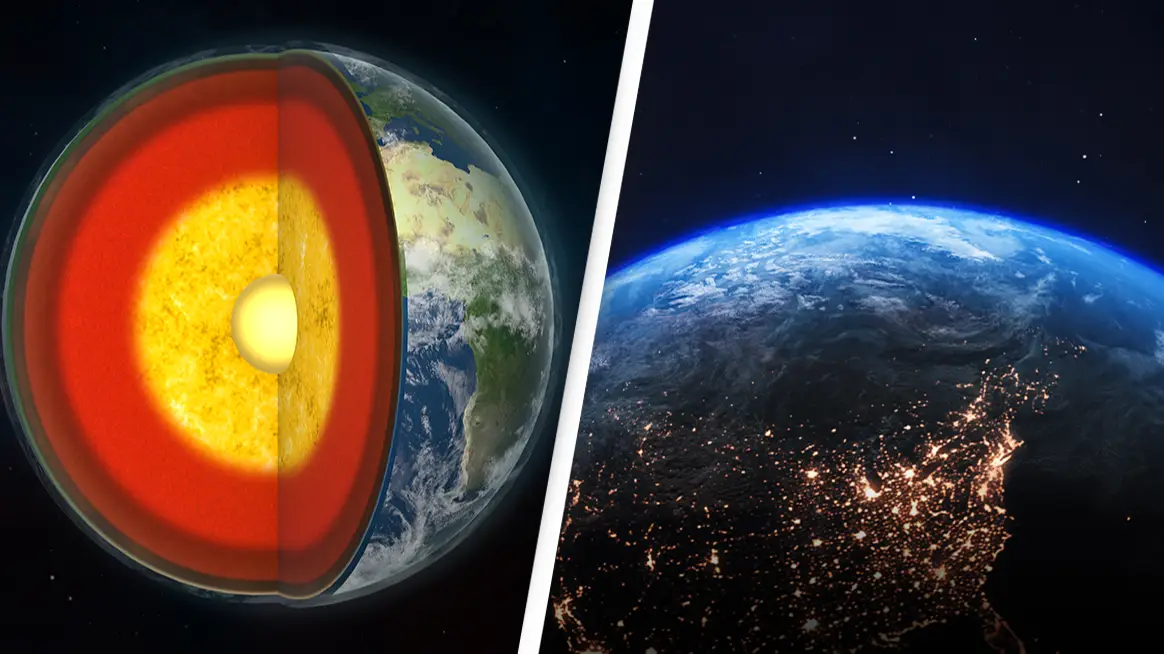
Earth’s inner core is ‘backtracking’ and it could have an impact on time
Home>News>World News
Published 11:55 26 Jun 2024 GMT+1

Earth’s inner core is ‘backtracking’ and it could have an impact on time

The findings offered conclusive answers on a long-debated topic

Emily Brown

Emily Brown

google discoverFollow us on Google Discover
Featured Image Credit: Getty Stock

Topics: Earth, Science, World News

Emily Brown
Emily Brown

Emily Brown is UNILAD Editorial Lead at LADbible Group. She first began delivering news when she was just 11 years old - with a paper route - before graduating with a BA Hons in English Language in the Media from Lancaster University. Emily joined UNILAD in 2018 to cover breaking news, trending stories and longer form features. She went on to become Community Desk Lead, commissioning and writing human interest stories from across the globe, before moving to the role of Editorial Lead. Emily now works alongside the UNILAD Editor to ensure the page delivers accurate, interesting and high quality content.

Advert

Advert

Advert

Humans backtrack all the time; attempting to get out of plans, promises or comments taken the wrong way, and now it seems the Earth itself is following our lead.

According to a study from the University of Southern California, researchers have found evidence that the Earth’s inner core is 'backtracking' - and it's been doing so for some time.

Since the Earth's inner core is hidden 3,000 miles under our feet, it can't be studied in person, meaning scientists typically have to analyze renderings of the inner core’s movement created using the seismic waves of earthquakes.

Advert

In this particular study, researchers looked at seismic data recorded around the South Sandwich Islands from 121 repeating earthquakes - earthquakes that occur at the same location - which occurred between 1991 and 2023, along with data from a number of nuclear tests.

The topic of movement of the inner core is one which has been debated by the scientific community for two decades, but the findings of the USC study determined that the core has, in fact, slowed down.
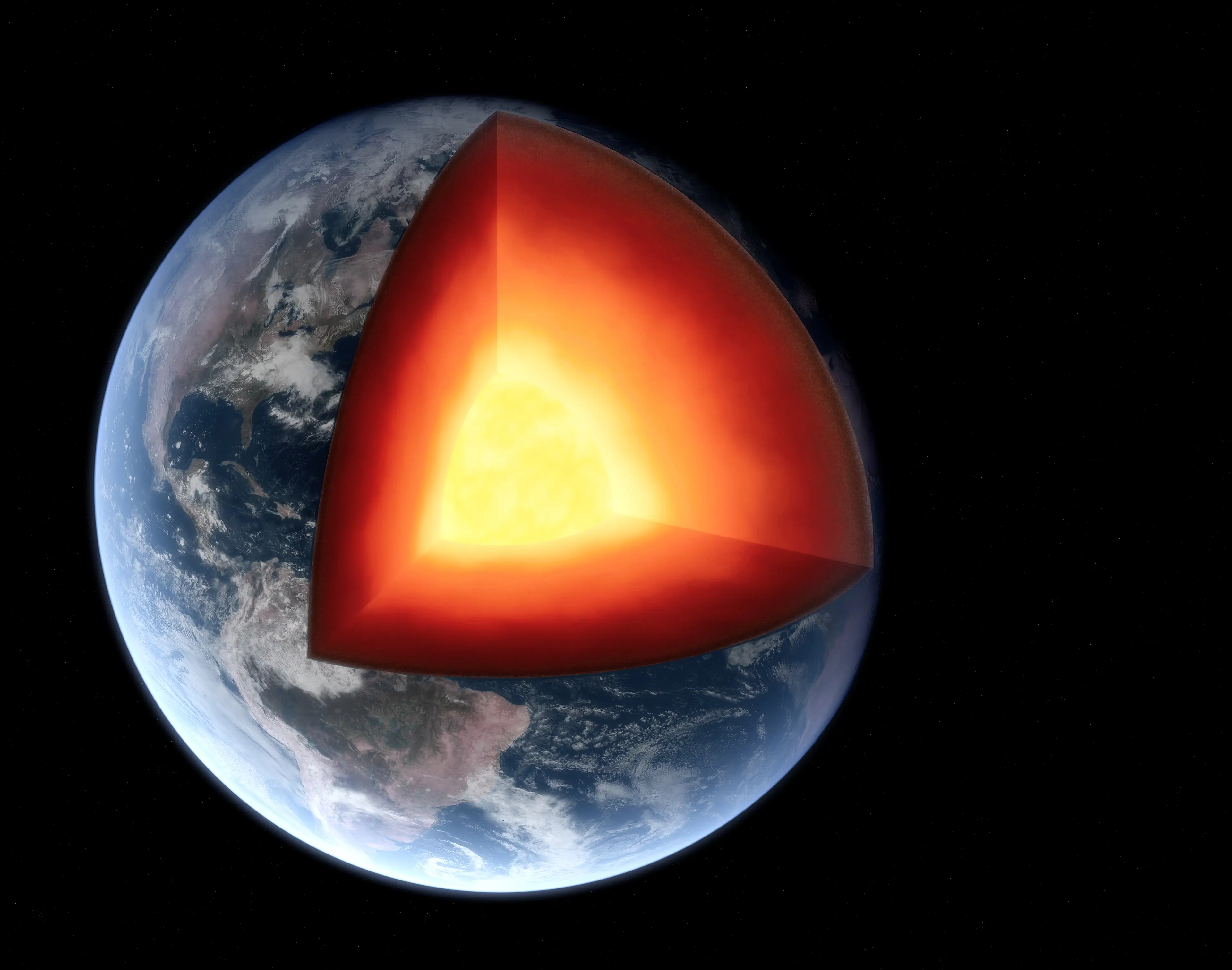
The Earth's core is hidden beneath our feet. (Getty Stock Photo)

John Vidale, Dean’s Professor of Earth Sciences at the USC Dornsife College of Letters, Arts and Sciences, commented: “When I first saw the seismograms that hinted at this change, I was stumped. But when we found two dozen more observations signaling the same pattern, the result was inescapable."

The research revealed that the inner core began to decrease its speed around 2010, and is considered now to be reversing in relation to the planet's surface.

For the first time in approximately 40 years, the inner core is moving slightly slower, instead of faster, than the Earth’s mantle.

More research is needed to learn why the core is slowing. (Getty Stock Photo)

"The inner core had slowed down for the first time in many decades," Vidale said. "Other scientists have recently argued for similar and different models, but our latest study provides the most convincing resolution.”

Though the inner core isn't something we can see, the changes it's experiencing could impact time itself - although we probably won't notice it.

Vidale explained: “It’s very hard to notice, on the order of a thousandth of a second, almost lost in the noise of the churning oceans and atmosphere.”

Following the initial research, the USC scientists hope to chart the trajectory of the inner core in even greater detail with goals to figure out exactly why it's changing.

“The dance of the inner core might be even more lively than we know so far,” Vidale concluded.

Choose your content:

27 mins ago
an hour ago
2 hours ago
  • Getty Stock Images
    27 mins ago

    Silent condition people taking GLP-1 weight loss drugs need to know about

    The health expert revealed 10 foods those using GLP-1 weight loss drugs should be eating

    News
  • Getty Stock Photo
    an hour ago

    Americans could soon take 'banned' flight to country for first time in over 40 years

    Flights to the Middle Eastern country were banned after the hijacking of TWA flight 847

    News
  • US Department of Justice
    2 hours ago

    Epstein-linked modeling scout Daniel Siad found dead at home

    The 69-year-old was under investigation in France

    News
  • Getty Stock Photo
    2 hours ago

    Amazon Prime customers have just days left to claim from $2,500,000,000 lawsuit

    Some current and former Prime customers could be entitled up to $51

    News
  • 'Super' El Niño could have a devastating impact on women, charity warns
  • The truth behind Earth’s newly discovered ‘second moon’ and why it won’t be here for long
  • Scientists say length of days on Earth is increasing at an 'unprecedented' rate
  • NASA explains best way and time to watch Orionid meteor shower and 20 shooting stars an hour