unilad homepage
  • News
    • UK News
    • US News
    • World News
    • Crime
    • Health
    • Money
    • Sport
    • Travel
  • Film and TV
    • Netflix
  • Music
  • Tech
  • Features
  • Celebrity
  • Politics
  • Advertise
  • Terms
  • Privacy & Cookies
  • LADbible Group
  • LADbible
  • SPORTbible
  • GAMINGbible
  • Tyla
  • UNILAD Tech
  • FOODbible
  • License Our Content
  • About Us & Contact
  • Jobs
  • Latest
  • Archive
  • Topics A-Z
  • Authors
Facebook
Instagram
X
Threads
TikTok
YouTube
Submit Your Content
Scientists reveal Antarctica's tallest active volcano is blasting out gold that could be worth a fortune

Home> News> World News

Published 19:00 15 Apr 2024 GMT+1

Scientists reveal Antarctica's tallest active volcano is blasting out gold that could be worth a fortune

You say you wish money grew on trees, but how about gold spewing from a volcano?

Poppy Bilderbeck

Poppy Bilderbeck

google discoverFollow us on Google Discover
Featured Image Credit: YouTube/GeologyHub / Getty Stock Image

Topics: Environment, Money, Science, World News, Nature, Travel, Antarctica, Volcano

Poppy Bilderbeck
Poppy Bilderbeck

Poppy Bilderbeck is a freelance journalist with words in Daily Express, Cosmopolitan UK, LADbible, UNILAD and Tyla. She is a former Senior Journalist at LADbible Group. She graduated from The University of Manchester in 2021 with a First in English Literature and Drama, where alongside her studies she was Editor-in-Chief of The Tab Manchester. Poppy is most comfortable when chatting about all things mental health, is proving a drama degree is far from useless by watching and reviewing as many TV shows and films as possible.

Advert

Advert

Advert

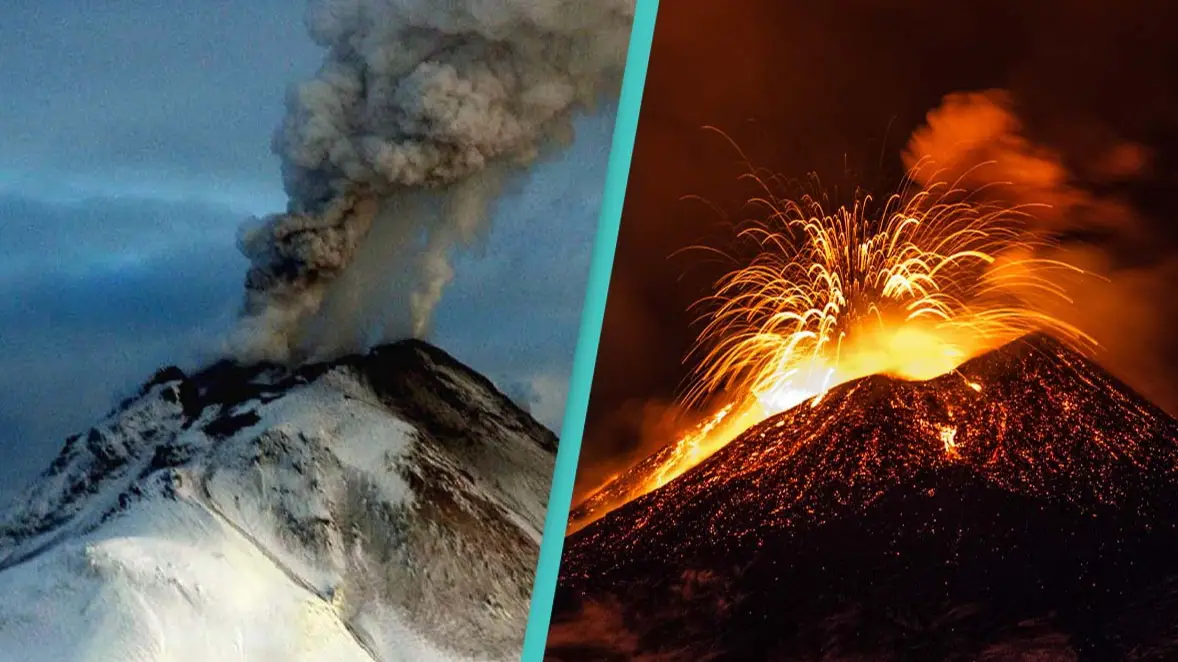
There's a volcano in Antarctica that spews out literal bits of gold.

If only money grew on trees or fell from the sky eh? Well, if you fancy a trip to the cold depths of Antarctica and fancy your chances getting fairly up close and personal with the highest active volcano in the continent, the latter of these scenarios almost comes true.
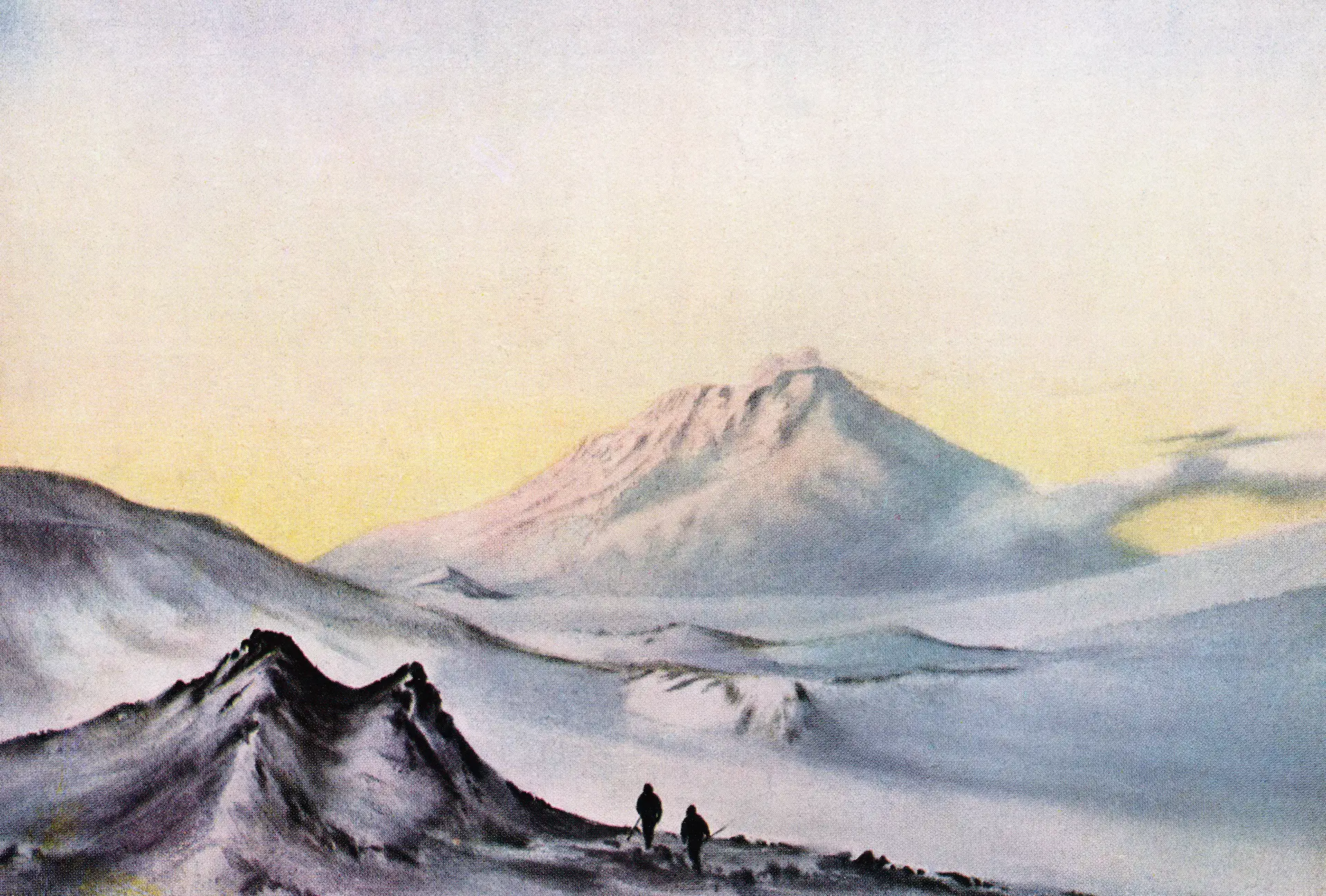
The mountain is the tallest active volcano in Antarctica. (Universal History Archive/Universal Images Group via Getty Images)

American geologists made the discovery back in 1991, New Scientist reports.

Advert

At the time, geologists found gold particles in the volcanic gases and in snow near to the volcano, with IFL Science stating particles of the precious metal were even detected 1,000km (621 miles) away.

And the volcano remains active to this day.

Philip Kyle, from the New Mexico Institute of Mining and Technology in Socorro, explained gold deposits can originate in volcanic rock and so when lava from the mountain - which has a summit elevation of 3,794 meters (12,448 feet) - emits hot gas, this carries some of the gold particles into the air.

But how much gold is spewed out and what is this gold-spewing mountain called? I hear you cry.

Well, it's called Mount Erebus and the gold flecks which American geologists found spewing out of it measured between '0.1 and 20 micrometers' in the volcanic gases and '60 micrometers' in nearby snow.

Still, while this amount may seem minuscule, over the course of a single day, scientists estimate that the volcano churns out around 80g (2.8 ounces) of gold.

According to Gold.co.uk, at the time of writing, the current price of a gram of gold is $75.76.

This means the volcano spews out around $6,000 worth of gold every day - although, this probably depends on the quality and certain other factors, I'm no expert in gold - unfortunately.

However, there's a much more grave and important reason as to why people travel down to visit the mountain.

Gold specks were found spewed out the mountain during an expedition in the early 90s. (Pexels/ cottonbro studio)

Mount Erebus is also known for being the scene of tragedy.

On November 28, 1979, Air New Zealand Flight 901 crashed into the side of the mountain.

It had been flying over Ross Island where Mount Erebus is located as part of its scheduled antarctic sightseeing flights which had been operating since 1977.

All 237 passengers and 20 members of crew on board were killed in the crash and from that day forward Air New Zealand stopped all of its flyovers across Antarctica.

The disaster became known as the Erebus disaster.

If you have experienced a bereavement and would like to speak with someone in confidence, contact The Compassionate Friends on (877) 969-0010.

Choose your content:

11 mins ago
an hour ago
2 hours ago
  • Instagram/@maraflavia
    11 mins ago

    Brazilian fitness influencer Mara Flávia dies aged 38 from drowning during Ironman competition in Texas

    Montgomery County Sheriff’s Office in Texas confirmed the news of the death on social media

    News
  • Win McNamee/Getty Images
    an hour ago

    FBI Director Kash Patel files $250 million defamation lawsuit over drinking claims

    Allegations that Kash Patel has 'bouts of excessive drinking' has led the FBI director to file a massive lawsuit

    News
  • Warner Bros.
    an hour ago

    Daniel Radcliffe ranks his Harry Potter films and reveals surprising pick for his least favorite

    Daniel Radcliffe has revealed what his favorite movie in the Harry Potter franchise is

    Film & TV
  • Joshua Applegate/WireImage
    2 hours ago

    Singer D4vd officially charged with murder of teen girl found dismembered in his car

    The singer has been accused of murdering Celeste Rivas Hernandez

    Celebrity
  • Huge rescue mission underway after tourist gets trapped 1,600ft down active volcano
  • Heartbreaking final text message tourist sent to mom before she died after being trapped down active volcano
  • Scientists discover mysterious inscription on ancient tomb that could reveal Count Dracula's final resting place
  • Scientists reveal how they will try to 'dim the sun' in new $66,000,000 project to combat global warming