World's most powerful passports revealed as US drops to its lowest ranking ever

For the first time since the Henley Passport Index launched twenty years ago, the US passport is no longer among the world’s top 10.
The Henley Passport Index, which ranks countries based on how many destinations citizens can enter without a visa or with one on arrival, has tracked global mobility since 2006.
Compiled by Henley & Partners using International Air Transport Association data, it’s long been a badge of soft power.
Ten years ago, the US passport held the top spot. This year, it has dropped two places from 2024, which is the first time it has fallen out of the top 10.
Advert
Recent policy changes have contributed to the decline. In April, Brazil reinstated visa requirements for US travelers, explaining that the move was about fairness, as Americans don’t grant Brazilians the same visa-free access.
China expanded its visa-free list but left out the US, while smaller nations like Myanmar and Papua New Guinea also tightened entry rules.
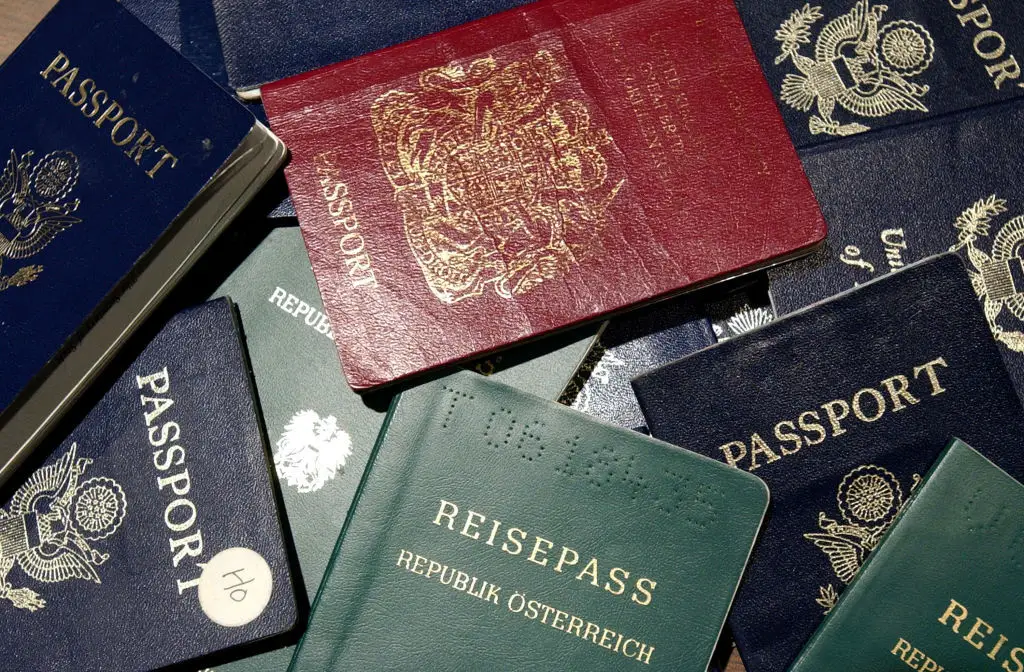
Even minor updates, like e-visa systems in Somalia or exclusions by Vietnam, chipped away at the number of countries open to Americans.
Henley & Partners said those small moves added up, reducing the power of what was once one of the strongest passports in the world.
Another issue is reciprocity. The US only allows visa-free entry for 46 countries, while American travelers can visit 180 without one. That uneven policy has made some governments less eager to return the favour.
In July 2025, CNN Business editor-at-large Richard Quest shed light on the weakening performance of the US passport, noting that travel freedom was being limited by new measures like the European Union’s and the UK’s ESTA systems.
Quest said: “Can we make a linkage, if you will, to immigration policies of the Trump administration?
“Yes, you probably can, at some level, say there is a direct relation between one and the other.”
He added that the passports at the top of the rankings remain highly desirable, with very few restrictions overall.
Quest noted that 'there are certainly citizenships that give greater access and availability to travel', and that wealthy individuals often try to secure them through investment programs, such as Trump’s proposed $5 million 'gold card'.
Henley & Partners advises clients on exactly these kinds of residence and citizenship opportunities.
“But for the average person, it’s not a jot of difference,” said Quest. “You’ve got your passport, you’ve got where you are. Learn and live with it.”
Singapore now ranks first, allowing its citizens visa-free access to 193 destinations. South Korea comes next with 190, followed by Japan with 189.
Major European countries like Germany, Italy, and Switzerland also remain near the top of the list.
Topics: Donald Trump, World News, Travel
 Vinay Sharma