unilad homepage
unilad homepage
  • News
    • UK News
    • US News
    • World News
    • Crime
    • Health
    • Money
    • Sport
    • Travel
  • Music
  • Technology
  • Film and TV
    • News
    • DC Comics
    • Disney
    • Marvel
    • Netflix
  • Celebrity
  • Politics
  • Advertise
  • Terms
  • Privacy & Cookies
  • LADbible Group
  • LADbible
  • SPORTbible
  • GAMINGbible
  • Tyla
  • UNILAD Tech
  • FOODbible
  • License Our Content
  • About Us & Contact
  • Jobs
  • Latest
  • Archive
  • Topics A-Z
  • Authors
Facebook
Instagram
X
Threads
TikTok
YouTube
Submit Your Content
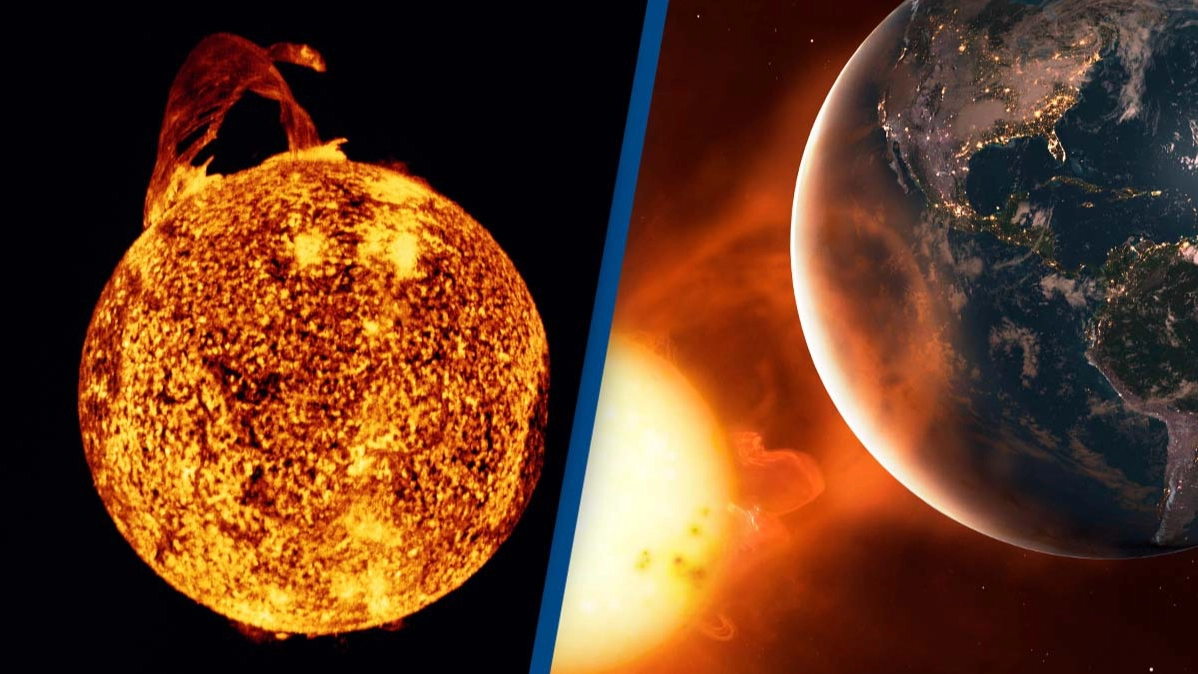
Scientists predict solar storms coming are so powerful they can cripple the internet for weeks
Home>News
Published 20:19 29 Nov 2023 GMT

Scientists predict solar storms coming are so powerful they can cripple the internet for weeks

Solar Storms so powerful the internet and communications could go down have been predicted to engulf Earth in 2024.

Gerrard Kaonga

Gerrard Kaonga

google discoverFollow us on Google Discover
Featured Image Credit: Getty Stock Images

Topics: NASA, Space, Technology

Gerrard Kaonga
Gerrard Kaonga

Gerrard is a Journalist at UNILAD and has dived headfirst into covering everything from breaking global stories to trending entertainment news. He has a bachelors in English Literature from Brunel University and has written across a number of different national and international publications. Most notably the Financial Times, Daily Express, Evening Standard and Newsweek.

Advert

Advert

Advert

Scientists have warned that upcoming solar storms could be so powerful, the internet across the world could face issues for weeks.

If the internet goes down for a couple hours at home it can be quite a hassle and is often made worse if you need to use it urgently.

So you can imagine this hassle would be amplified tenfold if internet connections across the planet went down or experienced any major issues.

Advert

Unfortunately, this isn’t the plot of an underappreciated B-tier Netflix thriller but an actual possibility according to scientists who have been studying the Sun’s solar activity.

Every 11 years the Sun goes through a phase known as a solar maximum, where the surfaces begins to display dark spots. These dark spots shoot violent explosive energy to the planet and are caused by a change to the Sun’s magnetic field.

The Sun is always emitting radiation, and NASA is well aware of the star’s capabilities but a new study by scientists in India have come up with a different forecast for the next solar maximum.
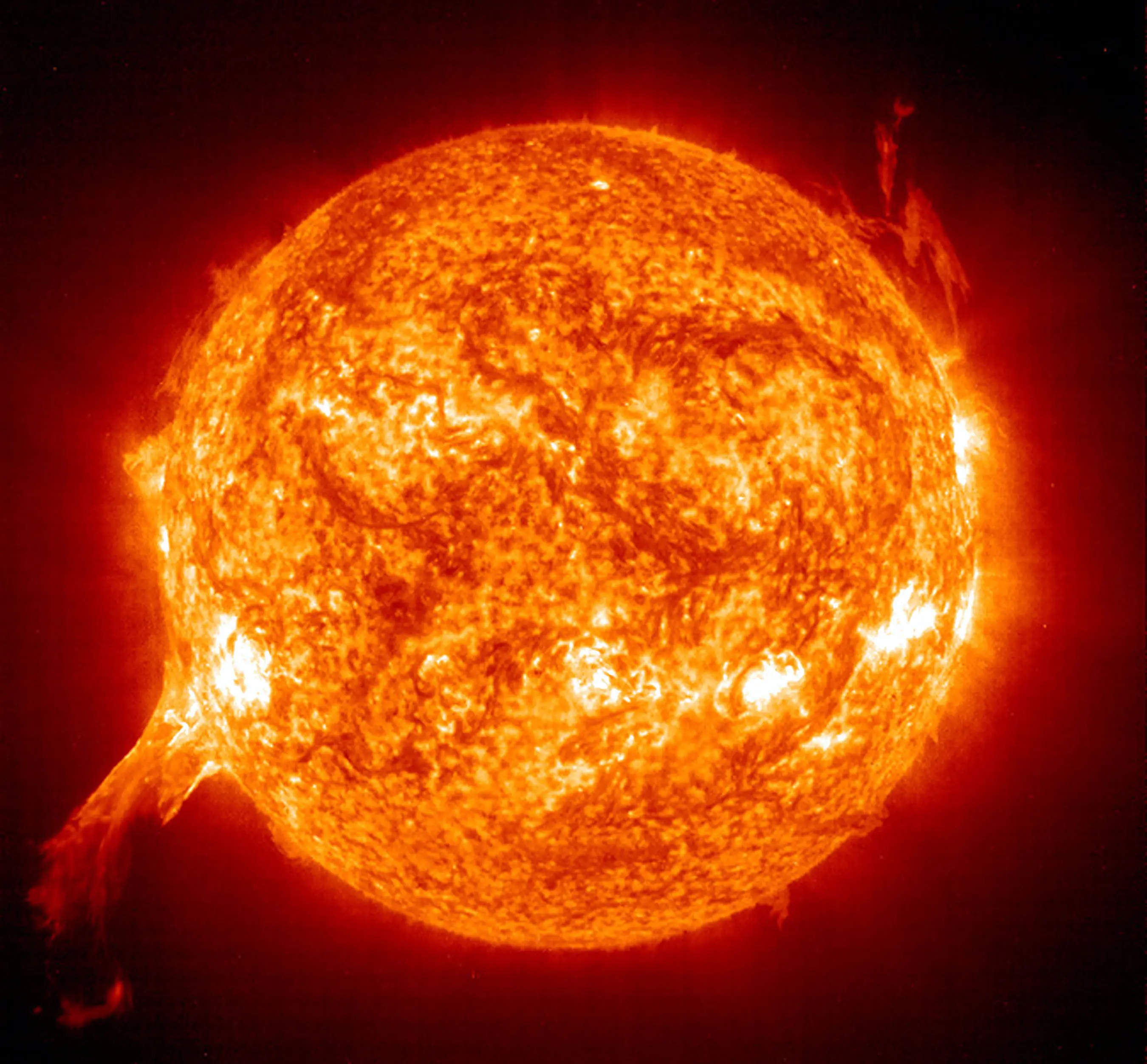
The sun goes through a phase known as a solar maximum where the surfaces begins to display dark spots.
NASA/WireImage

NASA has predicted the next solar maximum will begin in late 2025 - however, a new study led by Dr. Dibyendu Nandi, a physicist from the IISER Kolkata Center of Excellence in Space Sciences in India, has predicted an early 2024 solar event.

“[It is] not possible to predict the intensity and consequences' of solar storms this early, but we should learn more as the new year approaches,” he said when speaking to the Mail Online.

“The most intense storms can sometimes result in catastrophic orbital decay of low Earth orbiting satellites and disrupt satellite-based services such as communications and navigational networks.”

So that could mean disruption from many of the technological tools we use every day.

He continued: “They can also induce strong disturbances in the geomagnetic field tripping electric power grids located in high latitude regions.

A major and intense solar storm could mean disruption for many of the technological tools we use every day.
Andy Lyons

“Of course, they also create beautiful auroras so we can expect 2024 to be a good year for aurora hunters,”

Well I suppose there wouldn’t be a better time to appreciate the night time sky than when the internet is done.

Nandi went on to say that predicting exactly when the most intense solar storms could occur can be challenging.

He explained why his study and NASA’s conclusion differ as well as clarifying that individual solar cycles can vary in length from nine to 14 years.

So, 11 years is 'a mean periodicity, implying this is determined by averaging the individual periods of all observed solar cycles in the modern era.'

Choose your content:

2 hours ago
4 hours ago
6 hours ago
17 hours ago
  • Anna Rose Layden/Getty Images
    2 hours ago

    New Yorkers using fireworks on July 4th face jail or fine up to 60 times higher after new law passes

    Fireworks are not permitted in the New York state

    News
  • Chip Somodevilla/Getty Images
    4 hours ago

    Trump gives update on 'criminally made algae' at Reflecting Pool and announces when it will be drained

    The pool's issues have included dead ducklings and a price tag that's ballooned massively

    News
  • X/Bosnian Football
    6 hours ago

    US presenter apologizes over 'ignorant' comment about European country during World Cup coverage

    Furious football fans piled on after spotting one brutal detail in her viral on-screen blunder

    News
  • SWNS
    17 hours ago

    One question to ask yourself before starting GLP-1s to keep weight off according to doctors

    The expert shared his golden rule to follow before using GLP-1s for weight loss

    News
  • Scientists release new map of the universe 'like no other' so humans can see what space really looks like
  • Scientists left baffled after discovering interstellar object hurtling towards our solar system
  • Artemis II astronauts share powerful realization they had when returning to Earth
  • Scientists discover 'impossible' atmosphere on ancient planet where a year only lasts 10 hours