unilad homepage
unilad homepage
  • News
    • UK News
    • US News
    • World News
    • Crime
    • Health
    • Money
    • Sport
    • Travel
  • Music
  • Technology
  • Film and TV
    • News
    • DC Comics
    • Disney
    • Marvel
    • Netflix
  • Celebrity
  • Politics
  • Advertise
  • Terms
  • Privacy & Cookies
  • LADbible Group
  • LADbible
  • SPORTbible
  • GAMINGbible
  • Tyla
  • UNILAD Tech
  • FOODbible
  • License Our Content
  • About Us & Contact
  • Jobs
  • Latest
  • Archive
  • Topics A-Z
  • Authors
Facebook
Instagram
X
Threads
TikTok
YouTube
Submit Your Content
Major Warning Issued After Sun Throws Out Strongest Solar Flare In Years
Home>News
Published 16:27 24 Apr 2022 GMT+1

Major Warning Issued After Sun Throws Out Strongest Solar Flare In Years

Scientists have warned that Sun could throw out more solar flares which could affect life on Earth

Joe Harker

Joe Harker

google discoverFollow us on Google Discover
Featured Image Credit: NASA

Topics: Space, Science

Joe Harker
Joe Harker

Joe graduated from the University of Salford with a degree in Journalism and worked for Reach before joining the LADbible Group. When not writing he enjoys the nerdier things in life like painting wargaming miniatures and chatting with other nerds on the internet. He's also spent a few years coaching fencing. Contact him via [email protected]

X

@MrJoeHarker

Advert

Advert

Advert

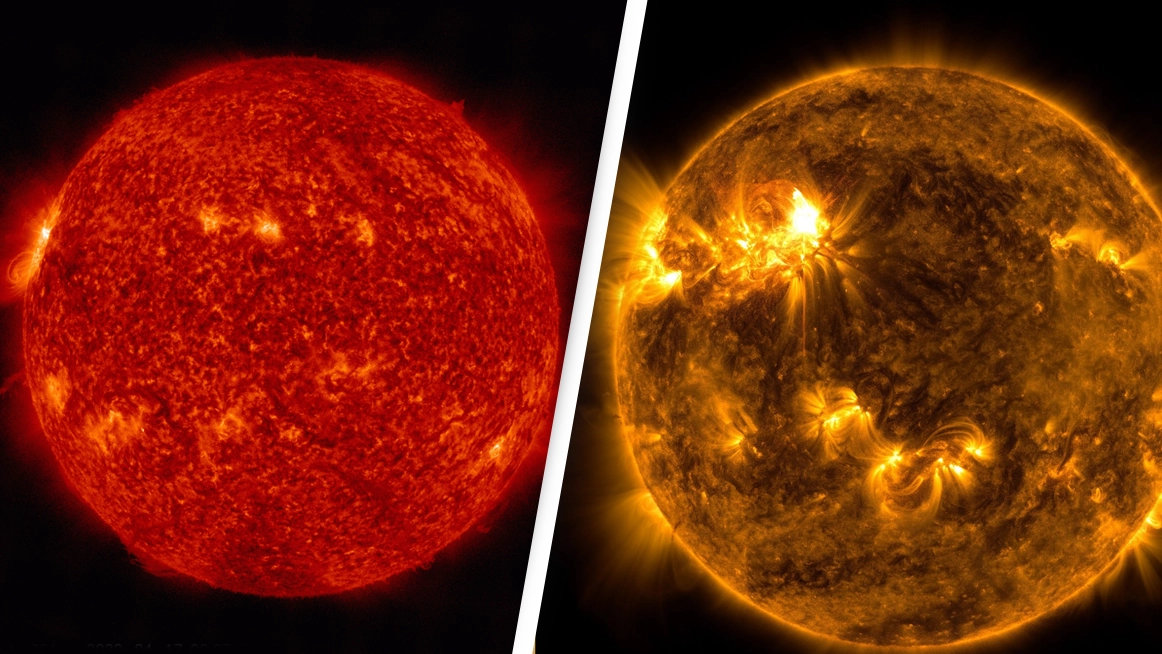
Scientists have issued a major warning after the Sun threw out the strongest solar flare recorded for years.

The Independent reported that this strong solar flare is part of a period of increasing activity from our star which could impact planet Earth in the future.

It was spotted on the evening of April 20 and follows another recent solar flare on April 16.

This strong solar flare, the strongest in the current solar cycle, did not do significant damage to the planet and only briefly caused a radio blackout in some parts of Asia.

Advert

We may have been lucky in this case as the flare came from the far edge of the Sun and therefore missed Earth, a closer flare may have done more damage.

Today's X2.2 solar flare is the strongest solar flare of the current Solar Cycle thus far. It peaked at 03:57 UTC and came from sunspot region 2992 which is rounding the western limb. The eruption was fairly impulsive and the resulting CME is not earth-directed. pic.twitter.com/Aq38bXuFnA

— SpaceWeatherLive (@_SpaceWeather_) April 20, 2022

The Sun works in 11 year periods of activity known as solar cycles where the star's magnetic field flips completely. The current cycle began in 2019 and will reach a peak in 2025.

Solar flares can even impact radio communications or in extreme cases affect the electrical grid, they also pose a danger to satellites and other space installations.

According to Newsweek, our Sun is far more active than it should be at this point in the solar cycle

Professor Matthew Owens of the University of Reading said the number of sunspots recorded were higher than official forecasts expected but luckily may not be too much to worry about.

He said: 'The observations of sunspot numbers are certainly tracking higher than the official forecasts.

'I think at least some of this is from getting the timing of the cycle start wrong. If you push the official forecast back 6 months - which is not an unreasonable thing to do, as the forecast was focussed on magnitude, rather than timing - it agrees pretty well.'

The Sun sends salutations 🌞

On Saturday, April 16, the Sun emitted a powerful burst of energy, an X-1 solar flare. Flares and solar eruptions can sometimes impact radio communications, electric power grids, and navigation signals: https://t.co/Bm6VNwJW3Q pic.twitter.com/HY45lzkRwa

— NASA (@NASA) April 18, 2022

Professor Robert von Fay-Siebenburgen of the University of Sheffield warned that a world increasingly reliant on technology was one more vulnerable to larger disruptive solar flares and more solar activity.

He said: 'This might not have been a problem 100 years ago, he said, when humanity wasn't relying on electrical technology so much.

'Today it is another story. These days, even a coffee maker - at least a more expensive one - does have a chip in it.

'I think we really should be careful and prepare ourselves for the next solar cycle because I think the more we rely on technology the more vulnerable we are to these sunspots.'

Solar flares are given a number to note their intensity, with a higher figure meaning a more intense flare.

This most recent flare, strongest measured since 2017, was given a rating of X2.2, whereas the strongest solar flare on record was from 2003 and rated X28.

If you have a story you want to tell, send it to UNILAD via [email protected]

Choose your content:

an hour ago
3 hours ago
  • Jeff Robinson/Icon Sportswire via Getty Images
    an hour ago

    Kyle Busch's wife breaks silence after NASCAR star's sudden death aged 41

    Samantha Busch has said 'the weight of this loss feels impossible to carry'

    News
  • X/@bluebeari3
    an hour ago

    Two women who went viral at NBA game decide not to attend Finals after alleged harassment incident

    The OnlyFans models, Blue and Julie J. Swan, claim to have been accosted by a group of people at the Spurs game

    News
  • Mark and Jacob Foundation
    3 hours ago

    LA attorney makes heartbreaking point as family of boys killed in 'game of chicken' are awarded $176 million

    Rebecca Grossman was given 15 years after the murders of Mark and Jacob Iskander.

    News
  • Lev Radin/Pacific Press/LightRocket via Getty Images
    3 hours ago

    US state moves to remove 'mother' and 'father' labels and replace with more inclusive terms

    The bill passed 38-23 but drew criticism from both political parties, with one Democrat calling it 'unnecessary'

    News
  • Simulation shows exactly what happens to your body after drinking 'liquid death' as warning issued
  • Scientists left baffled after discovering interstellar object hurtling towards our solar system
  • Harvard physicist issues chilling ‘mini-probe’ warning as fast-moving space object nears the Sun
  • Scientists have discovered a mysterious tiny world in our solar system