
unilad homepage
unilad homepage
    • News
      • UK News
      • US News
      • World News
      • Crime
      • Health
      • Money
      • Sport
      • Travel
    • Music
    • Technology
    • Film and TV
      • News
      • DC Comics
      • Disney
      • Marvel
      • Netflix
    • Celebrity
    • Politics
    • Advertise
    • Terms
    • Privacy & Cookies
    • LADbible Group
    • LADbible
    • SPORTbible
    • GAMINGbible
    • Tyla
    • UNILAD Tech
    • FOODbible
    • License Our Content
    • About Us & Contact
    • Jobs
    • Latest
    • Archive
    • Topics A-Z
    • Authors
    Facebook
    Instagram
    X
    Threads
    TikTok
    YouTube
    Submit Your Content
    Scientists say everyone should follow '21 second rule' while peeing to stay healthy

    Home> News> Health

    Published 09:38 25 Oct 2024 GMT+1

    Scientists say everyone should follow '21 second rule' while peeing to stay healthy

    On your marks, get set, pee!

    Poppy Bilderbeck

    Poppy Bilderbeck

    google discoverFollow us on Google Discover
    Featured Image Credit: Costfoto/Future Publishing/delihayat/Getty Images

    Topics: Health, Science

    Poppy Bilderbeck
    Poppy Bilderbeck

    Poppy Bilderbeck is a freelance journalist with words in Daily Express, Cosmopolitan UK, LADbible, UNILAD and Tyla. She is a former Senior Journalist at LADbible Group. She graduated from The University of Manchester in 2021 with a First in English Literature and Drama, where alongside her studies she was Editor-in-Chief of The Tab Manchester. Poppy is most comfortable when chatting about all things mental health, is proving a drama degree is far from useless by watching and reviewing as many TV shows and films as possible.

    Advert

    Advert

    Advert

    You may believe that peeing doesn't require much thought, but it turns out there's actually a bit more to consider when it comes to emptying your bladder.

    Ah, the peace and quiet of being able to go and sit down and have a wee, staring into the abyss of the bathroom, allowing your mind to temporarily wander, taking in the peace and quiet before having to drag yourself back into reality - no, just me?

    Alas, you may need to be concentrating a bit harder the next time you go to relieve yourself of bodily fluids but thankfully, scientists have come up with a '21 second rule' which is pretty easy to follow.

    Advert

    A group of mechanical engineering students at the Georgia Institute of Technology conducted a study into what the length of our pees says about our health.

    For the study, the team of researchers analyzed high-speed videos of animals of all different sizes peeing and coined the term 'The Law of Urination'.

    It found that animals that are over three kilograms (6.6 pounds) empty their bladders over a period of around 21 seconds while smaller animals - i.e. rats - took just a fraction of a second to empty their bladders.

    The researchers were able to confirm pee duration is ultimately not just to do with bladder pressure - it's related to gravity as well, IFL Science explains.

    Animals weighing more than 3kg take around 21 seconds to empty their bladders (Monica Murphy/Getty Stock Image)
    Animals weighing more than 3kg take around 21 seconds to empty their bladders (Monica Murphy/Getty Stock Image)

    Published back in 2014, the paper states: "How can bladders of both 0.5kg and 100kg be emptied in nearly the same duration? Larger animals have longer urethras, and so greater gravitational force driving flow.

    "These long urethras increase the flow rate of larger animals, enabling them to perform the feat of emptying their substantial bladders over approximately the same duration."

    And the study ultimately found out the ideal length of time it should take humans to wee too.

    So, next time you sit down for a number one, get your stopwatch at the ready and see if you make the time of around 21 seconds.

    If you end up falling short or exceeding the mark, it could be a sign you're visiting the loo too often - I see you those of you trying to avoid work - or not enough - workaholics, take note.
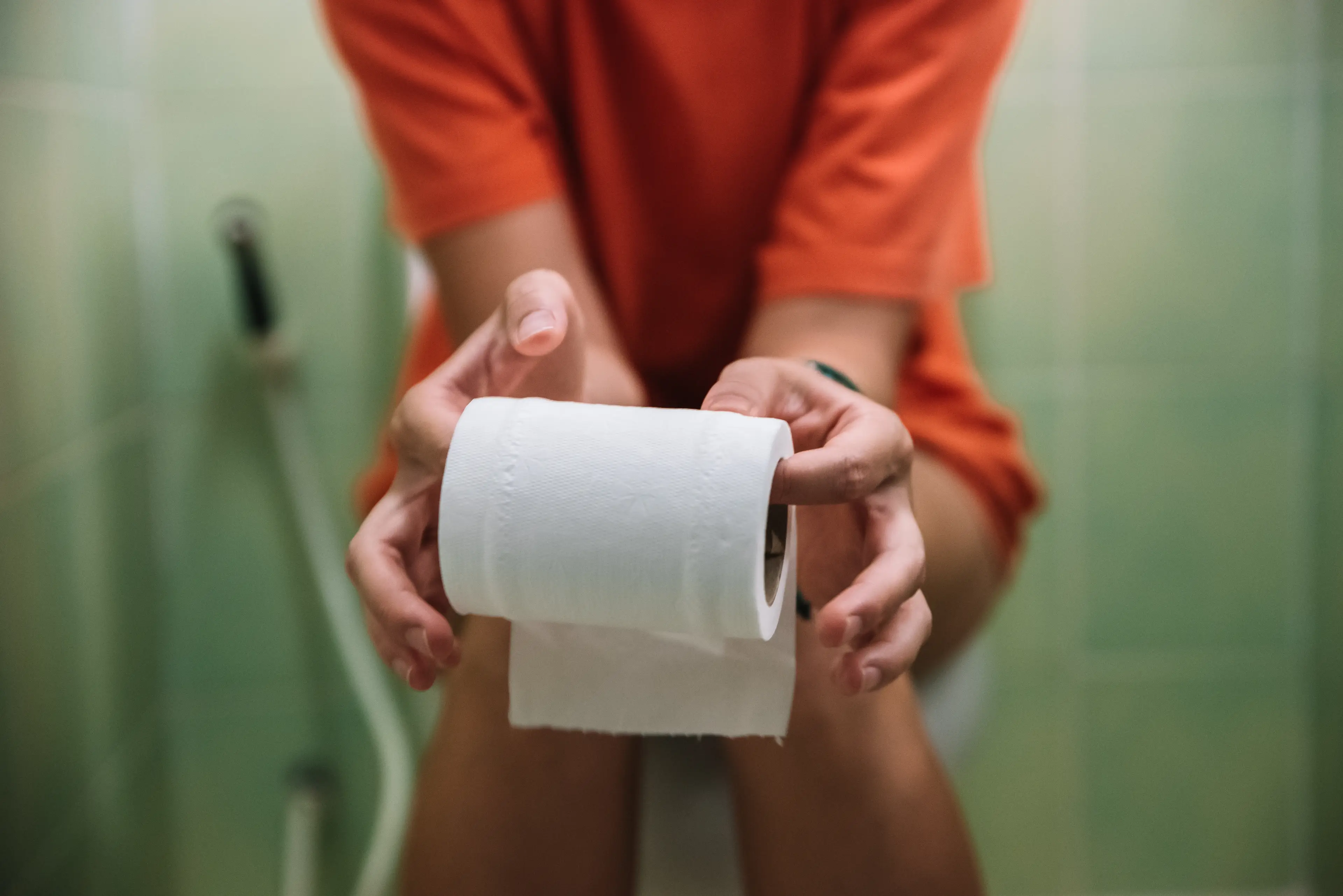
    Holding in your pee or peeing too often isn't good for your bladder (Antonio Hugo Photo/Getty Stock Image)
    Holding in your pee or peeing too often isn't good for your bladder (Antonio Hugo Photo/Getty Stock Image)

    If you pee too often, it could lead to you having what's known as an 'overactive bladder' while holding in your pee for too long could cause you develop a UTI - and believe me, you want to avoid those like the plague.

    There's also an increased risk of kidney disease if you're an infrequent toilet-goer alongside your bladder becoming enlarged or even rupturing.

    So, drink up and make sure to embrace the toilet breaks.

    Choose your content:

    an hour ago
    2 hours ago
    • YouTube/Lex Clips
      an hour ago

      Why island home to uncontacted tribe is off limits to everyone in the world

      Many have tried, and failed, to visit North Sentinel Island - and suffered the huge consequences

      News
    • Anna Moneymaker/Getty Images
      an hour ago

      5 famous world leaders photographed when they were young

      President Trump has variously called some of these world leaders 'handsome' with a 'great aura'

      News
    • Getty Stock Image
      2 hours ago

      Woman who spent 500 days in dark cave reveals why leaving was the most difficult part

      Beatriz 'wasn't expecting' what was to come as she came out of the cave

      News
    • (Photo by AFP via Getty Images)
      2 hours ago

      Influencer trapped on MV Hondius cruise details the 'hardest part' of ongoing Hantavirus outbreak

      Jake Rosmarin said the entire crew were handling the situation 'to their best of their ability'

      News
    • Shocking truth behind five-second rule shows what really happens when you drop food on the floor
    • Scientists issue warning over 'zombie deer disease' spreading to humans as cases surge in US
    • Scientists are starting to vaccinate koalas against chlamydia
    • Doctor breaks down 5 worrying symptoms that may indicate colon cancer