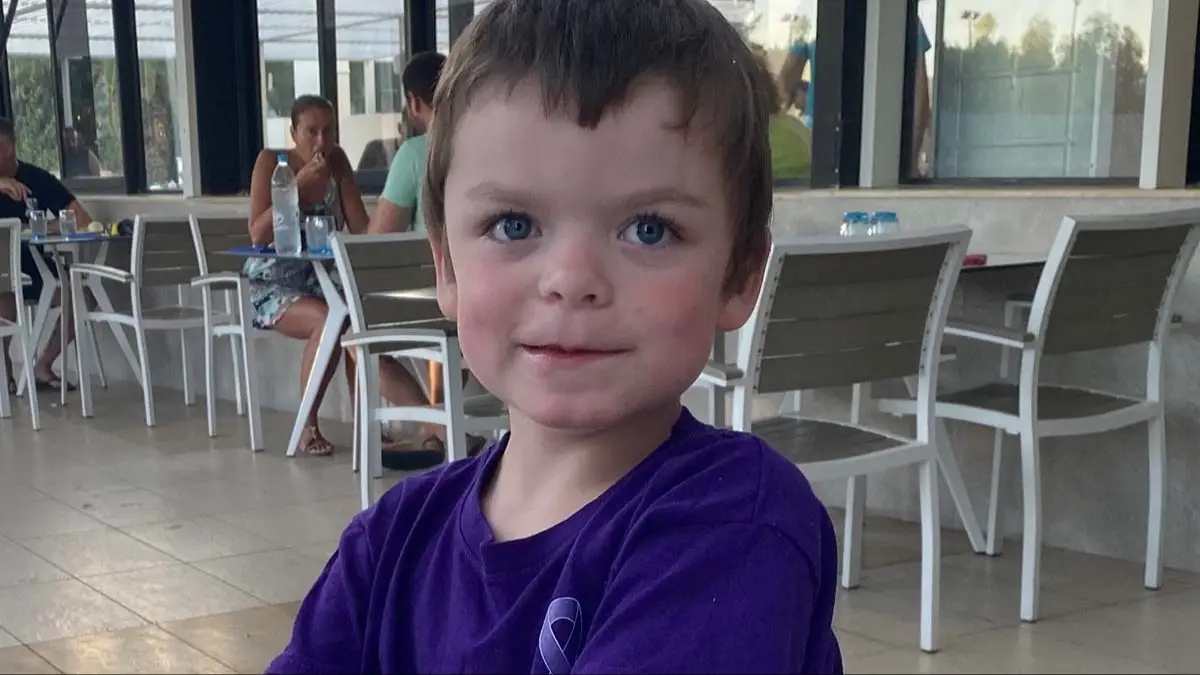
Mom reveals heartbreaking symptom she noticed in son that was subtle sign of childhood dementia

A mom has revealed the signs she thought were ‘too good to be true’ that turned out to be ‘childhood dementia’ in her two-year-old son.
Tammy McDaid, 34, took her son, Tate, to see a doctor due to signs she believed could mean something, but nothing scary.
However, she would soon go on a long and emotional journey to the ‘worst’ outcome for her little boy.
The mom, from Wales, UK, revealed that Tate was a happy boy, but one who didn’t give eye contact unless she ‘sang’, and wasn’t known to cry or fuss.
Advert
Believing he was ‘too good to be true’, she took him to see medical professionals at the National Health Service (NHS), which flagged what appeared to be a bump on his head.
Scarily, after undergoing a CT scan at Birmingham Women’s and Children’s hospital, the possibility was revealed that little Tate was suffering from a syndrome that is known as ‘childhood Alzheimer’s’ with a potential devastating prognosis.

The family were then referred to Noah’s Ark Children’s Hospital, Cardiff, to work with the metabolic team.
However, Tammy shared that doctors soon took it ‘off the table’, telling her that Tate, who is also autistic, didn’t have the condition, despite some tell-tale signs the mom said she noticed.
Sadly, 18 months later, Tate would in fact be diagnosed with the syndrome, which could leave him under life-long care and reliant on medical machines.
The condition is Sanfilippo syndrome, which the Cure Sanfilippo Foundation reveals is a rare neurodegenerative metabolism disorder without a cure.
Diagnosed in September 2025, tammy reveals ground breaking gene technology could help her son prevent further cognitive decline, but it could cost between £1.5 million and £3 million ($2 million and $4 million).
Per the CSF, the syndrome is also known as Mucopolysaccharidosis type III or MPS III, and is ‘a terminal, neurodegenerative’ disease that 'causes children to lose all the skills they’ve gained, suffer seizures and movement disorders, experience pain and suffering, and then die, often before the second decade of life.’
“Because of its neurodegenerative nature and multi-system impact, Sanfilippo Syndrome is often called ‘childhood Alzheimer’s’ or ‘childhood dementia,’” it adds.
Children with Sanfilippo syndrome also have physical tell-tale signs too, which are those that Tammy says she saw in her own son; despite being told he initially didn’t have the condition.
They include full lips, coarse eyebrows and a button nose.
Tammy told Talk to the Press: “When it was first mentioned, I went on social media and saw other children that looked exactly like my son. But then the experts said it wasn’t that so I doubted myself. In August 2025, they called me back in for a meeting with a genetic doctor and a metabolic doctor.”
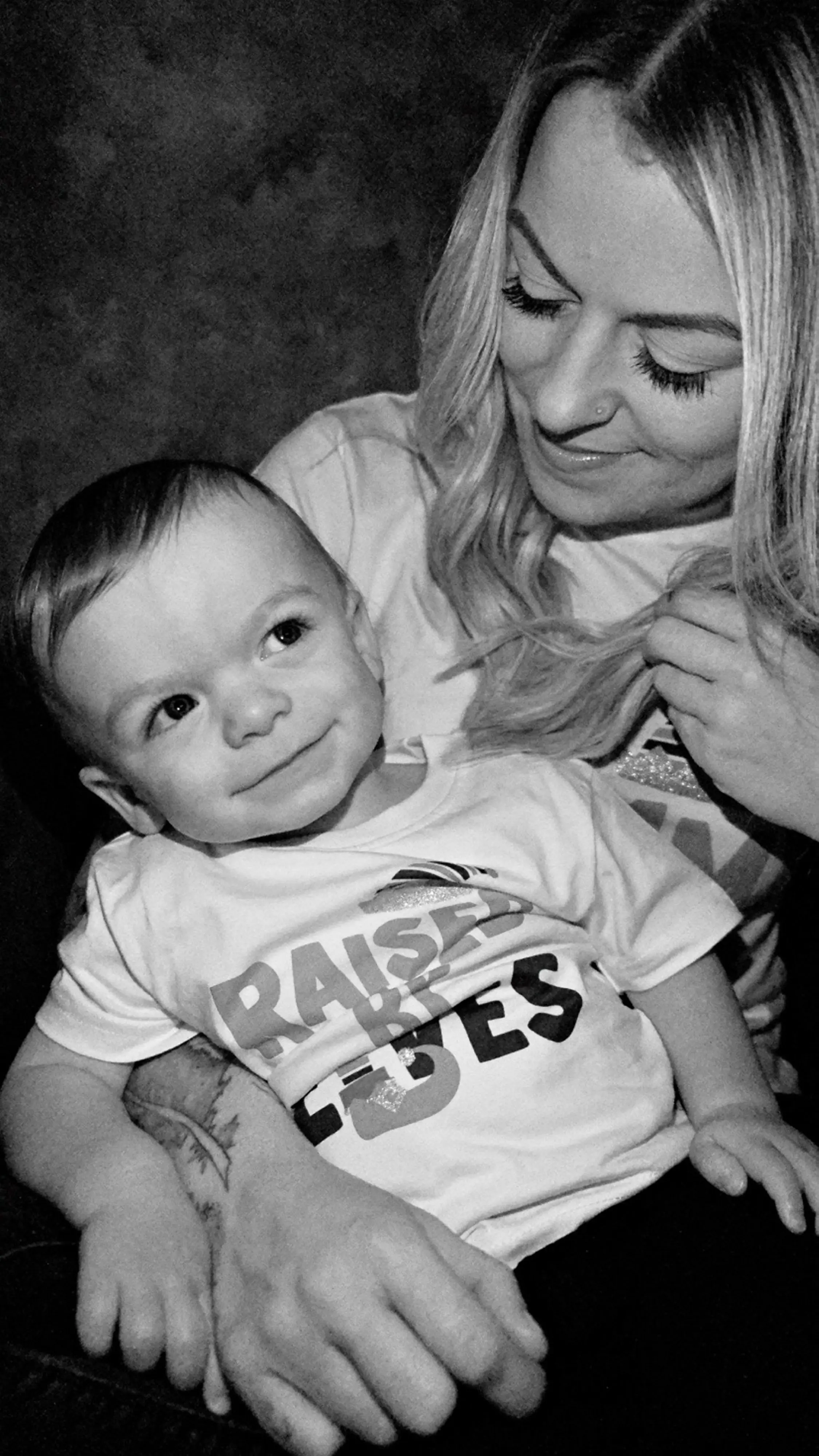
She said ‘this is where we were told Sanfilippo was on the table and it could be Type A, the worst one.”
“It was mid-September when we got the official diagnosis of Sanfillipo Type A,” the mom revealed, which is the most advanced form of the condition.
Tammy said: “As it progresses, Tate will start losing the ability to eat, walk, communicate.
“The brain damage takes over and he will become completely bed bound and dependent on machines. It completely overrides the body and is the absolute worst way for someone to die, but you just don't know when it will happen because it's so rare.”
She explained that due to the delay with Tate’s diagnosis, they missed the chance to enter clinical trials in the US for a revolutionary gene therapy drug.
Now, she says they’re waiting for it to potentially become FDA-approved in September, which will leave her scrambling to get together the money it could cost.
One treatment that has been resubmitted for FDA approval for Type A is UX111 AAV, by Ultragenyx.
The company is set for a September start date, which may be the one Tammy is waiting for.
“The FDA’s acceptance of the BLA for UX111 brings us closer to the possibility of a first-ever therapy for Sanfilippo syndrome Type A—a milestone that we recognize cannot come soon enough for families facing this devastating diagnosis,” said Emil D. Kakkis, M.D., Ph.D., chief executive officer and president of Ultragenyx. “We appreciate the FDA’s prompt acceptance of the resubmission and look forward to working with the Agency throughout its review in order to bring this treatment option to the Sanfilippo syndrome community as quickly as possible.”
Tammy is now officially fundraising through Just4Children, in hopes of raising enough money to put Tate through treatment.
 Britt Jones