Man born with ‘butterfly syndrome’ reveals symptoms of ‘worst disease you’ve never heard of’

A man with a rare disease that resulted in him being born without any skin on his left leg is fighting to make life better for others suffering from the horrific condition.
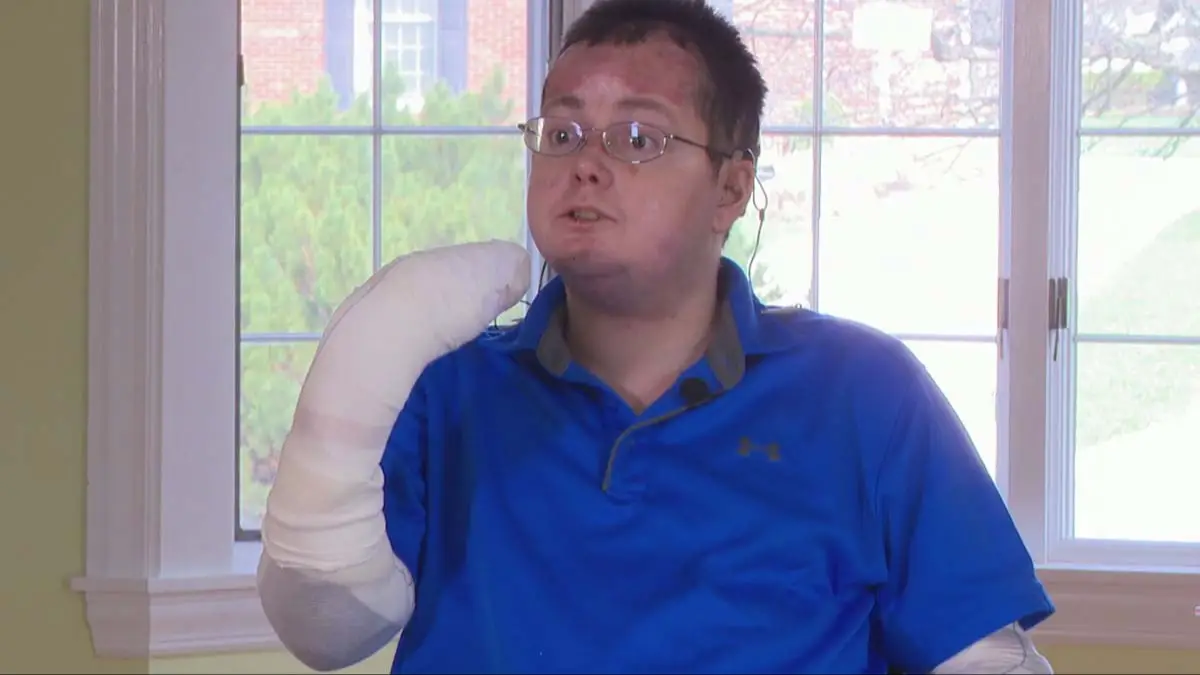
Shane DiGiovanna is just 27 years old and lives with a rare condition sometimes referred to as ‘Butterfly Syndrome’.
The Cincinnati-native was born with a disease that affects only 25,000 to 50,000 Americans, per Stanford Medicine, but is known as the ‘worst disease you’ve never heard of’.
Epidermolysis bullosa (EB) is a terrible condition that causes blisters and painful lesions on the skin.
Advert
Shane, who heartbreakingly has terminal cancer and has just months left to live, told The Bulwark: “Basically I am missing a protein called collagen 7, and that acts as the glue between different layers of the skin.
"And so without that glue, my skin is extremely fragile. I have open wounds all over my body. I’m missing 50 to 60 percent of my skin.
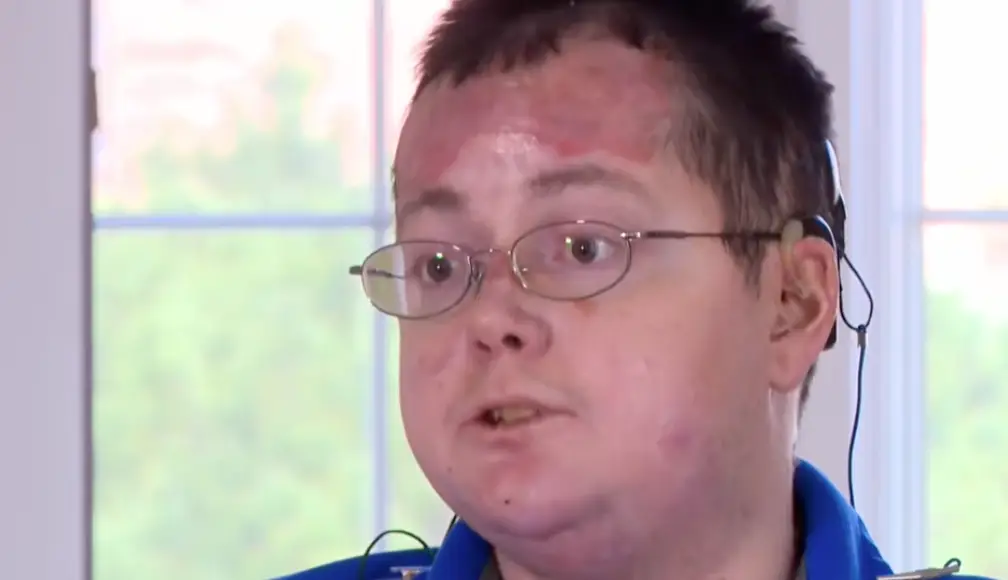
"I have bandages all over my body. I don’t have any functional hands. I am very limited in what I can do. I am always in a tremendous amount of pain."
EB's likeness to butterflies comes from the fact that it makes a person’s skin just as fragile as that of a butterfly’s wings, meaning the skin needs to be constantly wrapped for fear of introducing dangerous bacteria to the wounds.
According to the National Institute of Health, people with EB can lack fingernails, have roughened skin, grow slowly, and have poor tooth enamel.
Shane told People: "Every day requires intensive wound care just to prevent infection, manage pain, and keep my body functioning. The bandages that make that possible aren’t optional — they’re the difference between life and death.”
Unfortunately, these bandages are a terrible financial burden on Shane and his family, costing around $80,000 a month.
That's why he is trying to change US legislation to make medical dressings and bandages free for people who have epidermolysis bullosa (EB).
The 27-year-old has now taken his story to Rep. Greg Landsman, who will introduce a bill to attempt to provide financial relief for EB families and cover bandages in their Medicare insurance.
Shane has said he is ‘very old for a person with severe EB’. According to EB Research, the average life expectancy for those with the disease ranges anywhere from infancy to 30 years old.
In a Facebook post last year, Shane said he had entered hospice care due to the ongoing health complications stemming from the condition.
He said: “One of the new challenges has been inflammation effectively attacking my internal organs. Over the past year, my kidney function has steadily declined — and in the past few months, it has dropped off a cliff.
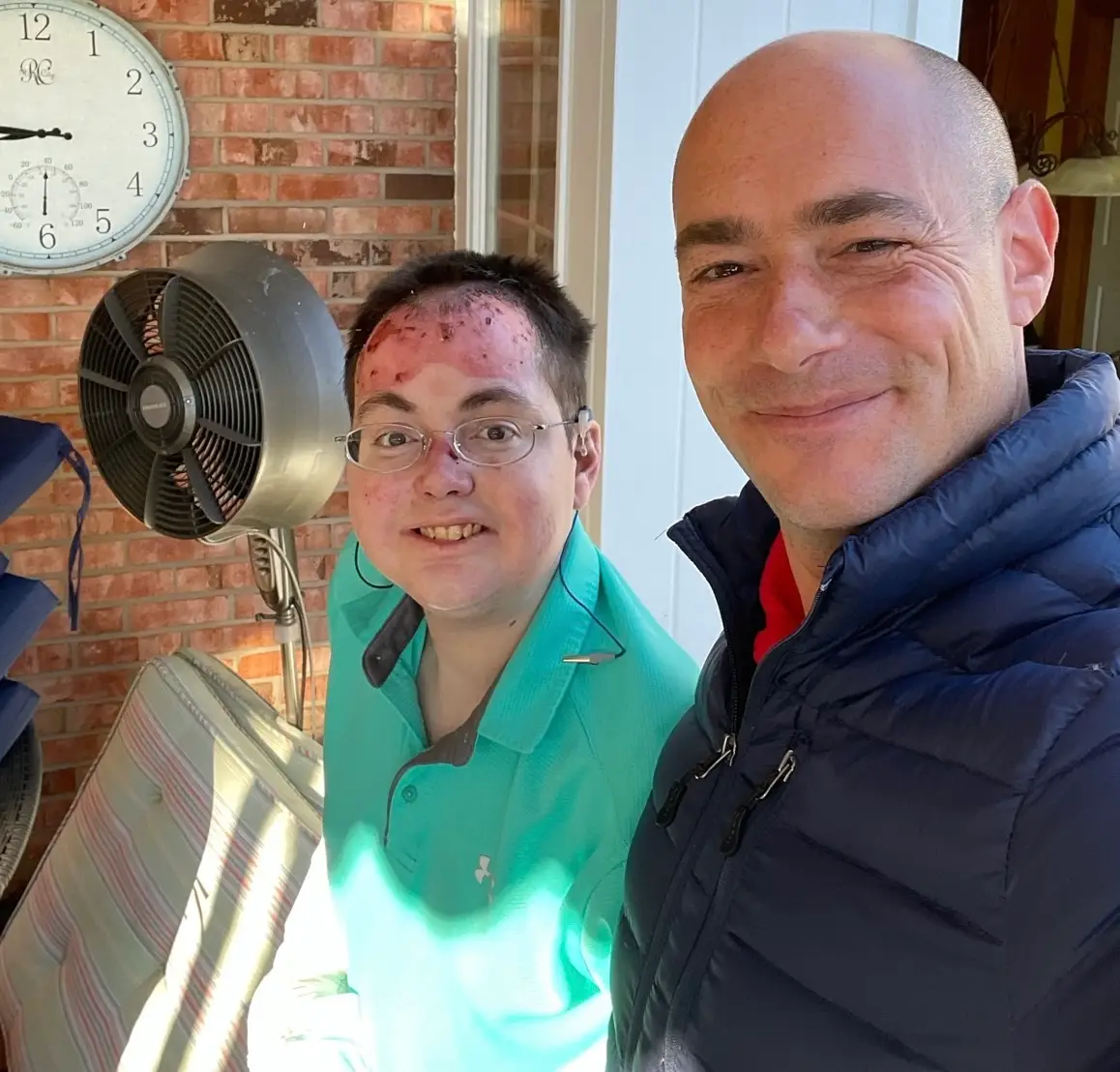
“The doctors say I have somewhere between three months and a year left to live.
"I have had a wonderful life, and I am proud of everything I have accomplished, and how far I have come."
Shane is the first person living with EB to live away from home for college, graduating with a degree in economics.
His legislation, known as the Shane DiGiovanna Act, means the Department of Health and Human Services (HHS) would need to look into whether covering bandages on Medicare would prevent as many hospital visits.
“This bill … asks a simple question: What happens if we treat wound care for EB patients not as a luxury, but as essential medical care?” Shane said in a statement to the outlet. “Because we already know the answer.
"When patients have what they need, they stay out of the hospital. They suffer less. They live longer, fuller lives.”
Per Local 12, he said a study is a required step before Congress can mandate free bandages for EB sufferers, adding: “But the study is going to show that if you pay for these bandages to be covered, these kids are going to not be hospitalized as often. Their health care costs are going to be lower in the long run than they would be.”
 Britt Jones