Health warning issued to people who drink water from bottles

We're told that our water intake plays a key part in our health, but what some people don't realize is what we're drinking water out of all plays a part in our overall wellbeing.
How much H20 you need to drink a day depends on your age. For example, children aged between four and eight are said to need 1.2 liters a day. In contrast, teenagers need to be drinking as much as 1.9 liters a day.
If you don't drink enough water, it can lead to a host of health issues. From headaches and bowel problems, to it impacting your appearance, not consuming enough of the important liquid can be detrimental.
While drinking water is indeed important, what your drinking it from is as well.
Advert
To help tackle global warming, people have been urged to purchase reusable water bottles, a popular kind being metal ones. It should be noted, however, that you need be getting rid of these kind of bottles after so many years — especially if you put carbonated drinks in it.
People still use plastic water bottles too and a concerning 2024 study revealed why you might want to move away from this type of beverage holder for more reasons that just helping the environment...
The study was conducted by Xin Gao and Xiaoqi Lang of the Columbia chemistry department; Huipeng Deng and Teodora Maria Bratu of Lamont-Doherty; Qixuan Chen of Columbia’s Mailman School of Public Health; and Phoebe Stapleton of Rutgers University, and published in the journal Proceedings of the National Academy of Sciences.
It revealed that drinking bottled water could be causing your health some issues, particularly in the future as it found that there are tiny little pieces of plastic particles in plastic bottles, which then enter your body.
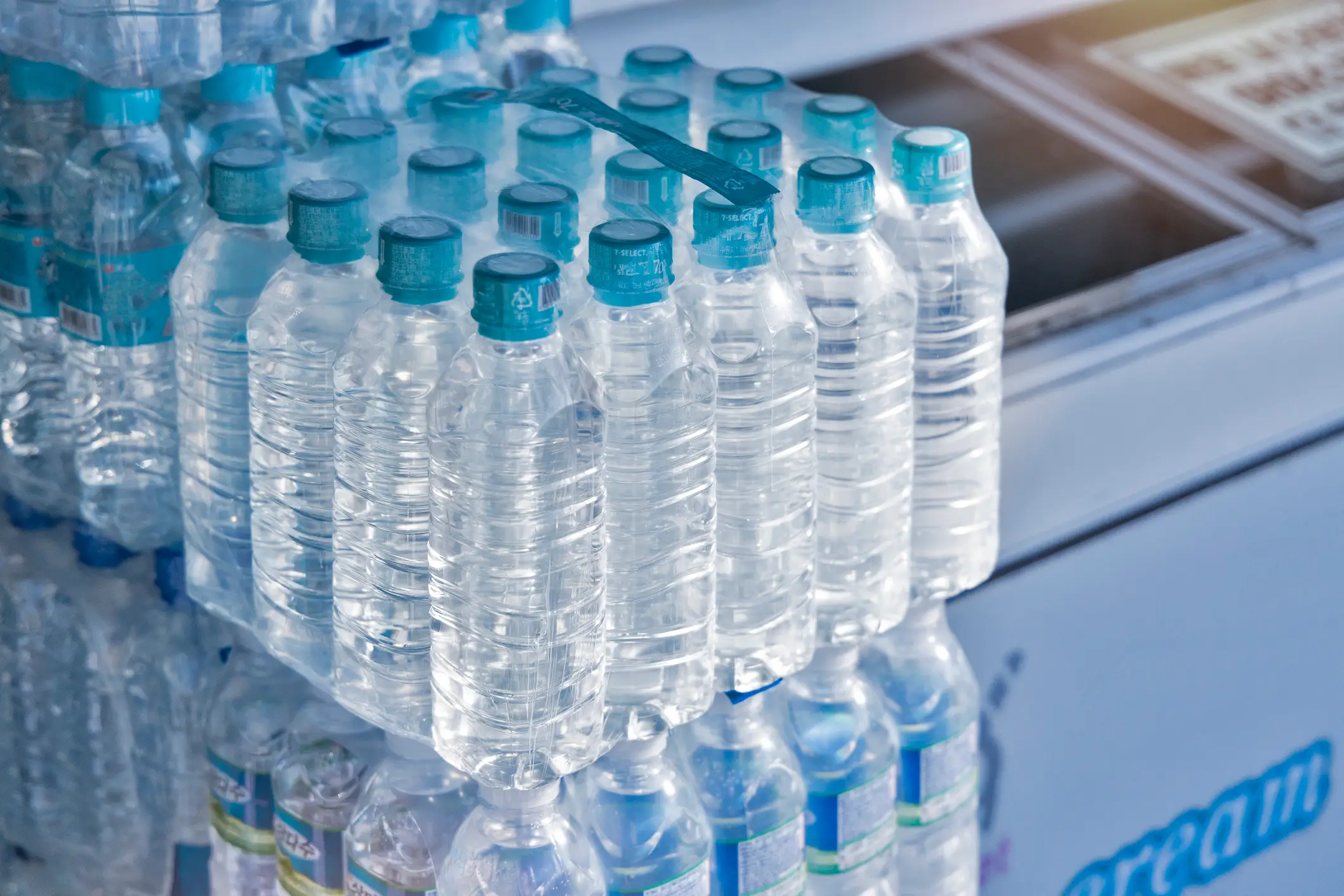
The researchers at Columbia University's Lamont-Doherty Earth Observatory found an incredible amount of plastic in just one liter of water.
According to the study authors, there were 240,000 plastic particles found in the average-sized bottle, which is now 10 to 100 times more than previous estimates thought would be inside of a bottle.
The plastic particles are so small that they are called nanoplastics, and they could be linked to cancer, birth defects, and even fertility problems.
They are so small that they could enter our blood cells and our brains, causing issues for our health the more we consume them.
But that’s not the only issue with drinking from water bottles.
Unfortunately, the phthalates in the plastics are also dangerous for us to consume. The National Institute of Environmental Health Sciences stated this plastic is 'linked with development, reproductive, brain, immune and other problems'.
"Previously this was just a dark area, uncharted. Toxicity studies were just guessing what’s in there,” said study coauthor Beizhan Yan. “This opens a window where we can look into a world that was not exposed to us before."
Topics: Health, Food and Drink
 Niamh Shackleton