unilad homepage
unilad homepage
    • News
      • UK News
      • US News
      • World News
      • Crime
      • Health
      • Money
      • Sport
      • Travel
    • Music
    • Technology
    • Film and TV
      • News
      • DC Comics
      • Disney
      • Marvel
      • Netflix
    • Celebrity
    • Politics
    • Advertise
    • Terms
    • Privacy & Cookies
    • LADbible Group
    • LADbible
    • SPORTbible
    • GAMINGbible
    • Tyla
    • UNILAD Tech
    • FOODbible
    • License Our Content
    • About Us & Contact
    • Jobs
    • Latest
    • Archive
    • Topics A-Z
    • Authors
    Facebook
    Instagram
    X
    Threads
    TikTok
    YouTube
    Submit Your Content
    Twisted 'facial expression' experiment 'traumatized' subjects after making them do gruesome things for science
    Home>News
    Published 17:10 3 Aug 2024 GMT+1

    Twisted 'facial expression' experiment 'traumatized' subjects after making them do gruesome things for science

    The controversial experiment was conducted by Carney Landis

    Niamh Shackleton

    Niamh Shackleton

    google discoverFollow us on Google Discover
    Featured Image Credit: Getty Stock Image/Carney Landis

    Topics: Psychology, Science, History

    Niamh Shackleton
    Niamh Shackleton

    Niamh Shackleton is an experienced journalist for UNILAD, specialising in topics including mental health and showbiz, as well as anything Henry Cavill and cat related. She has previously worked for OK! Magazine, Caters and Kennedy.

    X

    @niamhshackleton

    Advert

    Advert

    Advert

    An experiment that was conducted back in the early 1920s is still shocking people to this day.

    There have been dozens of controversial psychology experiments over the years.

    Schrödinger's Cat remains as one of the most questionable experiments to have been conducted.

    In simple terms, the experiment looked at quantum mechanics. Schrödinger said that if you place a cat and something that could kill the cat (a radioactive atom) in a box and sealed it, you wouldn't know if the cat were dead or alive until you opened the box therefore meaning that the cat was technically both 'dead and alive'.

    Advert

    Fortunately no real cats were actually used in the experiment meaning no living animals were harmed - but the same can't be said for The Landis Facial Expression Experiment.

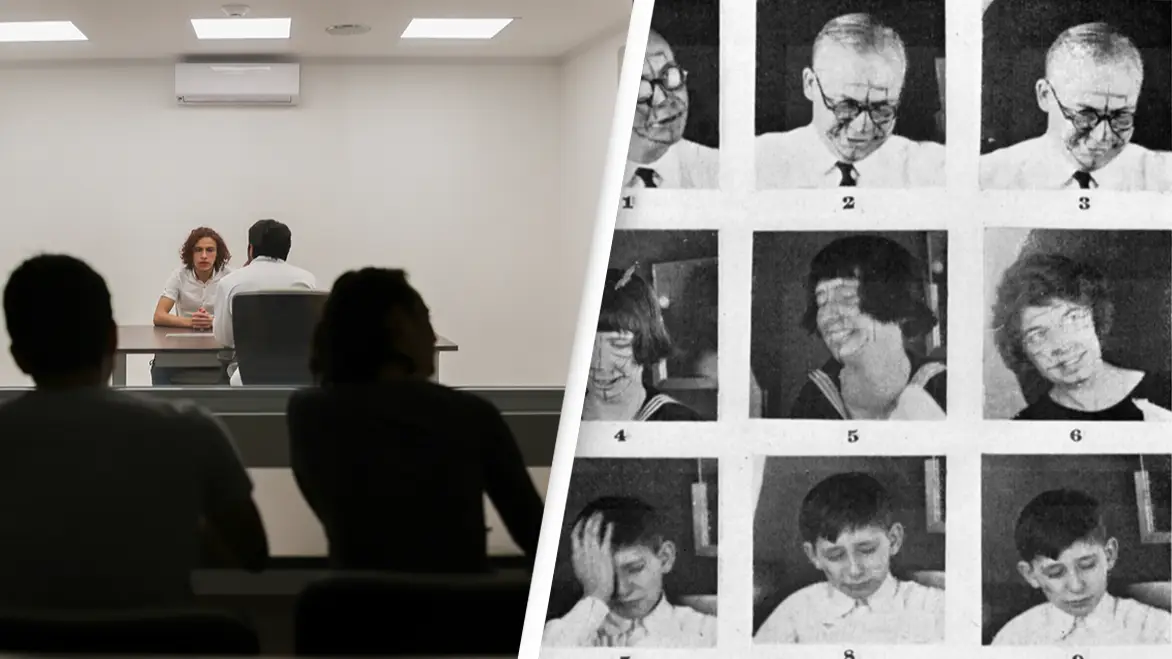
    Conducted in 1924, psychologist Carney Landis wanted to analyze if all humans made the same facial expressions when responding to the same emotions.

    He was a Minnesota University graduate student and recruited several other psychology students to part take in his experiment.

    Landis wanted to find repetitive patterns in people's facial expressions and drew lines on the research participants faces.

    He then subjected them to different stimuli while taking pictures of their faces.

    Initially said stimuli was completely harmless; they had to listen to jazz music, smell ammonia, read a passage from the Bible, for example.

    Then things got a little darker and Landis showed them pornographic photos and gruesome medical photos.
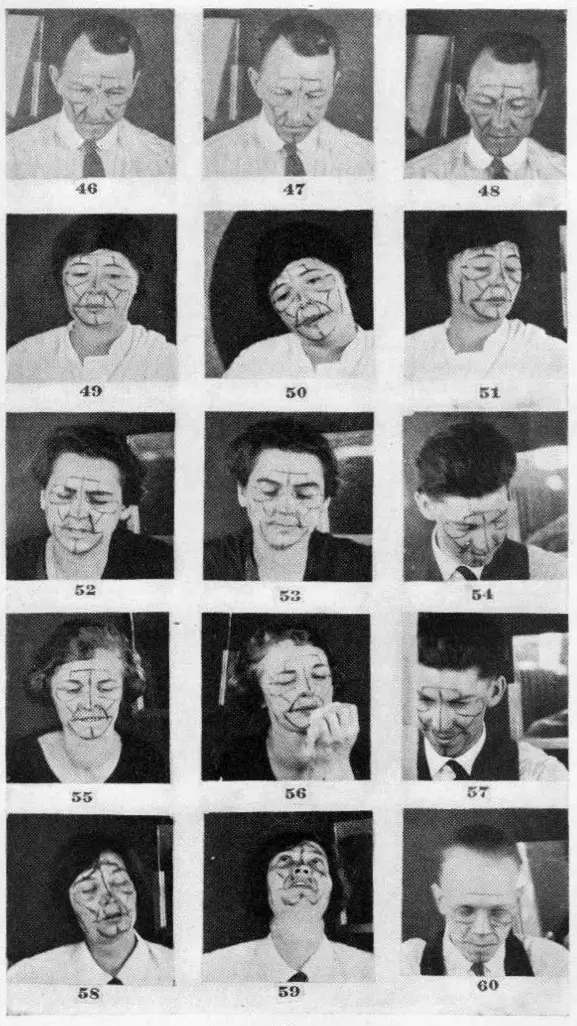
    The participants portrayed an array of different emotions. (Carney Landis)
    The participants portrayed an array of different emotions. (Carney Landis)

    This wasn't the worst part, however. For the grand finale participants were given a rat and a knife and were ordered to decapitate the rodent. If they refused to do so, Landis did it for them.

    After this, people began to give him a series of complex emotions. Some people cried and gasped, while others laughed.

    Despite putting the participants through all that, Landis' experiment didn't yield the results he'd wanted.

    The psychologist went on to conclude that people's natural expressions 'showed great differences among themselves' and that there's no universal expression for emotions like fear or pain.

    A century on from the questionable experiment and people are still talking about it.

    Commenting on a YouTube documentary about it, one person said: "We learned about this in my research methods in psych class when discussing ethics in research. I couldn't believe it was a real thing."

    Someone else hailed the rat element of the controversial experiment as a 'rather nasty bit of work', while another labeled the whole thing as 'twisted'.

    Choose your content:

    9 hours ago
    10 hours ago
    11 hours ago
    • Getty Stock
      9 hours ago

      What your answer to 'the Red or blue Button' dilemma means, according to science

      The red button or blue button debate has split social media in half, but a game theory expert has broken down what it actually means

      News
    • TLC
      10 hours ago

      The horrific crimes 90 Day Fiancé Geoffrey Paschel went to prison for explained

      Geoffrey Paschel appeared on our TV screens not long before being imprisoned for 18 years over a brutal attack on his ex

      News
    • Getty Stock
      10 hours ago

      The simple way swingers spot each other on a ‘spicy’ cruise explained

      There's a simple way to tell if passengers are up for 'play'...

      News
    • Getty Stock Image
      11 hours ago

      The six stages of a relationship explained and what to expect

      Knowing if your relationship is on the right track isn't easy, but there are six stages that all couples can expect to go through

      News
    • Artist who was 'ready to die' after allowing people to do anything to her for six hours explains why she only does things she's 'afraid' of