unilad homepage
unilad homepage
  • News
    • UK News
    • US News
    • World News
    • Crime
    • Health
    • Money
    • Sport
    • Travel
  • Music
  • Technology
  • Film and TV
    • News
    • DC Comics
    • Disney
    • Marvel
    • Netflix
  • Celebrity
  • Politics
  • Advertise
  • Terms
  • Privacy & Cookies
  • LADbible Group
  • LADbible
  • SPORTbible
  • GAMINGbible
  • Tyla
  • UNILAD Tech
  • FOODbible
  • License Our Content
  • About Us & Contact
  • Jobs
  • Latest
  • Archive
  • Topics A-Z
  • Authors
Facebook
Instagram
X
Threads
TikTok
YouTube
Submit Your Content
Incredible footage of polar bears in the sea exposes sad reality of species' future
Home>News>Animals
Published 15:55 14 Feb 2024 GMT

Incredible footage of polar bears in the sea exposes sad reality of species' future

Researchers monitored the polar bears' behavior as the amount of sea ice continues to melt

Emily Brown

Emily Brown

google discoverFollow us on Google Discover
Featured Image Credit: USGS

Topics: Animals, Environment, Canada, World News

Emily Brown
Emily Brown

Emily Brown is UNILAD Editorial Lead at LADbible Group. She first began delivering news when she was just 11 years old - with a paper route - before graduating with a BA Hons in English Language in the Media from Lancaster University. Emily joined UNILAD in 2018 to cover breaking news, trending stories and longer form features. She went on to become Community Desk Lead, commissioning and writing human interest stories from across the globe, before moving to the role of Editorial Lead. Emily now works alongside the UNILAD Editor to ensure the page delivers accurate, interesting and high quality content.

Advert

Advert

Advert

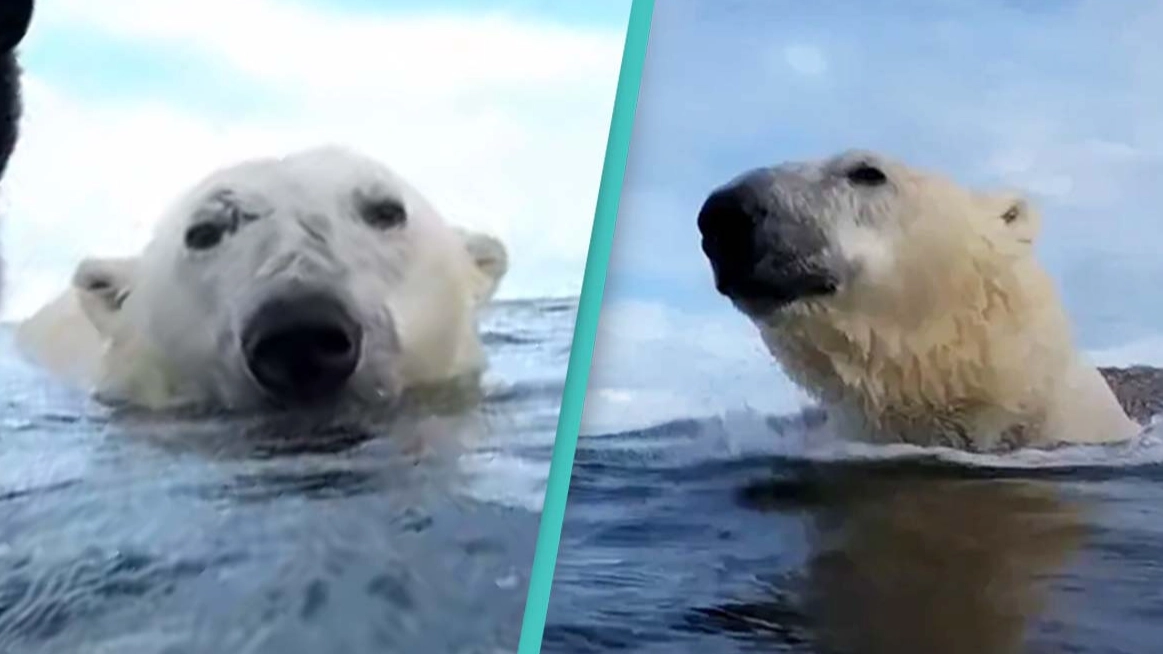
Eye-opening footage of polar bears hunting in Canada has offered an upsetting insight to the reality of their future.

As huge, strong creatures, it's hard to imagine polar bears ever struggling.

But that's a sight that could become more common in the future, as indicated by research conducted by Washington State University.

Warning: Contains footage of polar bears feeding that some may find upsetting.

Advert

Between 2019 and 2022, researchers from USGS and Washington State University spent three weeks each year monitoring 20 polar bears using GPS collars fitted with cameras.

As the amount of sea ice continues to decline amid rising global temperatures, the findings offered an insight into how polar bears are using land to hunt, as opposed to hunting from the ice sheet.

Research has shown that the period in which there is no ice in Hudson Bay increased between 1979 and 2015 by three weeks.

As a result, polar bears have to spend around 130 days on land.

In a statement cited by IFLScience, the study's lead author Anthony Pagano, a research wildlife biologist with the U.S. Geological Survey Polar Bear Research Program and former Washington State University postdoctoral researcher, said: "As polar bears are forced on land earlier, it cuts into the period that they normally acquire the majority of the energy they need to survive."
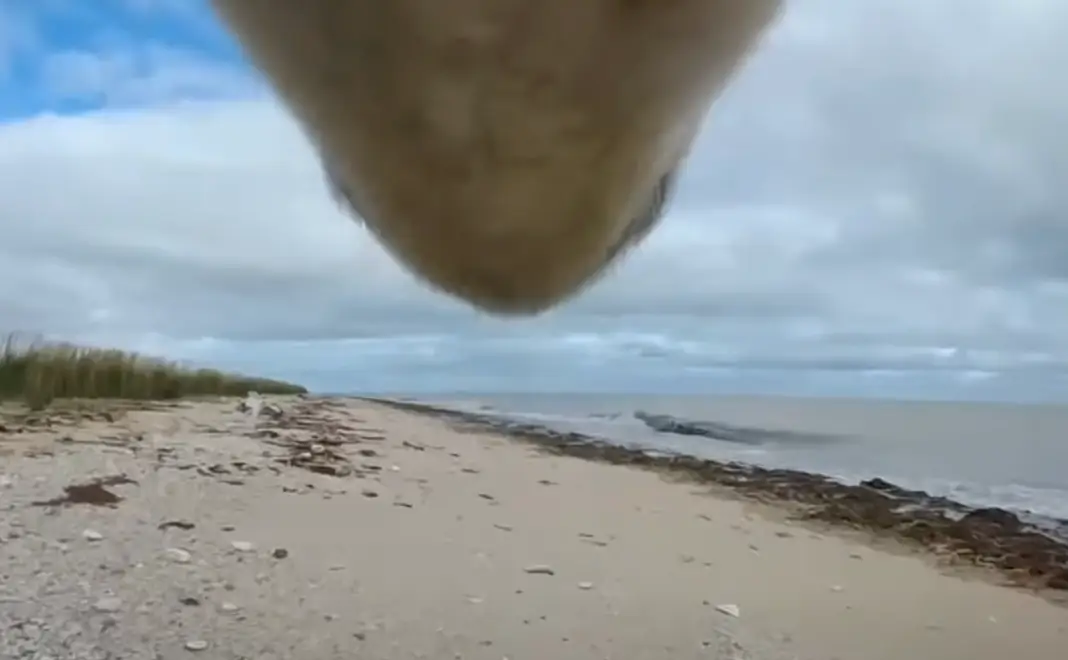
Researchers used cameras to monitor the bears' behavior.
NPG Press

“With increased land use, the expectation is that we'll likely see increases in starvation, particularly with adolescents and females with cubs," Pagano added.

To determine the impacts of more time spent on land, the researchers measured the energy expenditure, diet, behavior, activity, movement rate, blood chemistry, and body composition of the polar bears.

The researchers discovered a variation in behavior, with some polar bears staving off hunger by consuming berries on land, while others found carcasses to feed on while swimming.

In spite of the bears' varying approaches, the study found that 19 of the 20 bears lost weight over the three-week period. The one bear that gained weight found a dead marine mammal carcass on land.
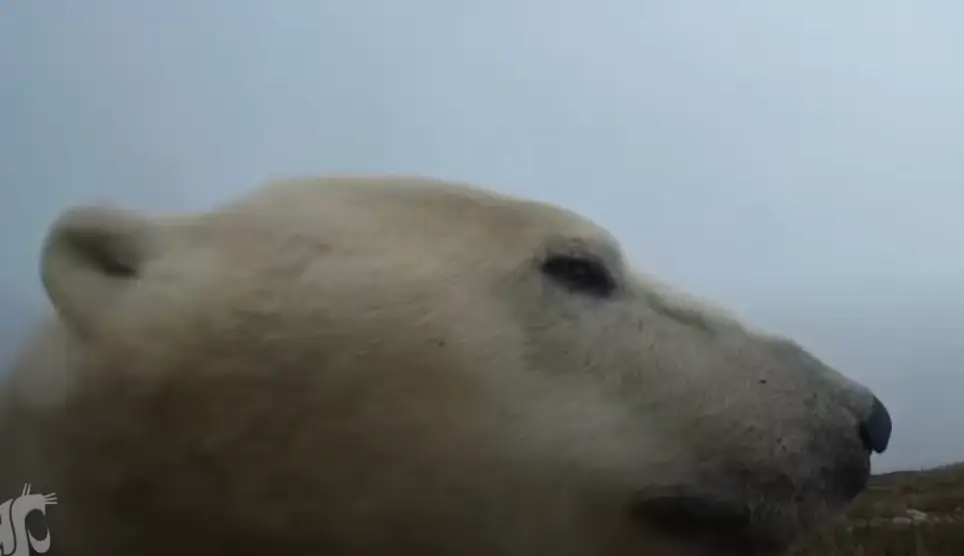
Researchers found the majority of bears lost weight during the study.
NPG Press

The findings indicated the bears struggled to feed while in water, with Charles Robbins, director of the Washington State University Bear Center and co-author of the study, noting that neither attempts to hunt on land or in the water is sustainable in the long term.

“Neither strategy will allow polar bears to exist on land beyond a certain amount of time. Even those bears that were foraging lost body weight at the same rate as those that laid down,” Robbins said.

As the sea ice continues to decline and the bears spend more time on land, they will sadly be at increased risk of starvation.

Choose your content:

7 hours ago
8 hours ago
  • Getty Stock
    7 hours ago

    Expert warns there's a GLP-1 side effect that flies under the radar

    Many may be experiencing the 'problem' without even noticing

    News
  • Getty Stock Image
    7 hours ago

    Doctor reveals causes of Dead Butt Syndrome and how to get rid of 'amnesia-like' symptoms

    If you start today, then the issue should be improved 'within a few weeks'

    News
  • Ohio Department of Rehabilitation & Correction
    7 hours ago

    Mackenzie Shirilla's prison records allegedly detail 23 violations behind bars

    Mackenzie Shirilla is behind bars after being convicted of double murder

    News
  • Kevin Dietsch/Getty Images
    8 hours ago

    Truth behind 'no fatties' rule for troops at Trump's UFC Freedom 250 event

    Not having the 'right' body composition measurements may stop you from nabbing a seat

    News
  • Scientist's gruesome discovery of 150 dead turtles serves as serious warning for the future
  • Four ways 'Super El Niño' could impact you as experts say chances of it happening increase
  • Urgent health warning issued after pigs with 'neon blue' flesh are discovered in one specific part of the US
  • Worker at remote Arctic radar station killed by two polar bears in rare attack