unilad homepage
  • News
    • UK News
    • US News
    • World News
    • Crime
    • Health
    • Money
    • Sport
    • Travel
  • Film and TV
    • Netflix
  • Music
  • Tech
  • Features
  • Celebrity
  • Politics
  • Advertise
  • Terms
  • Privacy & Cookies
  • LADbible Group
  • LADbible
  • SPORTbible
  • GAMINGbible
  • Tyla
  • UNILAD Tech
  • FOODbible
  • License Our Content
  • About Us & Contact
  • Jobs
  • Latest
  • Archive
  • Topics A-Z
  • Authors
Facebook
Instagram
X
Threads
TikTok
YouTube
Submit Your Content
Orangutan stuns scientists as it becomes first ever wild animal to treat wound with medicinal plant

Home> News> Animals

Published 18:53 3 May 2024 GMT+1

Orangutan stuns scientists as it becomes first ever wild animal to treat wound with medicinal plant

It's the first record of a wild animal treating itself with a medical plant

Niamh Shackleton

Niamh Shackleton

google discoverFollow us on Google Discover
Featured Image Credit: Armas

Topics: Animals, Nature, Science, News, World News

Niamh Shackleton
Niamh Shackleton

Niamh Shackleton is an experienced journalist for UNILAD, specialising in topics including mental health and showbiz, as well as anything Henry Cavill and cat related. She has previously worked for OK! Magazine, Caters and Kennedy.

X

@niamhshackleton

Advert

Advert

Advert

It's not new information that apes are extremely intelligent beings, but many probably didn't realise just how smart they are.

Biologists minds have been blown by Sumatran orangutan Rakus, who healed himself using plants.

This is the first time scientists have observed a wild animal treating a wound with a plant known to have pain-relieving properties.

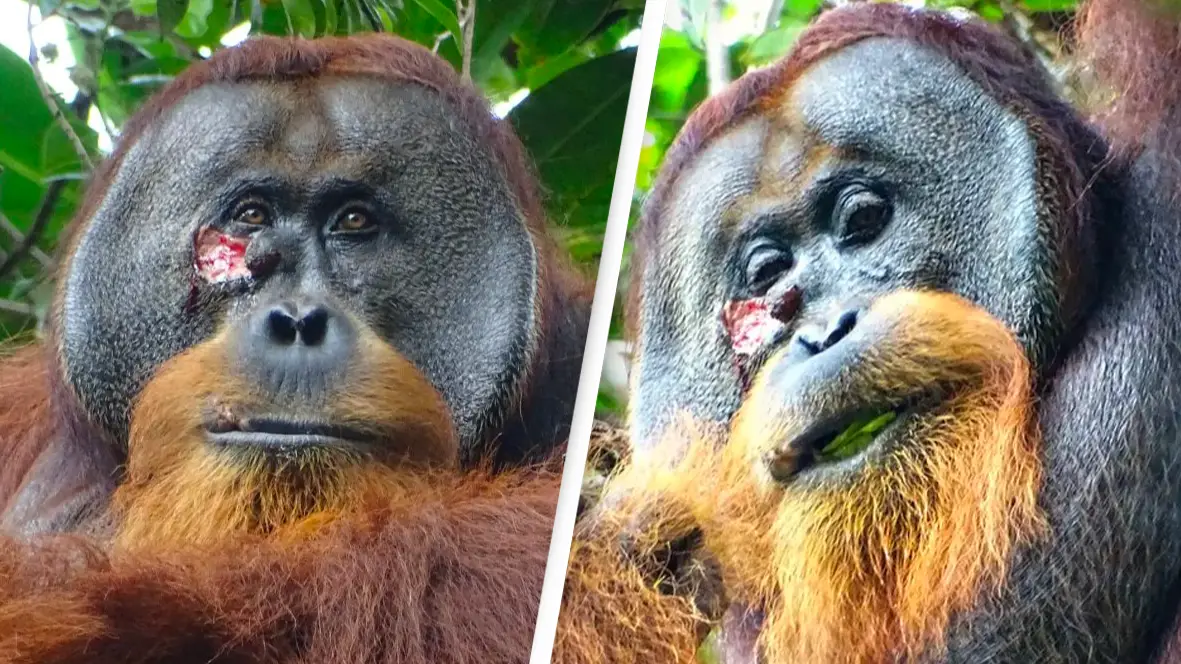
Rakus resides in in Indonesia and was spotted chewing the leaves of a climbing plant known as Akar Kuning (Fibraurea tinctoria) and applying the juicy mixture to a wound on his right cheek.

Advert
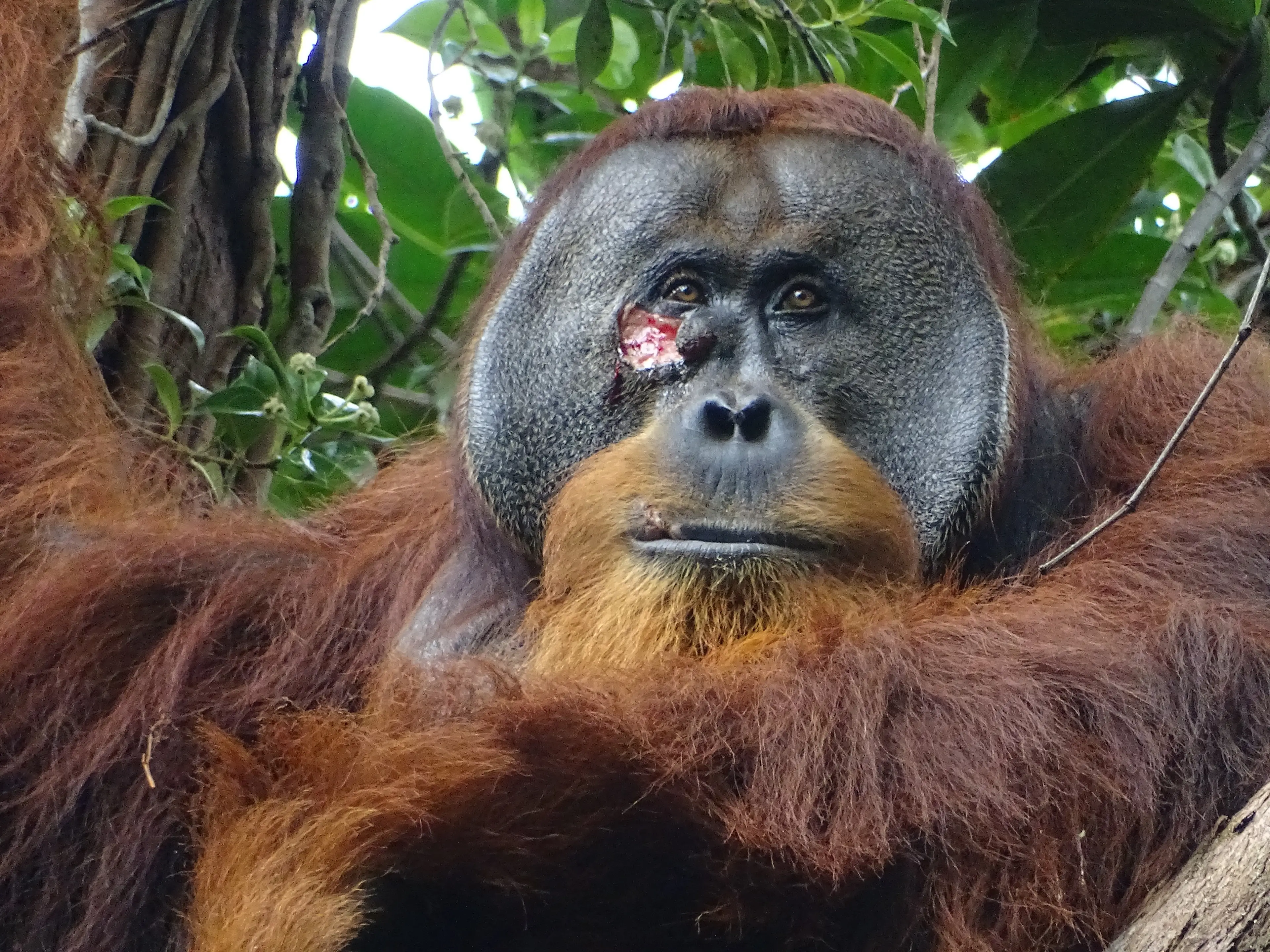
Rakus is thought to have sustained the injury in a fight. (Armas/Suaq Project/PA Wire)

It's believed he sustained the injury while fighting a neighboring male orangutan.

The team observed Rakus selectively ripping off leaves and chewing on them, and then applying the resulting mixture precisely onto the wound.

He did this for 30 minutes until the cut was completely covered.

Rakus had sustained the lesion three days before his self medication was observed at the Suaq Balimbing research site in Indonesia – a protected rainforest area home to 150 critically endangered Sumatran orangutans.

The researchers said there were no signs of wound infection in the following days that he applied the self-made mixtures.
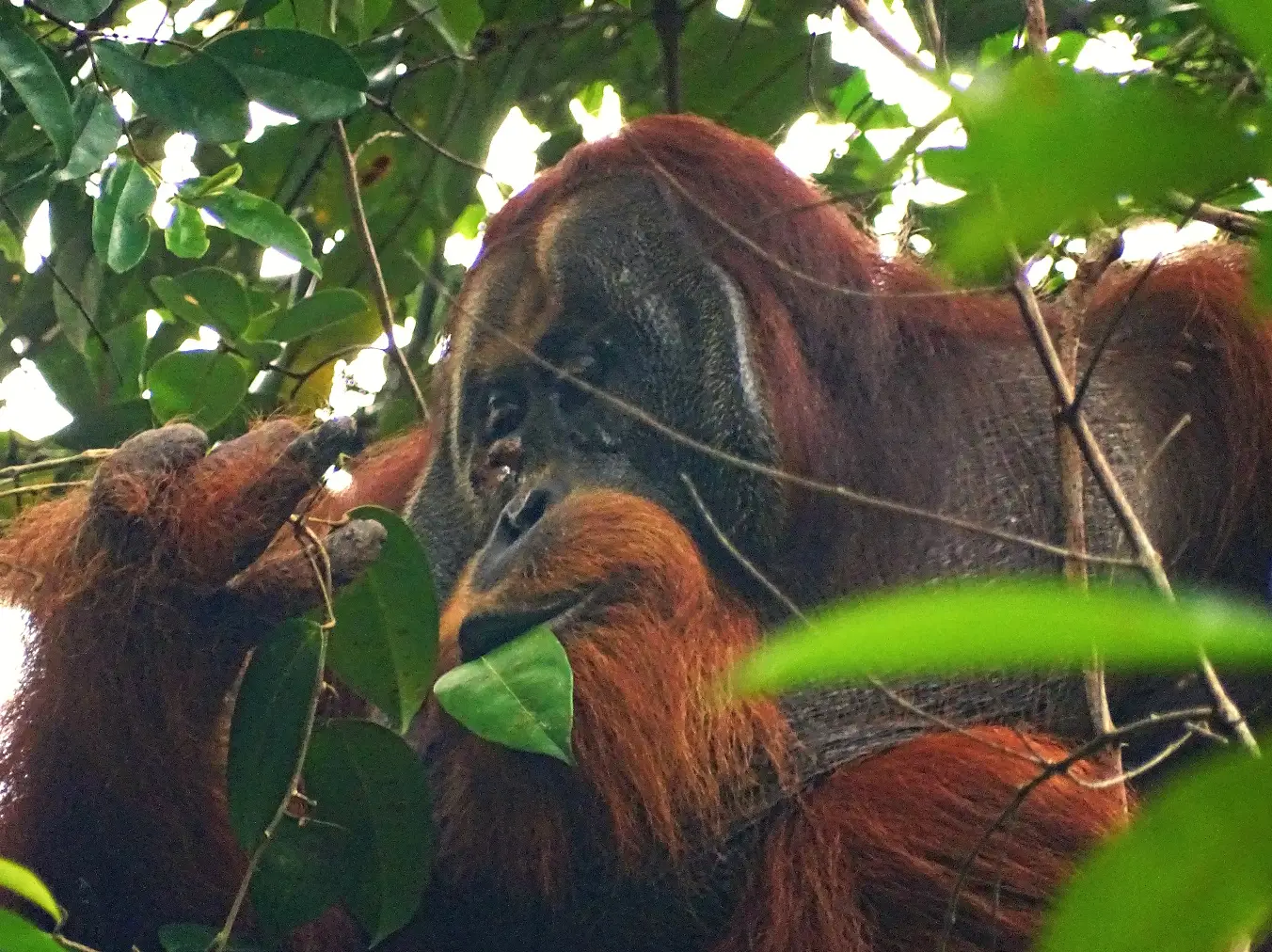
Miraculously, the wound was healed within a month. (Saidi Agam/Suaq Project/PA Wire)

The wound then closed within five days and was fully healed within a month.

During this healing period, Rakus was said to be seen resting more than usual as 'sleep positively affects wound healing as growth hormone release, protein synthesis and cell division are increased during sleep'.

Scientists say that it is likely that Rakus was intentionally treating the wound with the medicinal plant as he did not apply it to other parts of the body.

Dr. Isabelle Laumer, a primatologist and cognitive biologist at the Max Planck Institute of Animal Behaviour, said: “During daily observations of the orangutans, we noticed that a male named Rakus had sustained a facial wound, most likely during a fight with a neighbouring male.”
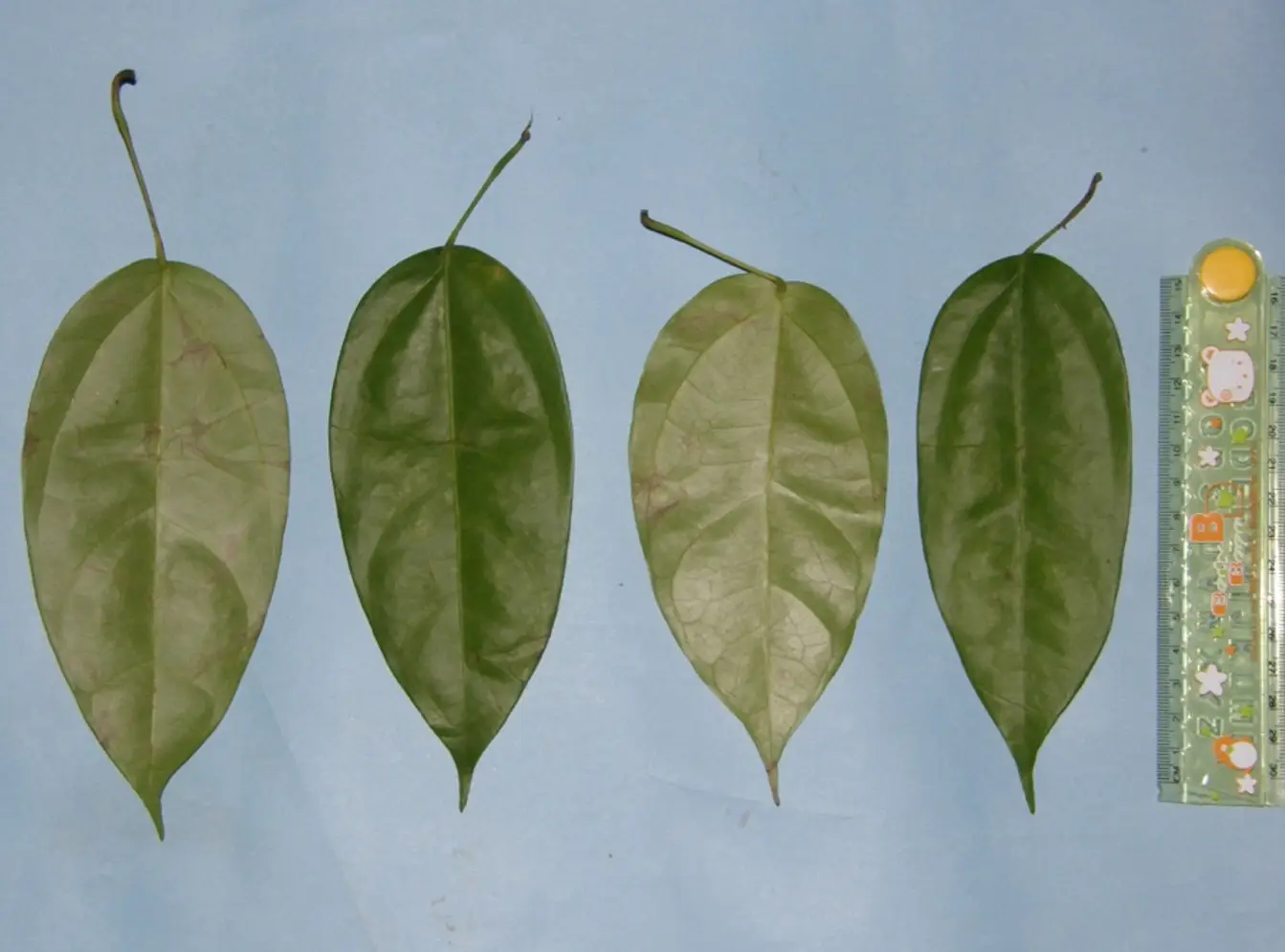
The Akar Kuning plant has many healing properties. (Saidi Agam/Suaq Project/PA Wire)

She said the Akar Kuning plant, which is found in tropical forests of Southeast Asia, is known for its pain relieving and anti-inflammatory effects and is often used in traditional medicine to treat diseases such as dysentery, diabetes and malaria.

Dr. Laumer continued: “Analyses of plant chemical compounds show the presence of furanoditerpenoids and protoberberine alkaloids, which are known to have antibacterial, anti-inflammatory, anti-fungal, antioxidant, and other biological activities of relevance to wound healing.”

The team now hope that its findings regarding Rakus, published in the journal Scientific Reports, could help shed light on how the knowledge of wound medications evolved in humans.

Choose your content:

12 hours ago
13 hours ago
  • Adam Gray/Bloomberg via Getty Images
    12 hours ago

    What Kamala Harris said about running for president in 2028

    Kamala Harris was in New York when she let slip her thoughts on trying to become the next president

    News
  • Getty Stock
    12 hours ago

    Doctor explains what to do if you have 'Pruritus ani' as 61% of men experience issue

    Experiencing 'pruritus ani' can be unpleasant and embarrassing, but plenty of people will experience this common health issue

    News
  • Miguel J. Rodriguez Carrillo / AFP via Getty Images
    13 hours ago

    Jeff Bezos' Amazon salary explained as it's revealed he earns less than an average construction worker

    Bezos has been earning the same salary for decades

    News
  • Jung Yeon-je / AFP via Getty Images
    13 hours ago

    Exactly who is affected by US military draft as automatic registration begins this year

    Millions of young Americans will be automatically registered for the US military draft by the end of the year

    News
  • Scientists weigh in on unusual salmon sperm skincare trend as they assess real results
  • Scientists reveal groundbreaking results of male birth control pill test as they explain how it works
  • Scientists reveal terrifying link between solar storms and heart attacks as NASA issues warning
  • Experts issue warning as infected 'Frankenstein' rabbits with 'tentacles' have invaded the US