Christopher Nolan's The Odyssey controversies explained as critics blast 3-hour-long film

Christopher Nolan's latest blockbuster, The Odyssey, has become one of the most talked-about films of the summer, but not all of the attention has been positive, with the movie drawing criticism over its historical accuracy, language and casting choices.
The film, based on Homer's ancient Greek epic, follows Odysseus on his long journey home to Ithaca after a decade fighting in the Trojan War, and stars Matt Damon, Tom Holland, Anne Hathaway, Robert Pattinson and Lupita Nyong'o.
While adaptations of classic literature often attract debate over fidelity to the source material, the level of scrutiny facing The Odyssey has been unusually intense, with some critics using the film as a vehicle to reignite broader cultural arguments rather than engage with it on its own terms.
Is The Odyssey historically accurate?
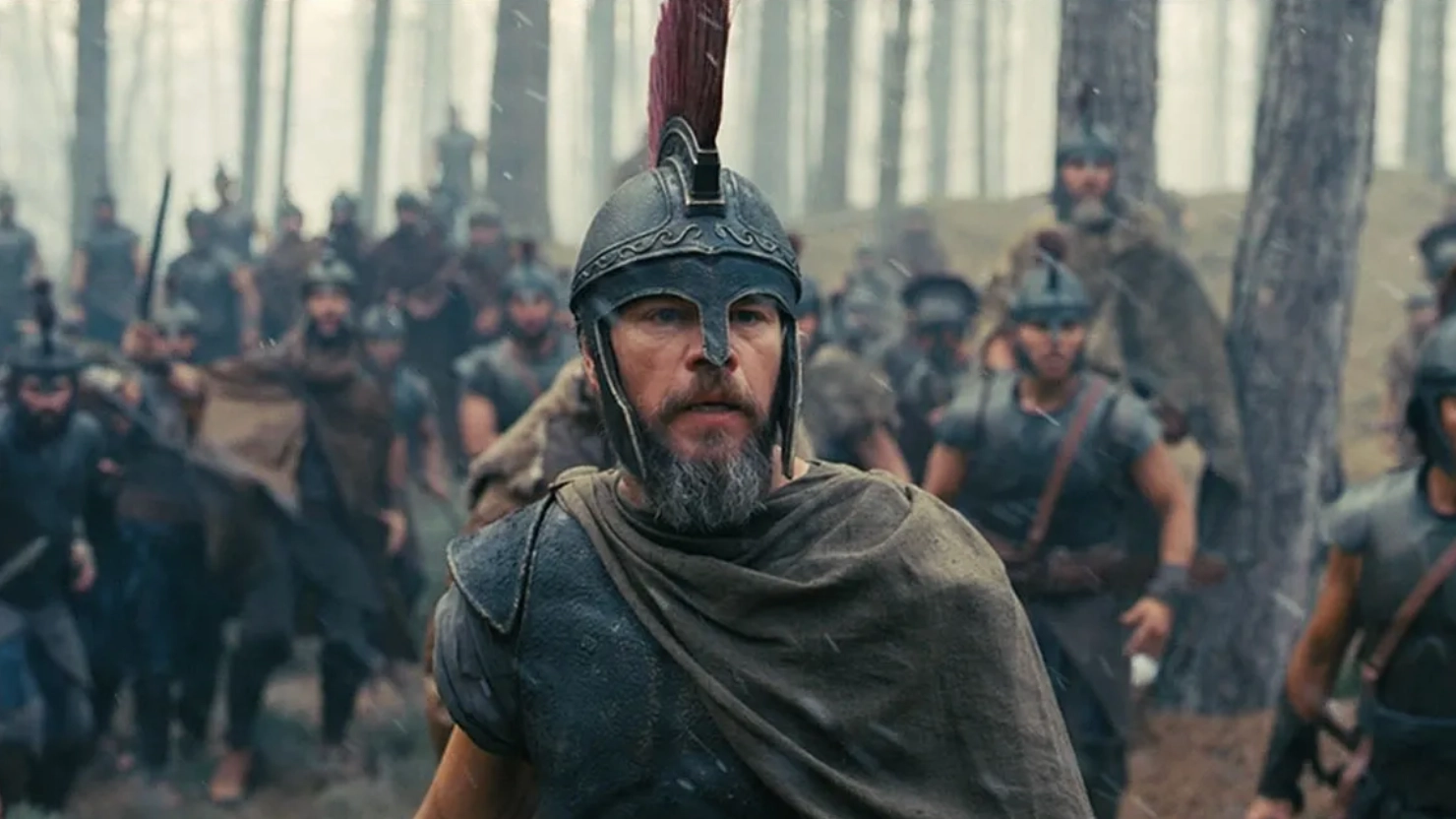
Some viewers took issue with the costuming after early trailers were released, criticizing Odysseus' plumed helmet and red cape as inaccurate to the period, and comparing Agamemnon's matte black armor to Batman's suit from Nolan's earlier Dark Knight trilogy.
Advert
Speaking to TIME, Nolan explained that historical knowledge of the Bronze Age comes from 'very fragmentary archaeological records", and defended the design choices, noting that Mycenaean daggers have been found with blackened bronze finishes achieved by adding gold, silver and sulfur to the metal.
Nolan also addressed criticism over the ship used in the film, which some compared to a Viking longship.
He told the Los Angeles Times that the production used an authentic Viking vessel discovered in Norway, since it needed a wooden-hulled ship built with ancient techniques capable of handling open ocean swells.
The cast reportedly learned to sail and row for the role, with the ship's real 26-man crew incorporated into the film as extras.
Criticism also centered on the film's use of modern language, particularly Telemachus' use of the word ‘dad’ in reference to Odysseus.
Nolan said he prioritized "language that has emotional, not intellectual meaning to people," while Tom Holland pointed out to Channel 4 that a historically accurate term would have been Greek in the first place. Adam Cooper, director of the linguistics program at Northeastern University, told Northeastern Global News that the word was likely meant to reflect a close parent-child bond that would have existed in some form in ancient Greek as well.
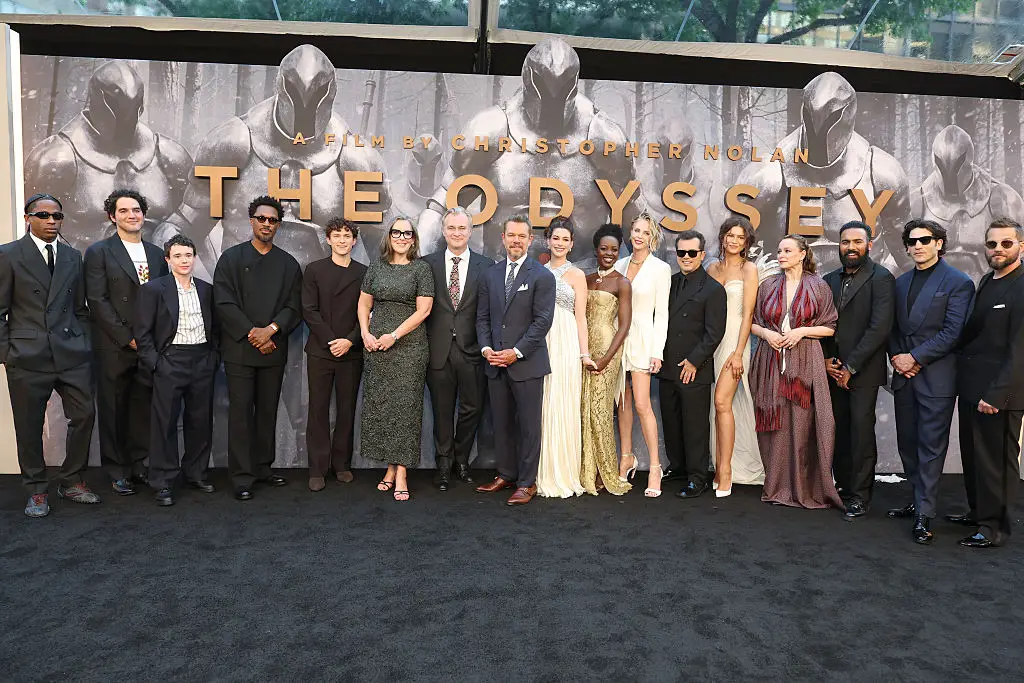
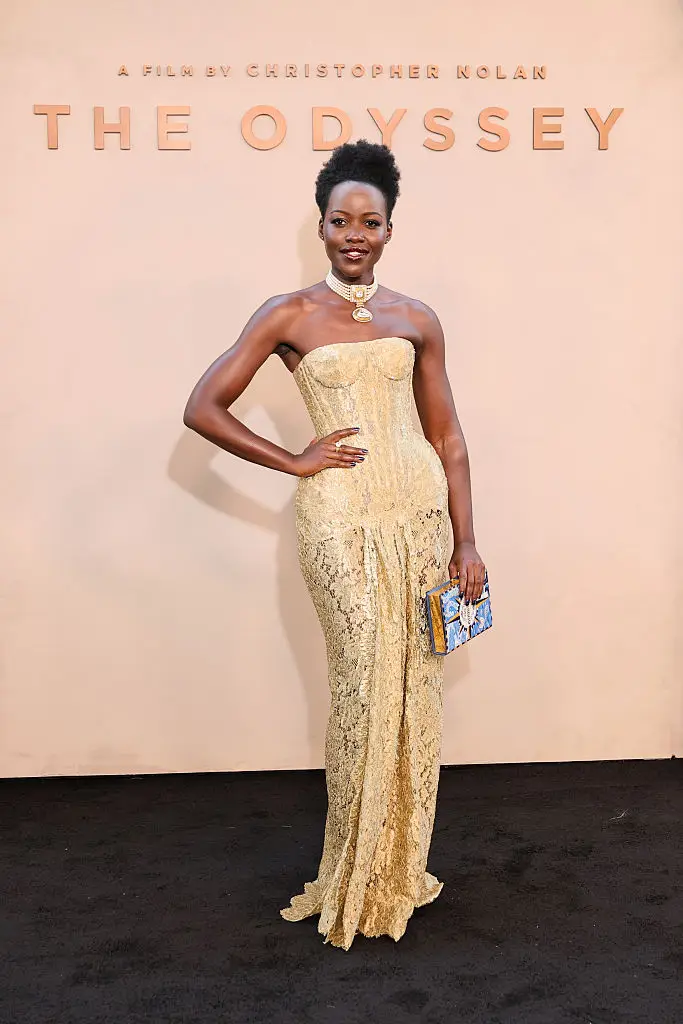 The film's cast, which also includes Zendaya, Elliot Page, Himesh Patel, Corey Hawkins and Travis Scott, has faced backlash online, most notably around Nyong'o's casting as Helen of Troy.(Photo by Dia Dipasupil/Getty Images)
Why has Lupita Nyong'o's casting caused controversy?
The film's cast, which also includes Zendaya, Elliot Page, Himesh Patel, Corey Hawkins and Travis Scott, has faced backlash online, most notably around Nyong'o's casting as Helen of Troy. Homer's original text offers only a brief description of Helen as ‘beautiful-haired’ and ‘white-armed.’
According to Polygon, Elon Musk amplified criticism of the casting on X, including posts from blogger Matt Walsh, who accused Nolan of casting Nyong'o out of fear of being called racist.
Musk went further, calling Nolan an ‘anti-white racist’ who was ‘pissing on Homer's grave.’
Polygon noted that the widely repeated claim describing Helen as ‘the most beautiful woman in the world’ doesn't actually appear in Homer's Odyssey, and instead originates from the ancient Greek poet Sappho.
Nolan told The Telegraph the backlash was ‘irrelevant’ and ‘comes with the territory,’ while Nyong'o told Elle she remains supportive of the director's vision. "Our cast is representative of the world," she said. "I'm not spending my time thinking of a defense."
Topics: Christopher Nolan, Film and TV
 Thomas Bamford