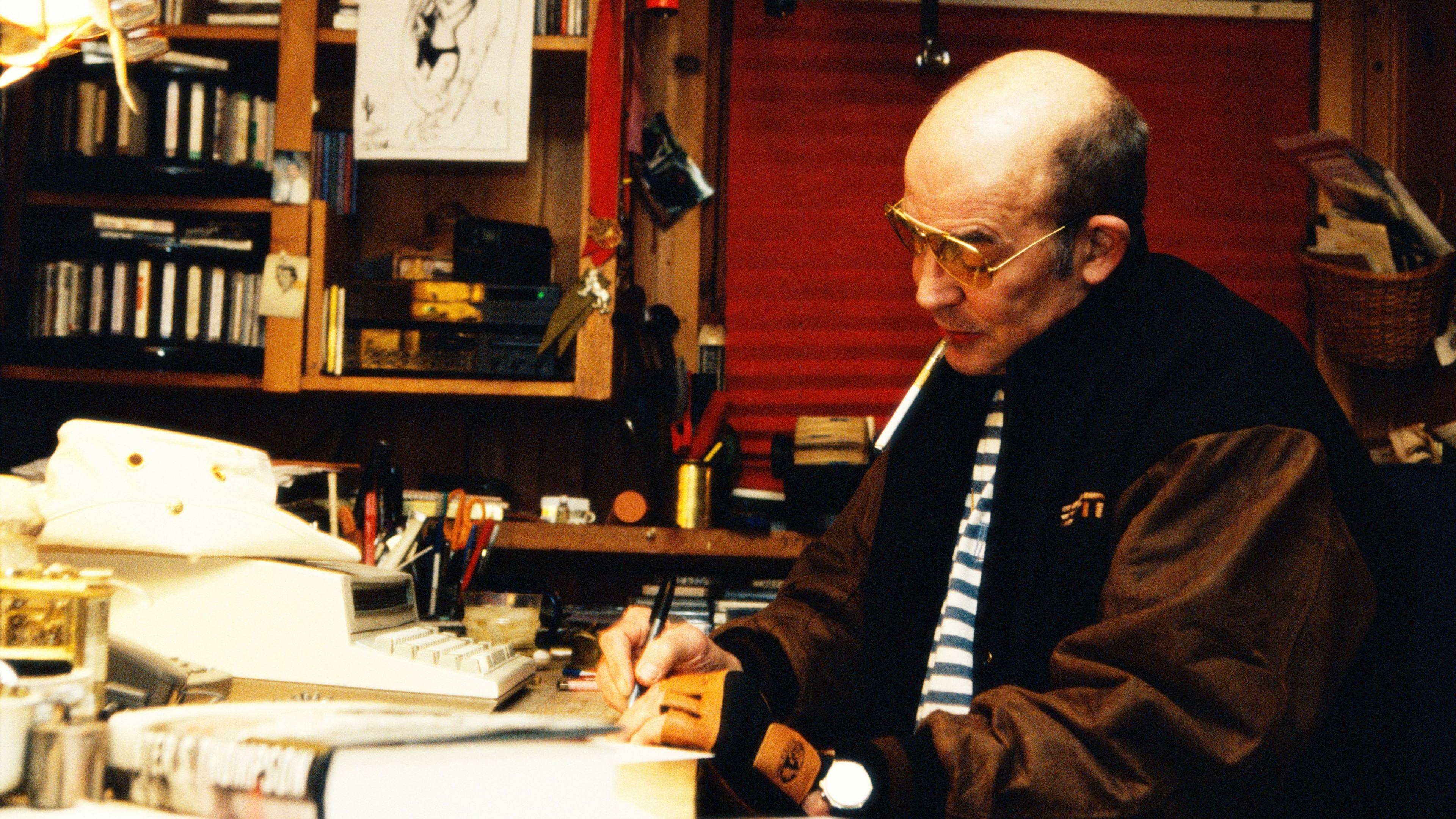
Truth behind viral post of writer's wild daily routine including cocaine, champagne and hot tubs

Warning: This article contains discussions of suicide and substance abuse which may be distressing to some readers.
Few writers can be credited with creating their own genre, fewer still have made such a titanic contribution to literature while on ‘a whole galaxy of multi-colored uppers, downers, screamers, laughers... and also a quart of tequila’.
But that is exactly what ‘Gonzo journalism’ inventor Hunter S. Thompson achieved, writing some of the greatest articles and novels to document the aftermath of the 1960s counterculture movement – often while high on enough drugs to sedate a small elephant.
This Gonzo style of writing involves placing the journalist at the center of the story, with them often functioning as an unreliable narrator in order to get closer to the truth of the matter. For Thompson, this often involved taking a cocktail of drugs and attempting to cover something like a police narcotics conference.
Advert
However, the infamous reputation of the Fear and Loathing in Las Vegas author as a drug-addled truth-teller has somewhat spun out of control in the 20 years since he committed suicide at the age of 67 at his home in Colorado, Owl Farm, including his viral daily routine.
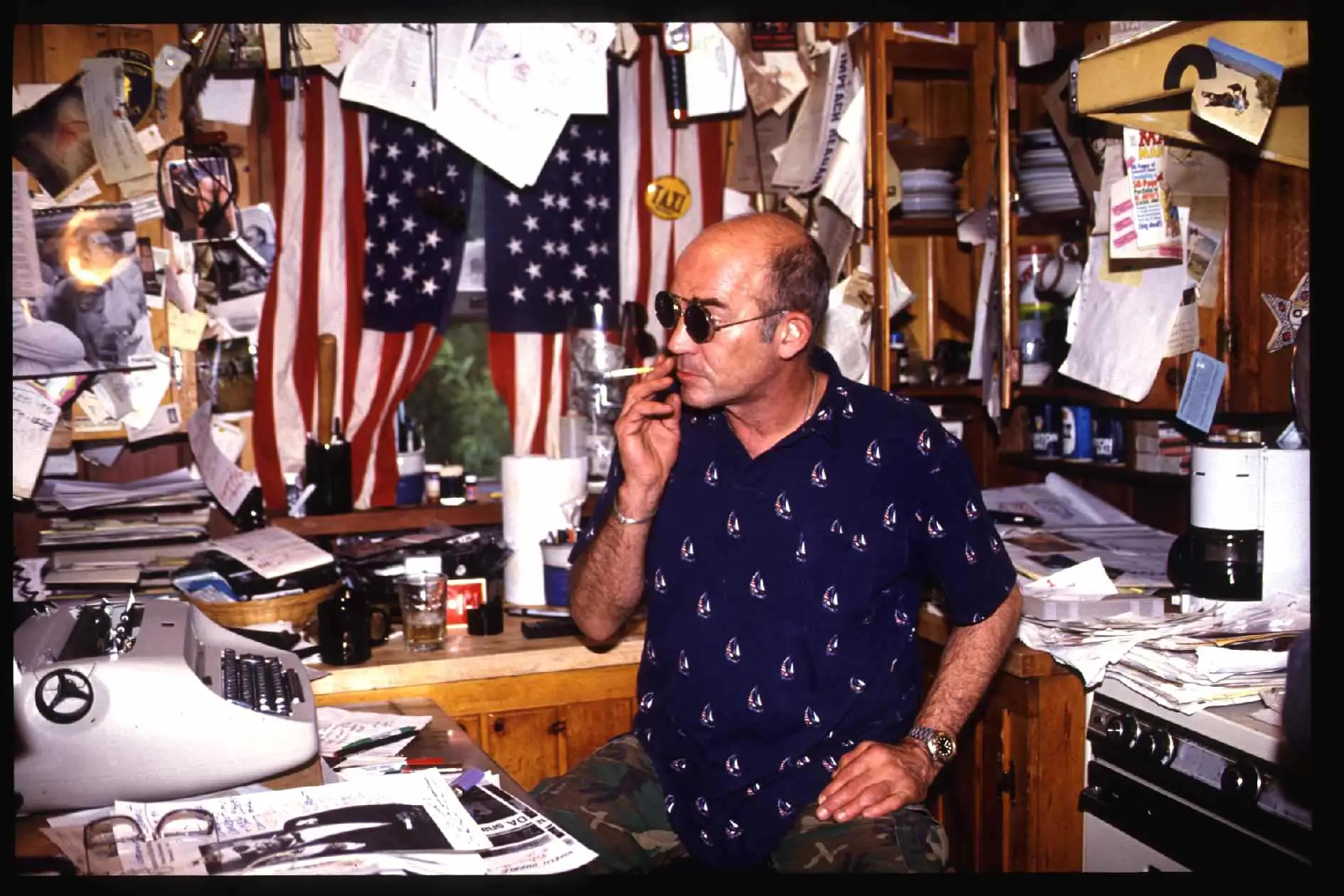
The most widespread example of this substance-abusing notoriety is a description of his daily routine that often goes viral on the internet, claiming that he did cocaine five times in the first two hours of the day.
This was apparently chased with Chivas Regal scotch and some more coke until midnight, when his schedule finally states: “Hunter ready to write.”
This often-shared routine, where the author only ‘starts snorting cocaine seriously’ at 9pm, has been cited by a number of journalists and respected publications, as well as podcaster Joe Rogan, during its time floating around the internet.
They will even often credit the Associated Press, but as a serious Hunter S Thompson obsessive who has read everything he ever wrote, as well as most of the things written about him, I regret to inform you that it is entirely fabricated.
But before I ruin one of the great public myths about the self-proclaimed Doctor of Journalism, below is this alleged schedule, which was recorded by E Jean Caroll after living with the great Gonzo practitioner in the early 1990s.
Hunter S. Thompson’s alleged daily routine
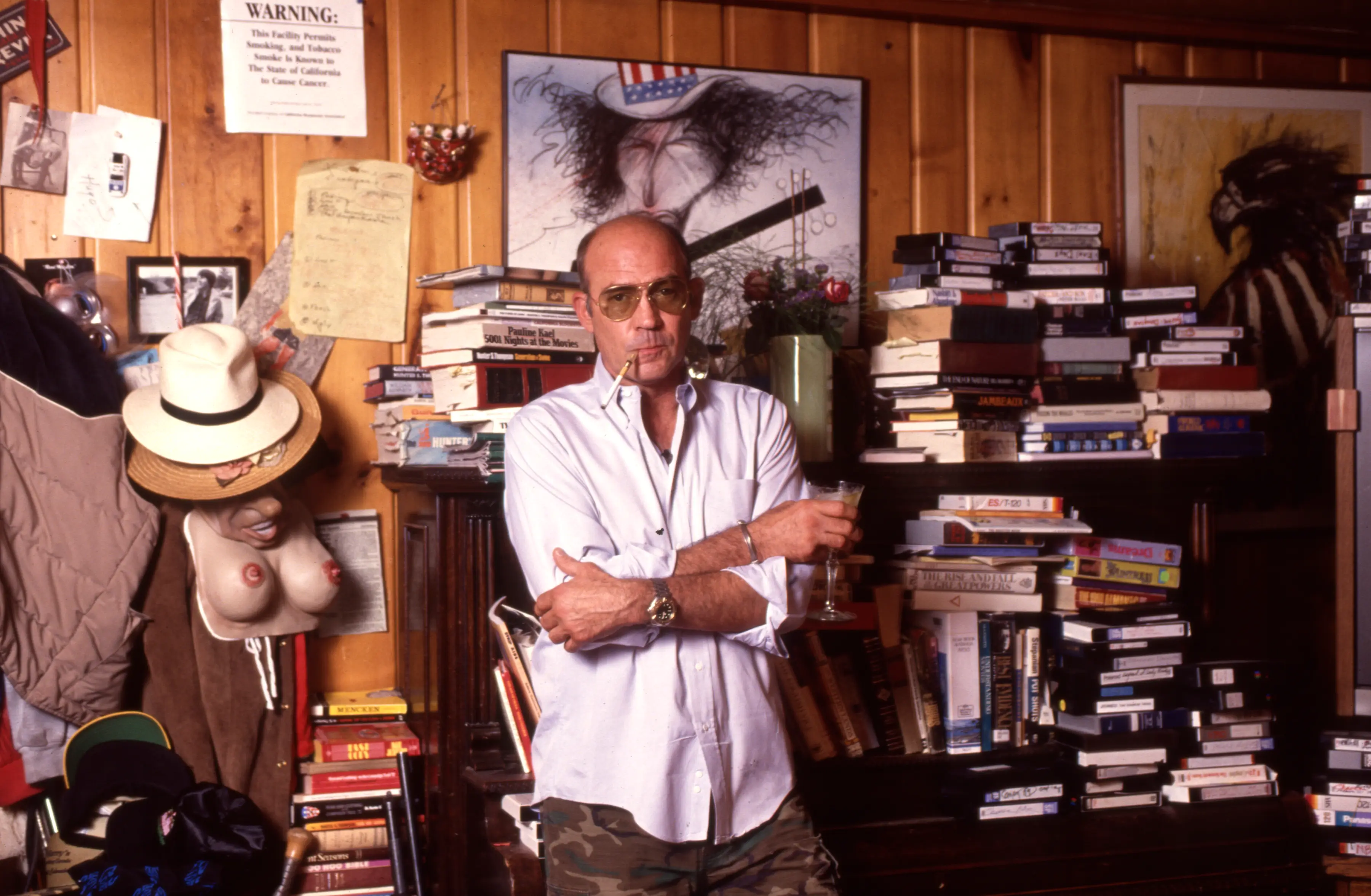
3:00pm - Rise
3:05 - Chivas Regal with the morning papers, Dunhills
3:45 - Cocaine 3:50 another glass of Chivas, Dunhill
4:05 - First cup of coffee, Dunhill
4:15 - Cocaine
4:16 - Orange juice, Dunhill
4:30 - Cocaine
4:54 - Cocaine
5:05 - Cocaine
5:11 - Coffee, Dunhills
5:30 - More ice in the Chivas
5:45 - Cocaine, etc., etc.
6:00 - Grass to take the edge off the day
7:05 - Woody Creek Tavern for lunch - Heineken, two margaritas, coleslaw, a taco salad, a double order of fried onion rings, carrot cake, ice cream, a bean fritter, Dunhills, another Heineken, cocaine, and for the ride home, a snow cone (a glass of shredded ice over which is poured three or four jiggers of Chivas)
9:00 - Starts snorting cocaine seriously
10:00 - Drops acid
11:00 - Chartreuse, cocaine, grass
11:30 - Cocaine, etc, etc.
12:00 midnight - Hunter is ready to write
12:05-6:00am - Chartreuse, cocaine, grass, Chivas, coffee, Heineken, clove cigarettes, grapefruit, Dunhills, orange juice, gin, continuous pornographic movies.
6:00 - The hot tub - Champagne, Dove Bars, fettuccine Alfredo
8:00 - Halcyon
8:20 – Sleep
Why Thompson’s daily schedule isn’t real
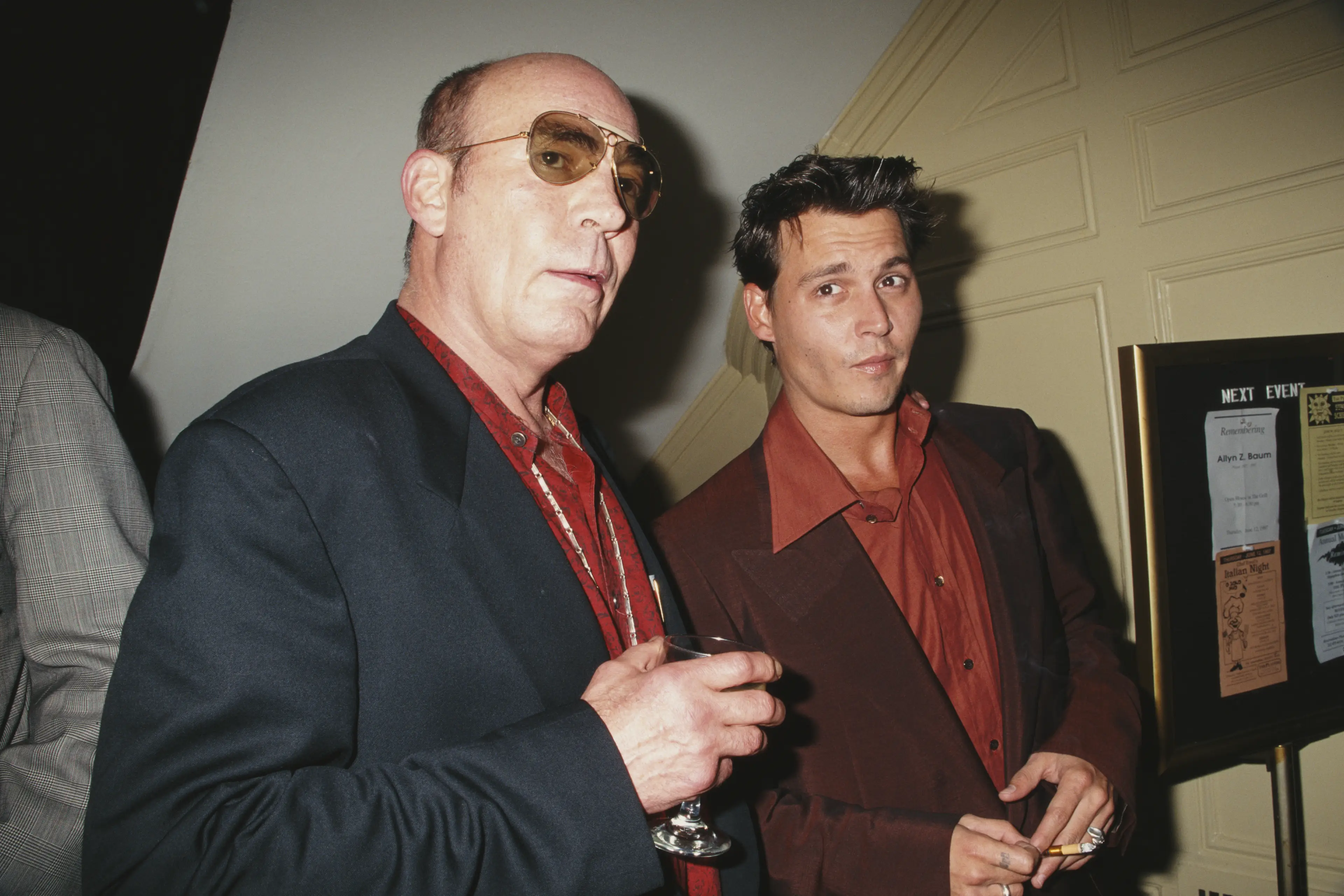
While the Times of London, one of the oldest newspapers in the world, has credited Thompson’s schedule to an AP report from 1979, this insane routine actually comes from a 1993 biography written by Carroll after staying at his drug, alcohol, and explosives-filled home at Owl Farm.
That's the same E Jean Carroll who many decades later won a $83 million civil court case against President Trump, who was found liable for defamation and sexual abuse in a landmark ruling that was upheld on appeal.
But before that, the same year that she began her ‘Ask E. Jean’ column in Elle, the author published a biography titled Hunter: The Strange and Savage Life of Hunter S. Thompson, based on the raucous time she spent living with the legendary drug user.
The very first chapter of the biography begins with an outright exaggeration and Carroll’s claim that Thompson fills her with ‘loathing’.
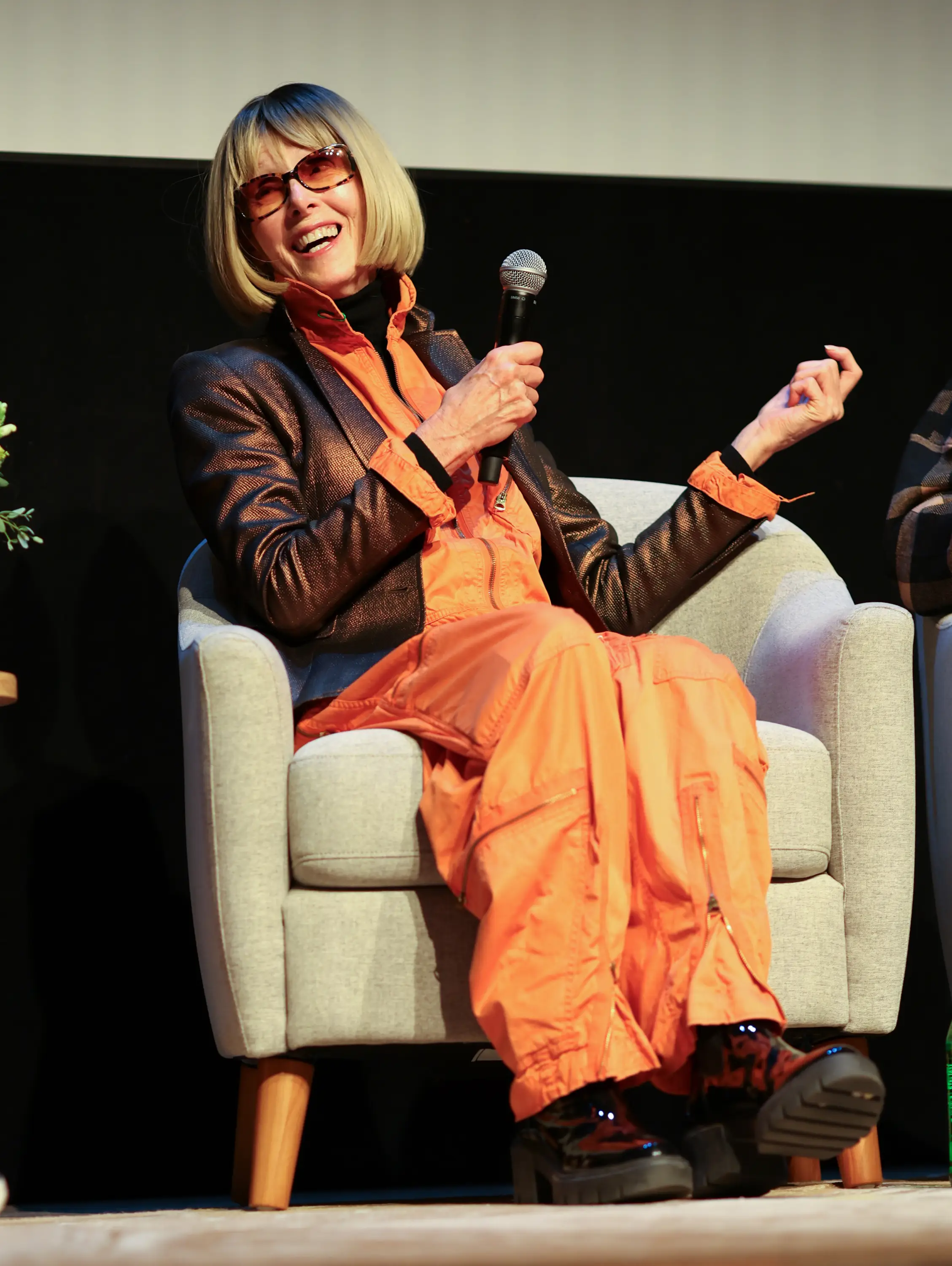
She says: “I have heard the biographer of Harry S. Truman, Catherine the Great, etc., etc., say they would give anything if their subjects were alive so they could ask them questions. I, on the other hand, would give anything if my subject were dead.
“He should be. Oh, yes. Look at his daily routine."
This might seem a bit harsh for a woman who the New York Times has called ‘feminism’s answer to Hunter S. Thompson’, but in a literary flair that the Rum Diary author would have enjoyed, what she wrote is believed to have simply been pure Gonzo.
Thompson was an inveterate user of intoxicating substances, whether that be a glass of Wild Turkey or a heavy dose of mescaline, and to most outside observers, his prodigious consumption while penning biting pieces of political journalism bordered on the absurd. He was also notoriously difficult and belligerent.
By inserting herself as a character into the biography, alongside small exaggerations of reality with satirical intent, Carroll actually paid homage to the style of writing that Thompson helped to develop and popularize - while also lightly poking fun at the aging journalist.
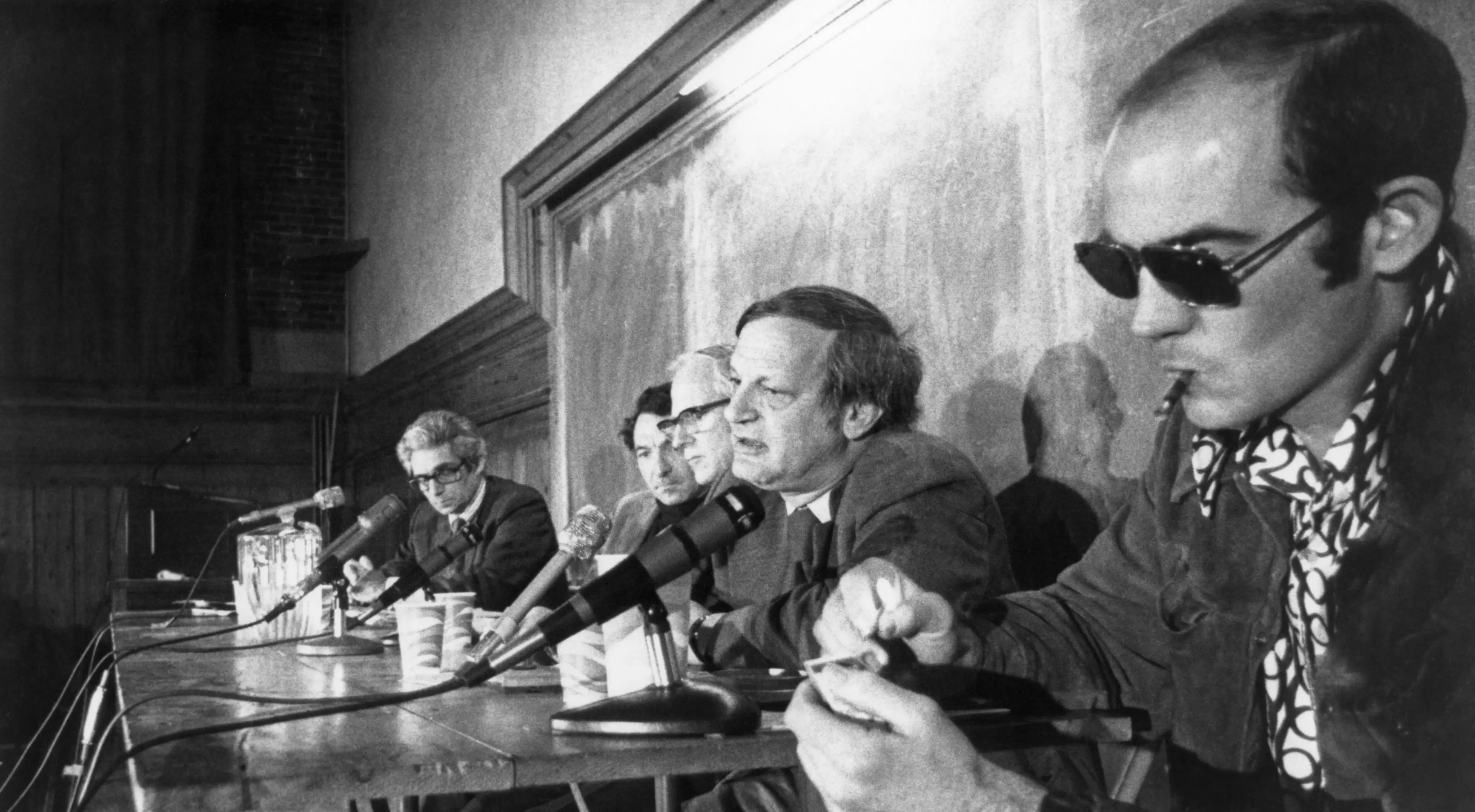
The insane routine also kicks off a major authorial choice in the biography, which alternates between fictional and factual chapters throughout in an attempt to paint a picture of both Hunter S. Thompson the person, and Hunter S. Thompson the character.
Somewhere along the way, in the intervening three decades since the biography was written, this light attempt at satire has been twisted from joke into widely-shared fact. But I can tell you for a fact that he would have loved this.
In his 1972 work Fear and Loathing on the Campaign Trail, Thompson writes an article claiming that Democratic candidate Edmund Muskie had been prescribed 'ibogaine' by an Amazonian witch doctor to help control his anger.
But a week later, when Muskie broke into a fit of rage on stage, suddenly Thompson's outlandish joke was reported as fact, causing Muskie to drop out of the race.
So, if anyone could appreciate a fake story about drug use becoming a seeming fact of their biography, it would be Hunter S. Thompson.
 William Morgan