NASA release 'mesmerizing' sounds from a new scorching 7-planet system

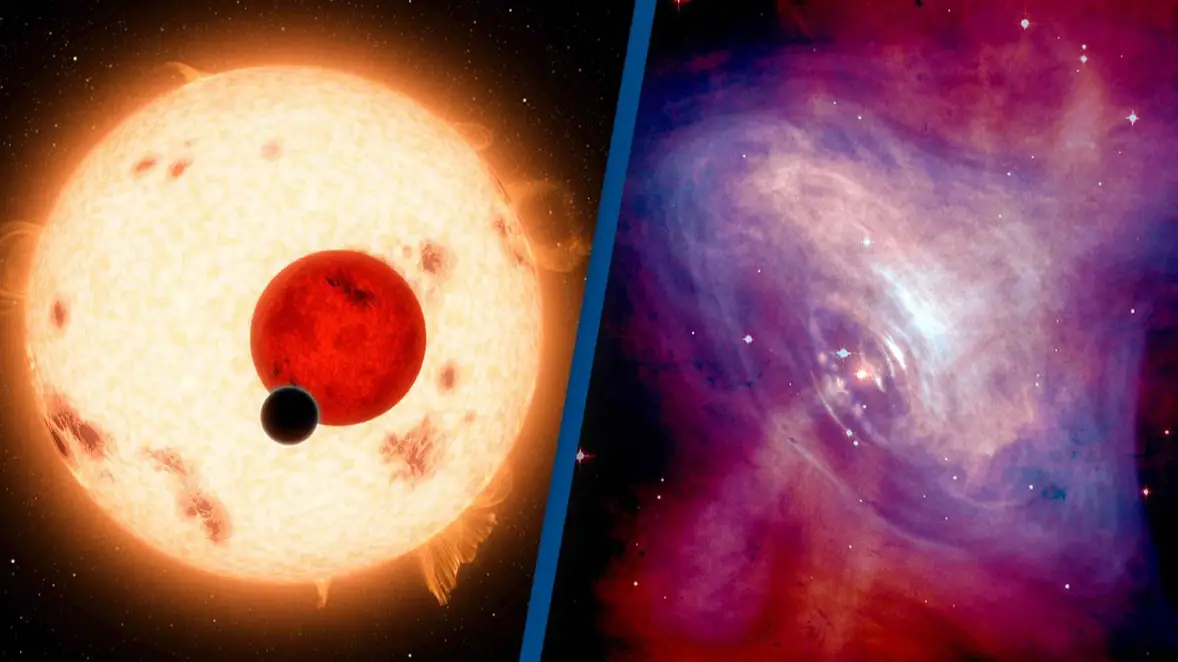
NASA has released a fascinating representation of a new seven-planet system.
The system sees the exoplanets, meaning planets in other solar systems, orbiting around a star which is around 10 percent bigger and five percent hotter than the Sun.
This star has the rather catchy name - Kepler-385.
Advert
Just like the solar system we inhabit, the planets each follow an orbital path as they hurtle through space.
Professor Jason Rowe, from Bishop's University, said: "Our revision to the Kepler Exoplanet catalog provides the first true uniform analysis of exoplanet properties.
"Improvements to all planetary and stellar properties have allowed us to conduct an in-depth study of the fundamental properties of exoplanetary systems to better understand exoplanets and directly compare these distant worlds to our own Solar System and to focus in on the details of individual systems such as Kepler-385."
But it's the way that NASA has presented the data about the new solar system which has got people talking.
This is because the space company has chosen to display it in a sonic way. Yes, you read that right.
Those who are chronically online might be familiar with the videos where a pendulum has a selection of dots which bounce between two lines, making a different note when they hit.
The result can be a mesmerising sound as the scale shifts and changes before completing the cycle and returning to the beginning.
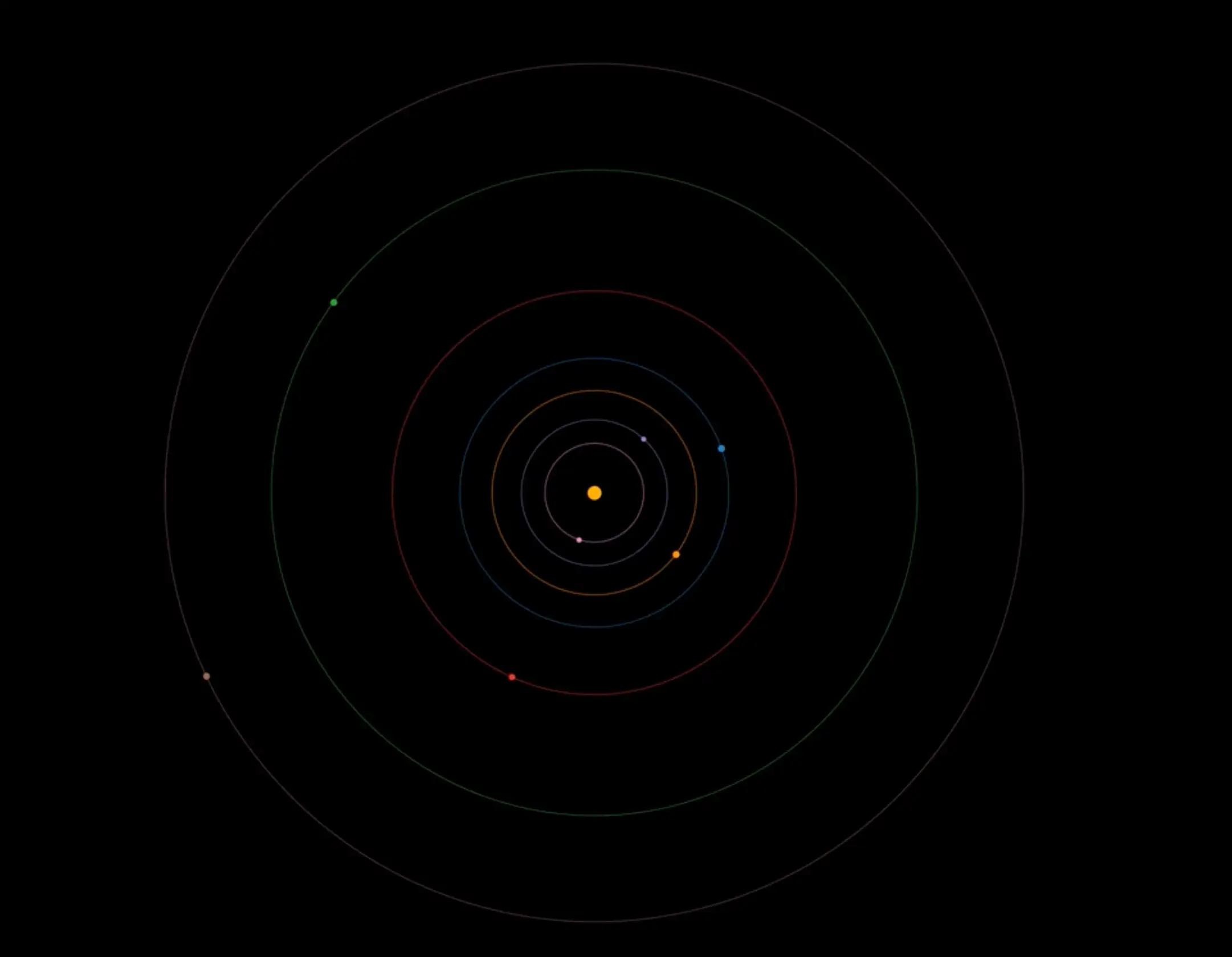
This is similar to NASA's sonification of the new system.
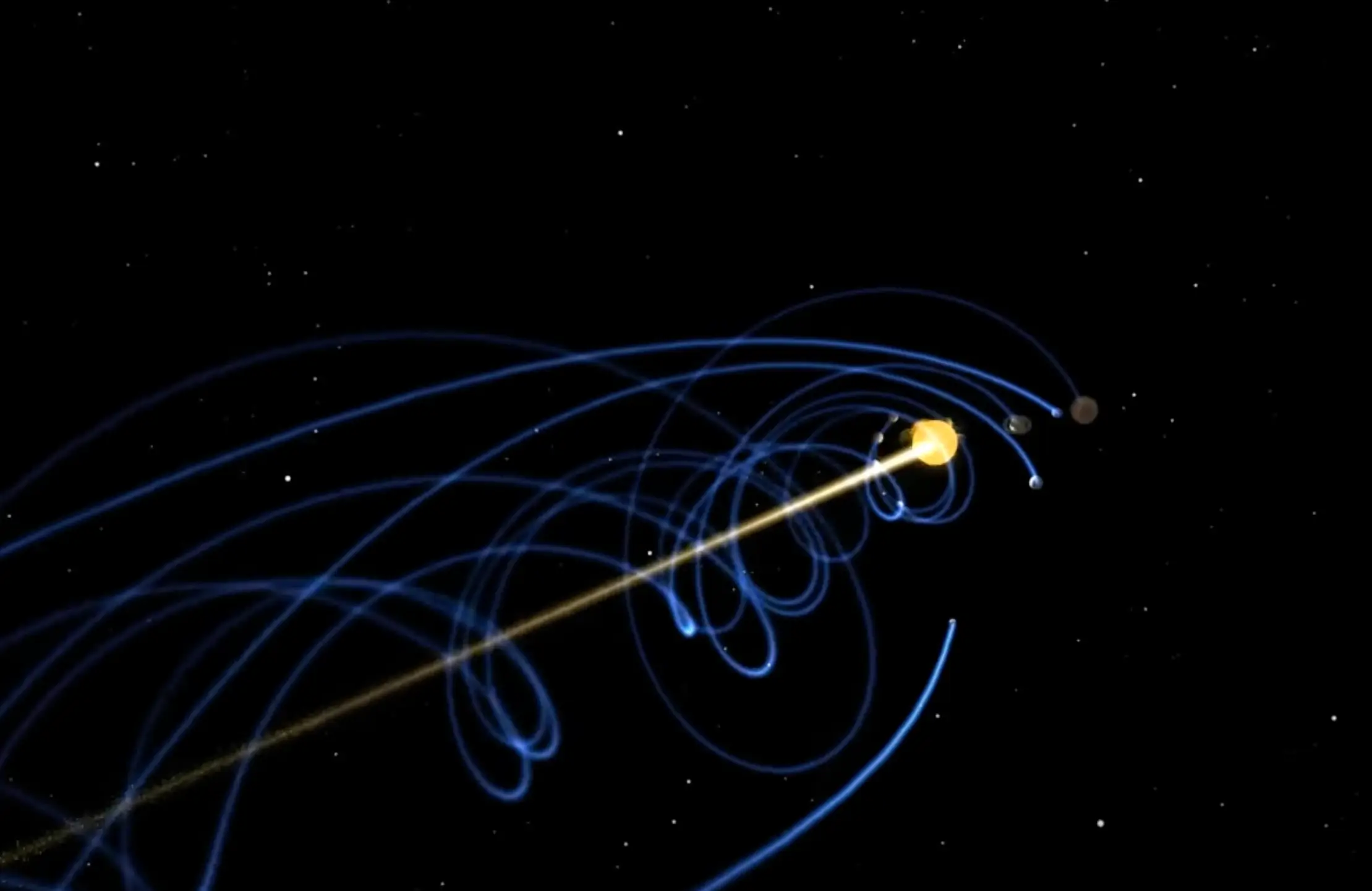
Each of the planet's orbits has been laid out as a circle. This is, of course, different from how the orbits actually work. They move more in a helix motion as the solar system goes through space rather than a flat circle, because space isn't flat.
All the same, it's a useful way to present the planets' orbits.
And in this case it was used to show that the orbital paths of the planets are somehow in synchrony with each other.
As a result they produce a gorgeous harmony when you present them 'sonically', a rather beautiful way to illustrate how the strange harmonies within the universe.
Viewers have been left stunned after NASA shared a video of the sonification on its YouTube channel.
One commented: "Wow !! Wow!! This just make you think, Love it."
Another added: "Out of this world."
And third simply put: "Mesmerizing."
But what about the big question - would it be possible to find life within this new solar system?
Well, all of the planets are well within the 'habitable zone', the sweet spot where a planet can orbit a star and have the right conditions for life to exist.
However, they are just too warm to sustain life as we know it.
Jack Lissauer, a research scientist at NASA’s Ames Research Center in California’s Silicon Valley, added: "NASA’s Kepler mission has discovered the majority of known exoplanets, and this new catalog will enable astronomers to learn more about their characteristics."
 Kit Roberts