unilad homepage
unilad homepage
    • News
      • UK News
      • US News
      • World News
      • Crime
      • Health
      • Money
      • Sport
      • Travel
    • Music
    • Technology
    • Film and TV
      • News
      • DC Comics
      • Disney
      • Marvel
      • Netflix
    • Celebrity
    • Politics
    • Advertise
    • Terms
    • Privacy & Cookies
    • LADbible Group
    • LADbible
    • SPORTbible
    • GAMINGbible
    • Tyla
    • UNILAD Tech
    • FOODbible
    • License Our Content
    • About Us & Contact
    • Jobs
    • Latest
    • Archive
    • Topics A-Z
    • Authors
    Facebook
    Instagram
    X
    Threads
    TikTok
    YouTube
    Submit Your Content
    Mars has started spinning faster and it's left scientists baffled
    Home>Technology>Space
    Updated 18:47 9 Aug 2023 GMT+1Published 15:14 9 Aug 2023 GMT+1

    Mars has started spinning faster and it's left scientists baffled

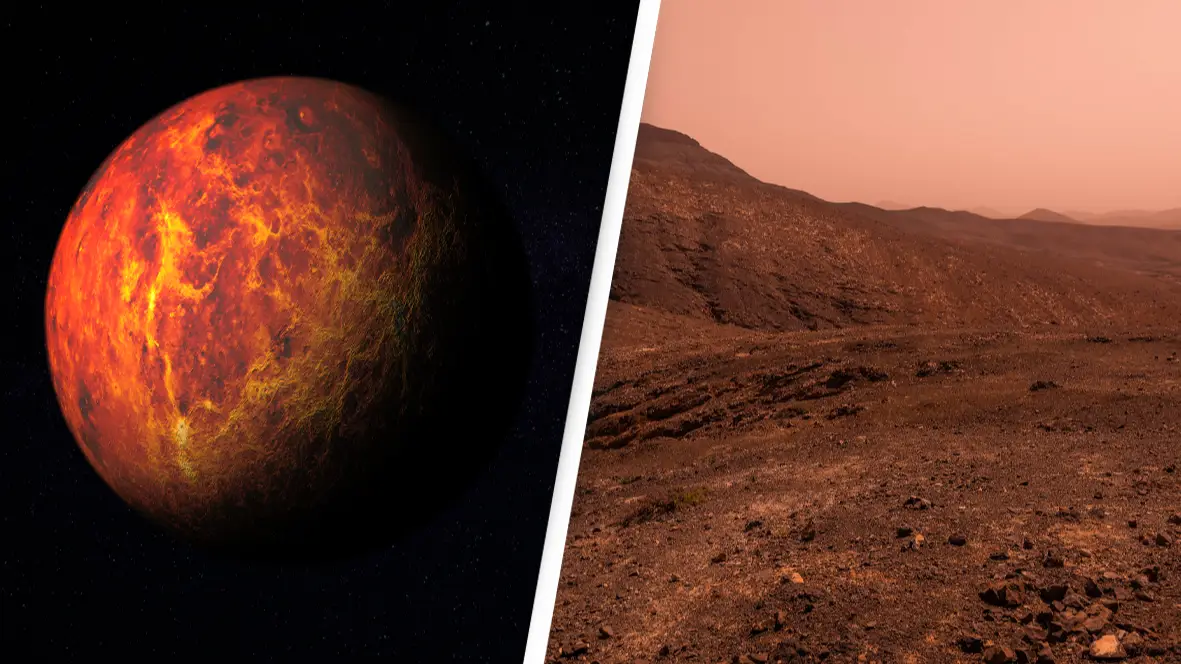
    Scientists have realised that Martian days are getting shorter because the planet is spinning faster.

    Gregory Robinson

    Gregory Robinson

    google discoverFollow us on Google Discover
    Featured Image Credit: Artur Debat

    Topics: News, Space, Technology, NASA

    Gregory Robinson
    Gregory Robinson

    Gregory is a journalist for UNILAD. After graduating with a master's degree in journalism, he has worked for both print and online publications and is particularly interested in TV, (pop) music and lifestyle. He loves Madonna, teen dramas from the '90s and prefers tea over coffee.

    Advert

    Advert

    Advert

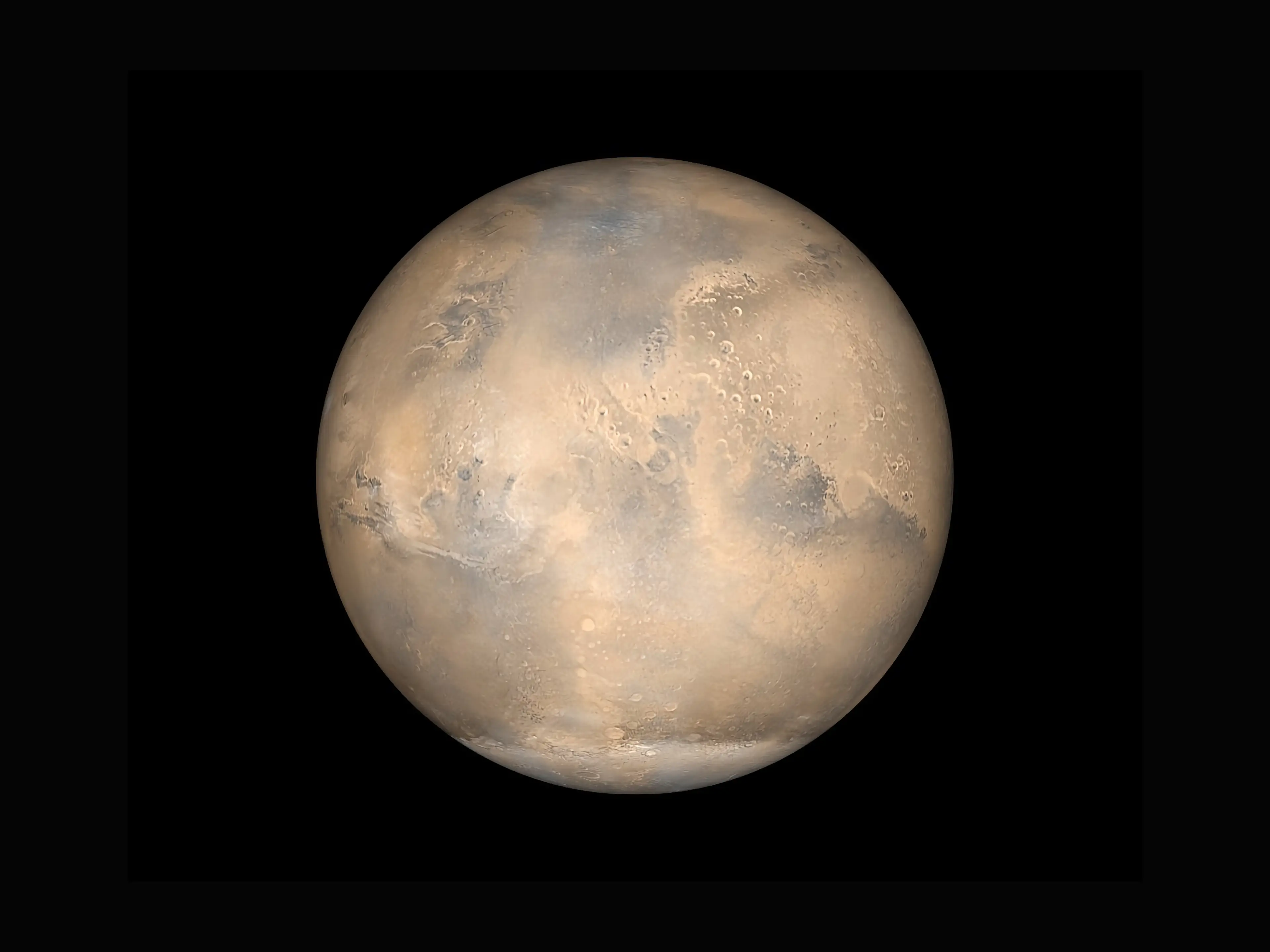
    Mars is spinning faster and scientists are not sure about the reason why.

    Scientists have discovered that the Red Planet is accelerating at around four milliarcseconds per year, which means Martian days are now a fraction of a millisecond shorter.

    The measurements suggest the changes are subtle, however, experts are currently unable to explain the exact reason behind it.

    Advert

    One of the potential causes could be ice accumulating on Mars’ polar caps or post-glacial rebound, which describes when land masses rise after being buried beneath ice.

    Shifts in a planet’s mass can cause it to accelerate, NASA says, which is kind of similar to when an ice skater spins with their arms stretched out before retracting them.

    The shift in spin speed was detected by using data from NASA’s InSight Mars lander. The spacecraft was designed to study Mars over a four year period, before it ran out of power in December last year.
    Mars is spinning faster and scientists are not sure about the reason why.
    NASA/Pexels

    Sebastien Le Maistre, lead author of a paper documenting the findings in the Nature journal, said the variations in speed on Mars were ‘just a few tens of centimetres over the course of a Martian year’.

    He added: “It takes a very long time and a lot of data to accumulate before we can even see these variations.”

    Scientists have been able to make the most precise measurements of Mars’ rotation ever, including that the planet wobbles because of the ‘sloshing’ of its molten core.

    The findings, which were detailed in a recent Nature paper, used data from the first 900 Martian days from NASA’s InSight Mars lander.

    Le Mistre called the study ‘a historic experiment’. He teased that the study is just the tip of the iceberg and there are a lot more discoveries to be made.

    He added: “We have spent a lot of time and energy preparing for the experiment and anticipating these discoveries. But despite this, we were still surprised along the way – and it’s not over, since RISE still has a lot to reveal about Mars.”
    Sebastien Le Maistre, lead author of a paper documenting the findings in the Nature journal, called the study 'a historic experiment'.
    Artur Debat

    For many years there has been talk of humans one day moving to Mars permanently, with the likes of Elon Musk aiming to get mankind on the Red Planet before anyone else.

    However, according to one of the most recent studies into the viability of human life on Mars, it might not be as easy as you may think.

    Research carried out by a team at UCLA looked to answer two key questions - the first being around the impact of particle radiation and whether it would pose too grave a threat to human life.

    The second was whether the timing of a mission to Mars could protect astronauts and the spacecraft from radiation?

    The scientists used geophysical models of particle radiation for a solar cycle and models of how radiation could affect both human passengers and a spacecraft, to answer both questions.

    The answers to their two questions were 'no' and 'yes', respectively.

    Choose your content:

    20 hours ago
    2 days ago
    4 days ago
    • Dhiraj Singh/Bloomberg via Getty Images
      20 hours ago

      iPhone users can check if they’re eligible for Apple's $250m payout over AI accusations

      The payout applies to people who bought certain iPhones between June 2024 and March 2025

      Technology
    • Christopher Willard/Disney via Getty Images
      2 days ago

      Shark Tank star Lori Greiner issues warning over hidden Gmail setting and reveals how to disable it

      Lori Greiner has warned 1.8 billion Gmail users about a setting that allows access to their private emails

      Technology
    • Getty Stock
      2 days ago

      Every country where ChatGPT is banned and why

      One in eight people on the planet can't access ChatGPT - and their governments want to keep it that way

      Technology
    • Getty Stock Images
      4 days ago

      Man who used AI to apply to 1,000 jobs while he was sleeping woke up to mind blowing results

      Work smart, not harder has taken on a whole new meaning

      Technology
    • NASA scientists baffled after discovering rock structure on Mars that isn't from there
    • Scientists left baffled after discovering interstellar object hurtling towards our solar system
    • NASA's Curiosity rover makes groundbreaking discovery that suggests Mars can support life
    • NASA is launching your name to the Moon and it's completely free