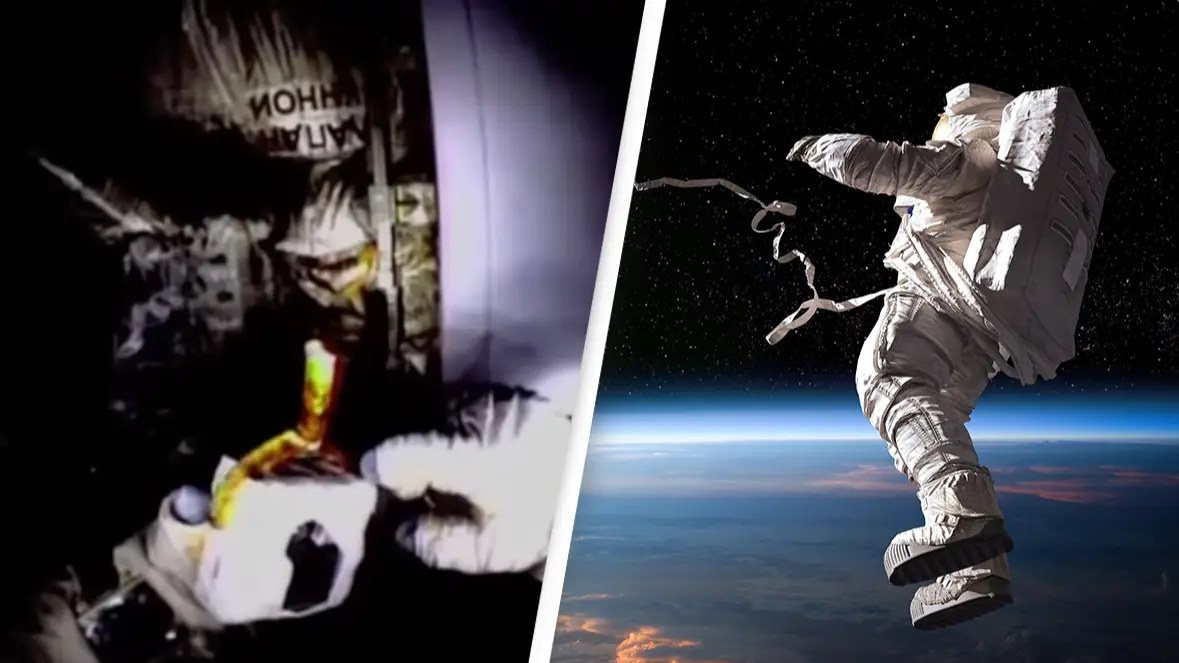
unilad homepage
unilad homepage
    • News
      • UK News
      • US News
      • World News
      • Crime
      • Health
      • Money
      • Sport
      • Travel
    • Music
    • Technology
    • Film and TV
      • News
      • DC Comics
      • Disney
      • Marvel
      • Netflix
    • Celebrity
    • Politics
    • Advertise
    • Terms
    • Privacy & Cookies
    • LADbible Group
    • LADbible
    • SPORTbible
    • GAMINGbible
    • Tyla
    • UNILAD Tech
    • FOODbible
    • License Our Content
    • About Us & Contact
    • Jobs
    • Latest
    • Archive
    • Topics A-Z
    • Authors
    Facebook
    Instagram
    X
    Threads
    TikTok
    YouTube
    Submit Your Content
    Cosmonaut told to leave area immediately after discovering blob growing outside International Space Station

    Home> Technology> Space

    Published 17:20 30 Oct 2023 GMT

    Cosmonaut told to leave area immediately after discovering blob growing outside International Space Station

    Russian cosmonaut Oleg Kononenko was told to evacuate the area immediately

    Rhianna Benson

    Rhianna Benson

    google discoverFollow us on Google Discover
    Featured Image Credit: Nasa/Peepo/Getty Images

    Topics: International Space Station, Life, Science, Space, NASA

    Rhianna Benson
    Rhianna Benson

    Rhianna is an Entertainment Journalist at LADbible Group, working across LADbible, UNILAD and Tyla. She has a Masters in News Journalism from the University of Salford and a Masters in Ancient History from the University of Edinburgh. She previously worked as a Celebrity Reporter for OK! and New Magazines, and as a TV Writer for Reach PLC.

    X

    @rhiannaBjourno

    Advert

    Advert

    Advert

    The question of whether there truly is life in space beyond planet Earth has puzzled scientists and philosophers for centuries.

    And though green aliens or mutant spaceships are yet to be caught on camera in the Milky Way, a group of Russian cosmonauts this week made an equally startling discovery.

    The group currently on board the International Space Station (ISS) were forced to conduct an unprecedented spacewalk in order to fix a leaking radiator on Wednesday 26 October.

    Advert

    The unforeseen leak was reported earlier this month by the Russian space agency Roscosmos, with the source understood to be the backup radiator that was mounted on the outside of the Nauka module launched in 2021.

    Though the main radiator remains operational, Rosmocos naturally scheduled in a rescue spacewalk to fix the problem, so as to prevent future delays if the backup one is needed.
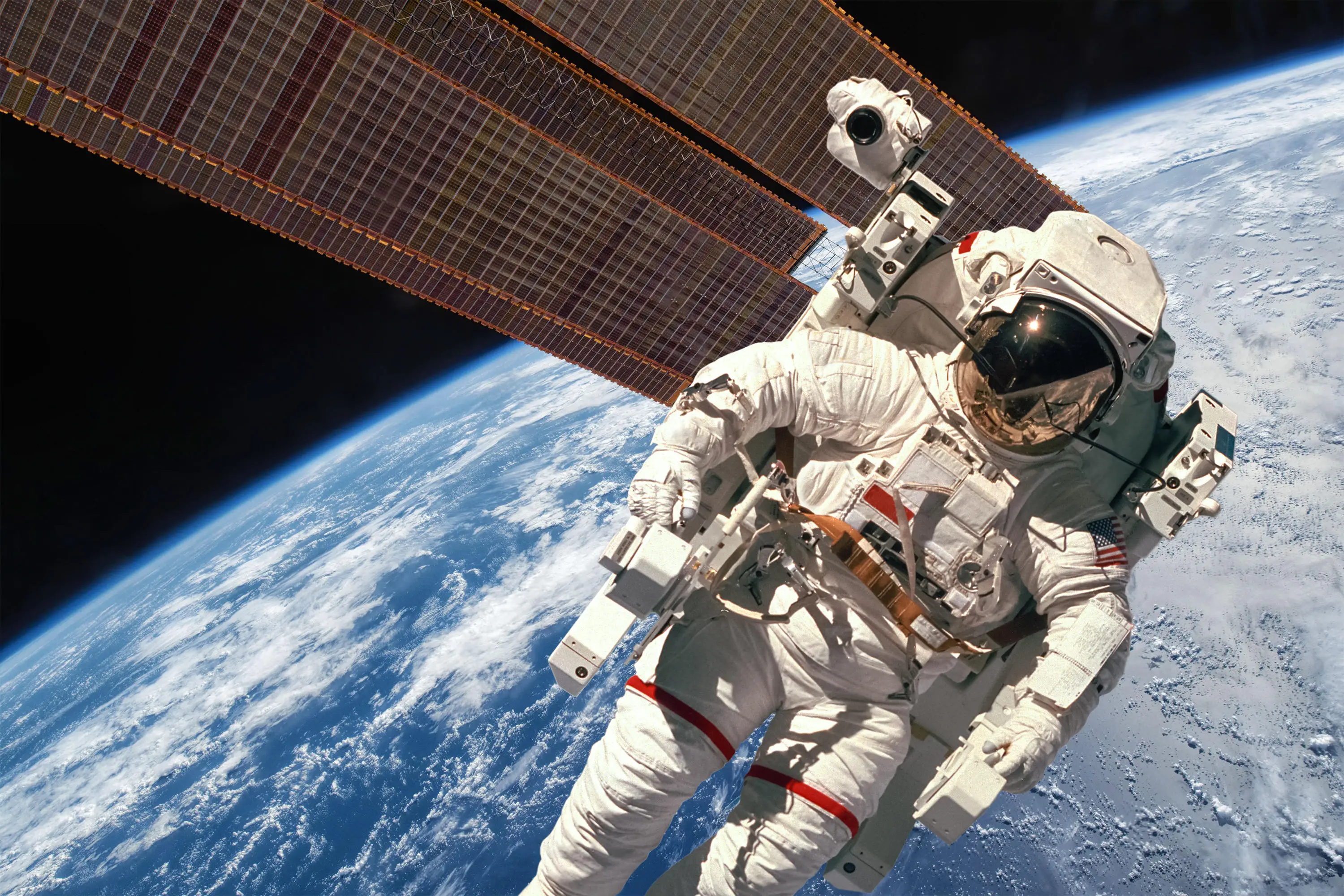
    The cosmonaut discovered a strange blob while fixing a leak.
    Alamy / Andrey Armyagov

    It was Russian cosmonaut Oleg Kononenko that became responsible for fixing the leak, and during the investigation, he claimed to have seen a number of holes on the radiator panel.

    "The holes have very even edges, like they've been drilled through," he immediately told Moscow Mission Control.

    "There are lots of them. They are spread in a chaotic manner."

    But the mysterious holes were the least of Oleg's problems, after he encountered a strange blob of coolant while soaking up any escaping liquid from the generator.
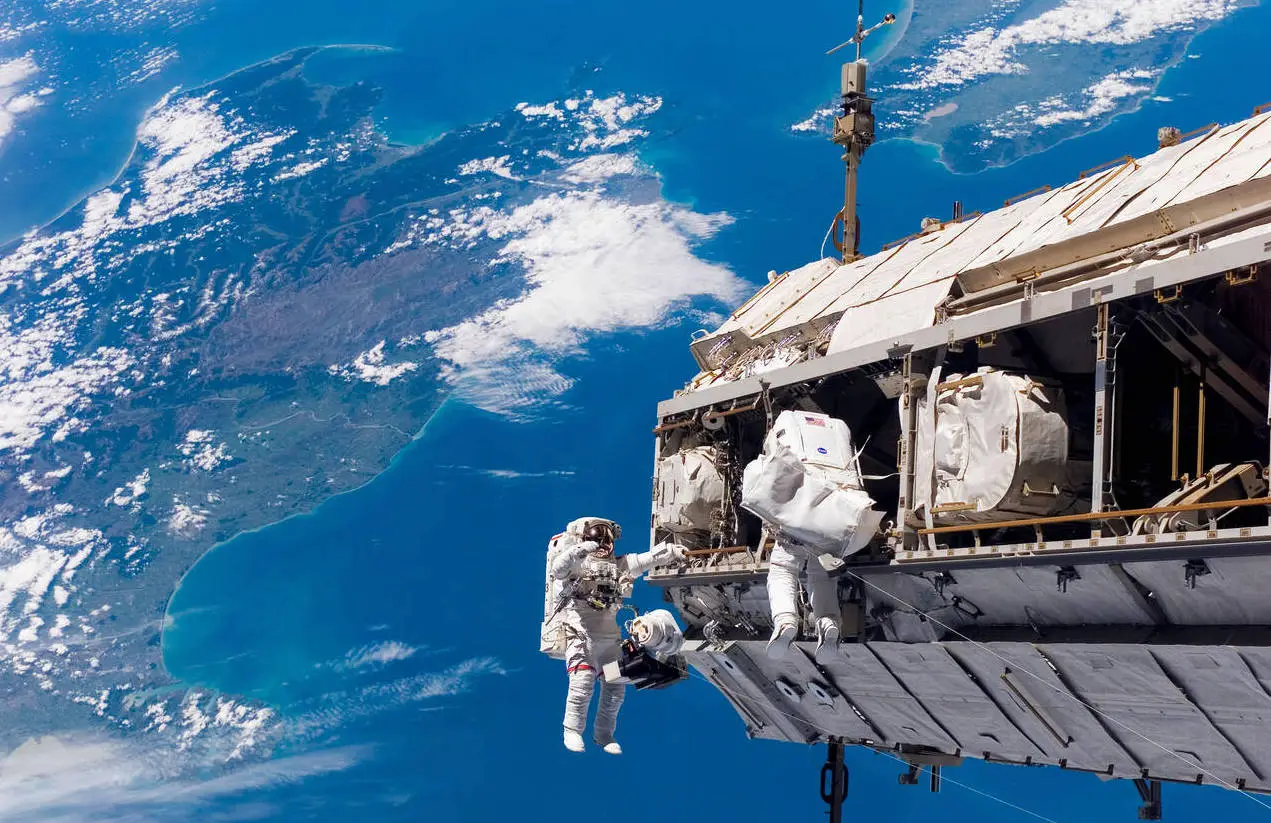
    Oleg was instructed to return to the ISS immediately.
    Alamy

    The blob had moved onto his safety tether, with his superiors quickly instructing him to leave the area immediately and return to the ISS.

    The concern comes just days after the speed of the ISS was shown through amazing animation, with the channel Airplane Mode releasing the incredible footage of the flyby.

    The video, that has been viewed more than 700,000 times since being posted on YouTube last year, begins by showing a simulation of the ISS in space.

    The space station moves at an average speed of 17,150mi/h (27,600km/h) as it orbits the planet. This is an estimated equivalent of going at Mach 22.3.

    The International Space Station is impressively fast.
    Airplane Mode/ Youtube

    The video shows a first-person view of what it would be like to move at Mach 22 speeds through New York City. Zipping past the large body of water to reach the city in just over a second.

    “This really puts into perspective how slow sound actually is, this is crazy stuff,” one YouTuber commented.

    “I think it's crazy that we as humans made an object go that fast. I bet Newton would be pretty shocked to hear we actually went fast enough to orbit Earth like he theorized back when the fastest vehicles were sailing ships,” another remarked.

    “Manhattan came and went in less than two seconds. Ha, that’s insane,” one user wrote.

    Choose your content:

    3 days ago
    6 days ago
    8 days ago
    9 days ago
    • Justin Sullivan/Getty Images
      3 days ago

      OpenAI names 22 industries at risk of job losses as it proposes four day week

      Two new reports suggest AI might be coming for your job - but you could also get a three day weekend

      Technology
    • Kayla Bartkowski/Bloomberg via Getty Images
      6 days ago

      Congressman Tim Burchett claims he has seen UFO footage that ‘defies logic’

      Tim Burchett says he has seen UFO footage that couldn't be man made - and he wants answers from the government

      Technology
    • NASA/JPL-Caltech/MSSS
      8 days ago

      NASA's Curiosity rover makes groundbreaking discovery that suggests Mars can support life

      An expert has claimed the new reveal 'increases the prospect that Mars offered a home for life in the ancient past'

      Technology
    • John Nacion/Variety via Getty Images
      9 days ago

      Bill Nye issues stern warning to Trump over concerns he could 'end NASA'

      Bill Nye the Science Guy revealed that Donald Trump's NASA proposal is a 'huge mistake'

      Technology
    • Cosmonaut told to leave area immediately after discovering blob growing outside International Space Station
    • Cosmonaut told to leave area immediately after discovering blob growing outside International Space Station
    • Cosmonaut told to immediately leave area after discovering blob growing outside International Space Station
    • NASA astronaut reveals whether sex in space is actually possible