unilad homepage
  • News
    • UK News
    • US News
    • World News
    • Crime
    • Health
    • Money
    • Sport
    • Travel
  • Film and TV
    • Netflix
  • Music
  • Tech
  • Features
  • Celebrity
  • Politics
  • Advertise
  • Terms
  • Privacy & Cookies
  • LADbible Group
  • LADbible
  • SPORTbible
  • GAMINGbible
  • Tyla
  • UNILAD Tech
  • FOODbible
  • License Our Content
  • About Us & Contact
  • Jobs
  • Latest
  • Archive
  • Topics A-Z
  • Authors
Facebook
Instagram
X
Threads
TikTok
YouTube
Submit Your Content
Comet three times bigger than Mount Everest is heading towards Earth after exploding

Home> Technology> Space

Updated 10:08 18 Oct 2023 GMT+1Published 09:03 18 Oct 2023 GMT+1

Comet three times bigger than Mount Everest is heading towards Earth after exploding

The 12P/Pons-Brooks will reached its closest point to Earth next year.

Niamh Shackleton

Niamh Shackleton

google discoverFollow us on Google Discover
Featured Image Credit: PaulFleet/Getty / James Yu/Getty

Topics: Science, Space, Technology, News

Niamh Shackleton
Niamh Shackleton

Niamh Shackleton is an experienced journalist for UNILAD, specialising in topics including mental health and showbiz, as well as anything Henry Cavill and cat related. She has previously worked for OK! Magazine, Caters and Kennedy.

X

@niamhshackleton

Advert

Advert

Advert

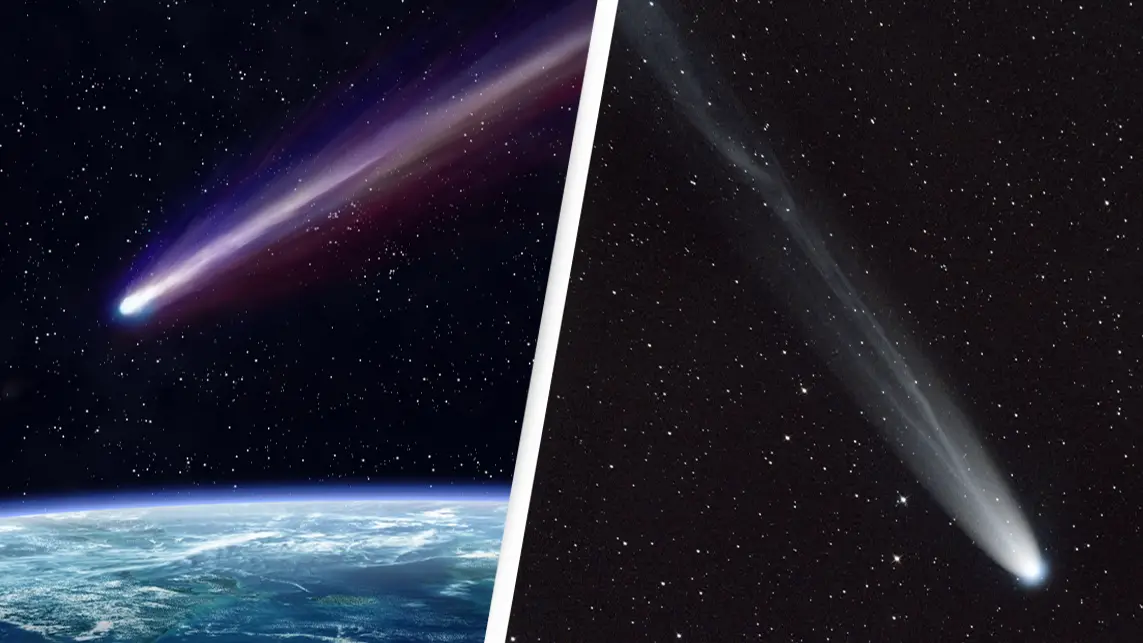
A huge comet three times the size of Mount Everest is making its way towards Earth.

And we're not joking when we say it's huge as the cold volcano comet has an estimated diameter of 18.6 miles.

The nucleus of the ginormous celestial object is filled with a mix of ice, dust and gas known as cryomagma.

Advert

The comet, named 12P/Pons-Brooks (or 12P for short if you're down with science lingo), recently exploded in space for the second time in four months, giving it back it's 'horned' features.

As to why it exploded, when solar radiation hits the comet's insides the pressure then builds up - sparking an explosion.

It then shoots out its cold insides into space through cracks in the nucleus' shell, giving the comet it's horn-like features.

Richard Miles, from The British Astronomical Association (BAA) said of its unique features: "The two ‘horns’ may be caused by a peculiarly-shaped cryovolcanic vent with some sort of blockage causing material to be expelled with a weird flow pattern."

Comet 12P exploded for a second time this month.
British Astronomical Association

According to Miles, 12P is one of 20 known comets with active ice volcanoes.

The BAA has been closely monitoring the comet.

Scientists detected the second explosion on October 5 after spotting that 12P became dozens of times brighter than usual due to the extra light reflecting from its expanded coma, the BAA explained.

Images of the explosion were taken by Jose Manuel Pérez Redondo by an 2.0-m Faulkes Telescope North located on the Hawaiian island of Maui.

While 12P is currently on a pathway to Earth, it won't be for a while before the comet reaches its closest point to our planet.

According to LiveScience, the comet will reach its closest point to Earth on April 21, 2024.

It may be visible to the naked eye at the time and, if you dub yourself an astronomer, you might want to get your telescope out for it as it's not expected to head back in our direction again until 2095.

It won't be that close to us though, you'll be pleased to know.

In fact, it'll be a whopping 232 million km away from us at its closest point.
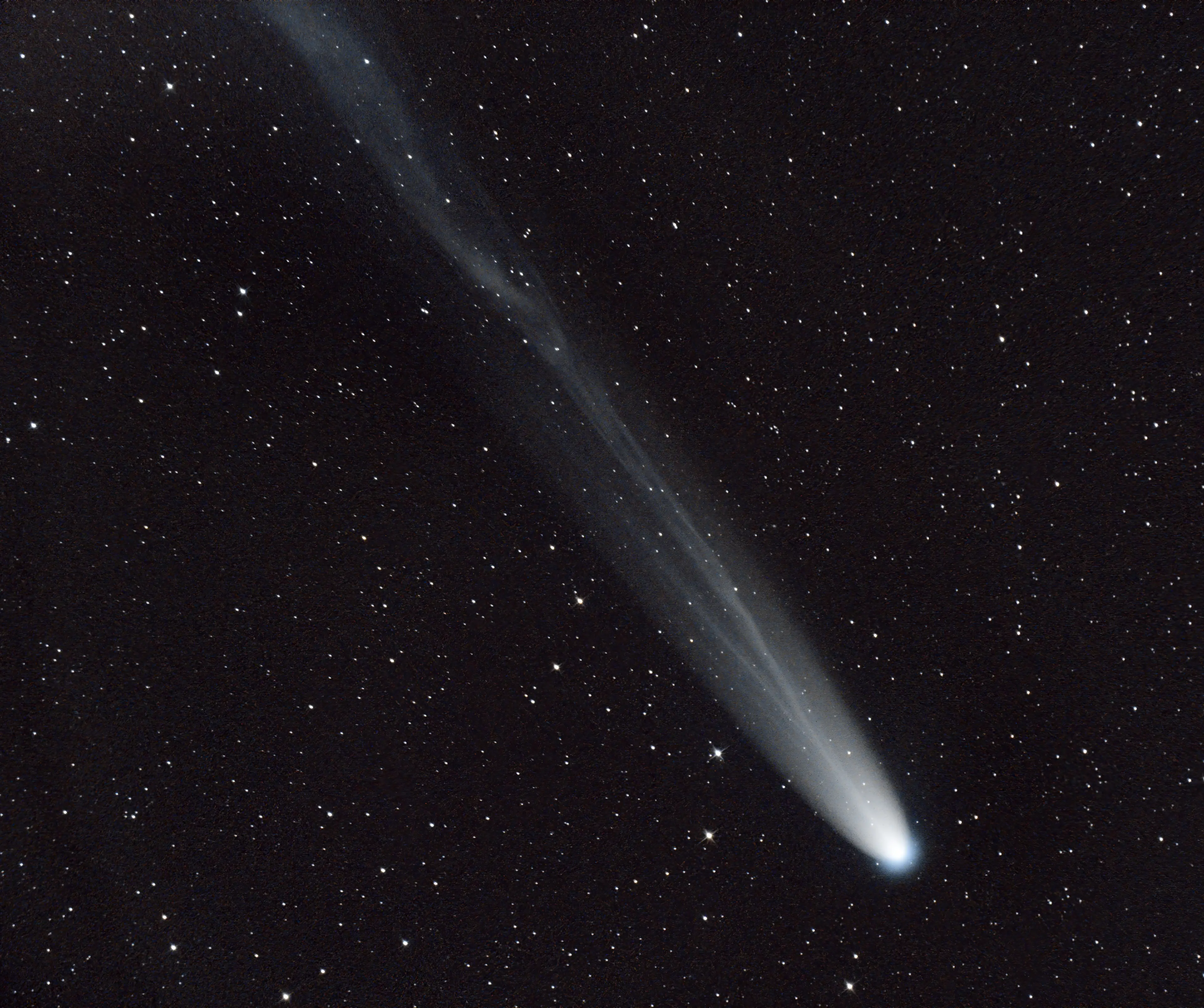
The comet will be at its closet point to Earth next year.
James Yu/Getty

12P has long been on scientists' radar and was first discovered by Jean-Louis Pons on July 12, 1812.

It was then rediscovered independently by William Robert Brooks in 1883 - hence why it's called the 12P/Pons-Brooks.

12P's July eruption marked the comet's first in 69 years.

At the time, it's coma (the comet's horns) grew a whopping 7,000 times wider than the comet's nucleus.

It remains unclear how big the coma grew during the explosion earlier this month, but the BBA notes that it was 'twice as intense' as the previous one over the summer.

Choose your content:

a day ago
2 days ago
  • NASA/JPL-Caltech/MSSS
    a day ago

    NASA's Curiosity rover makes groundbreaking discovery that suggests Mars can support life

    An expert has claimed the new reveal 'increases the prospect that Mars offered a home for life in the ancient past'

    Technology
  • John Nacion/Variety via Getty Images
    2 days ago

    Bill Nye issues stern warning to Trump over concerns he could 'end NASA'

    Bill Nye the Science Guy revealed that Donald Trump's NASA proposal is a 'huge mistake'

    Technology
  • (Photo by Chip Somodevilla/Getty Images)
    2 days ago

    NASA's 2028 moon landing already facing delay following Artemis II mission

    It's significantly pushing back the first landing on the moon since 1972

    Technology
  • Tommaso Boddi/Getty Images
    2 days ago

    Apple CEO Tim Cook made a huge promise about iPhones 10 years before stepping down

    Apple introduced a life-changing feature just one year after Cook's promise

    Technology
  • 'Devil comet bigger than Mount Everest’ is heading toward Earth
  • Scientists studying NASA’s James Webb Space Telescope discover black hole 300 million times bigger than the sun
  • 'Once in a lifetime' comet bigger than Mount Everest is heading for Earth and could be visible soon
  • NASA's Curiosity rover makes groundbreaking discovery that suggests Mars can support life