unilad homepage
  • News
    • UK News
    • US News
    • World News
    • Crime
    • Health
    • Money
    • Sport
    • Travel
  • Film and TV
    • Netflix
  • Music
  • Tech
  • Features
  • Celebrity
  • Politics
  • Advertise
  • Terms
  • Privacy & Cookies
  • LADbible Group
  • LADbible
  • SPORTbible
  • GAMINGbible
  • Tyla
  • UNILAD Tech
  • FOODbible
  • License Our Content
  • About Us & Contact
  • Jobs
  • Latest
  • Archive
  • Topics A-Z
  • Authors
Facebook
Instagram
X
Threads
TikTok
YouTube
Submit Your Content
New technology will allow astronauts to drink their own urine instead of wearing a diaper

Home> Technology> Space

Published 17:04 21 Jul 2024 GMT+1

New technology will allow astronauts to drink their own urine instead of wearing a diaper

The space creation is currently in its testing stage

Joe Yates

Joe Yates

google discoverFollow us on Google Discover
Featured Image Credit: Getty/ESA/Getty/MPI

Topics: Space, Science, Technology, Health, Environment

Joe Yates
Joe Yates

Joe is a journalist for UNILAD, who particularly enjoys writing about crime. He has worked in journalism for five years, and has covered everything from murder trials to celeb news.

X

@JMYjourno

Advert

Advert

Advert

Technology buffs reckon they've come up with a way to make life up in the stars easier for astronauts - and it involves them drinking their own pee.

Yes you read that correctly, and no it's not as gross as you may think.

New technology is currently being developed which would allow astronauts the ability to drink their own urine while out on spacewalks.
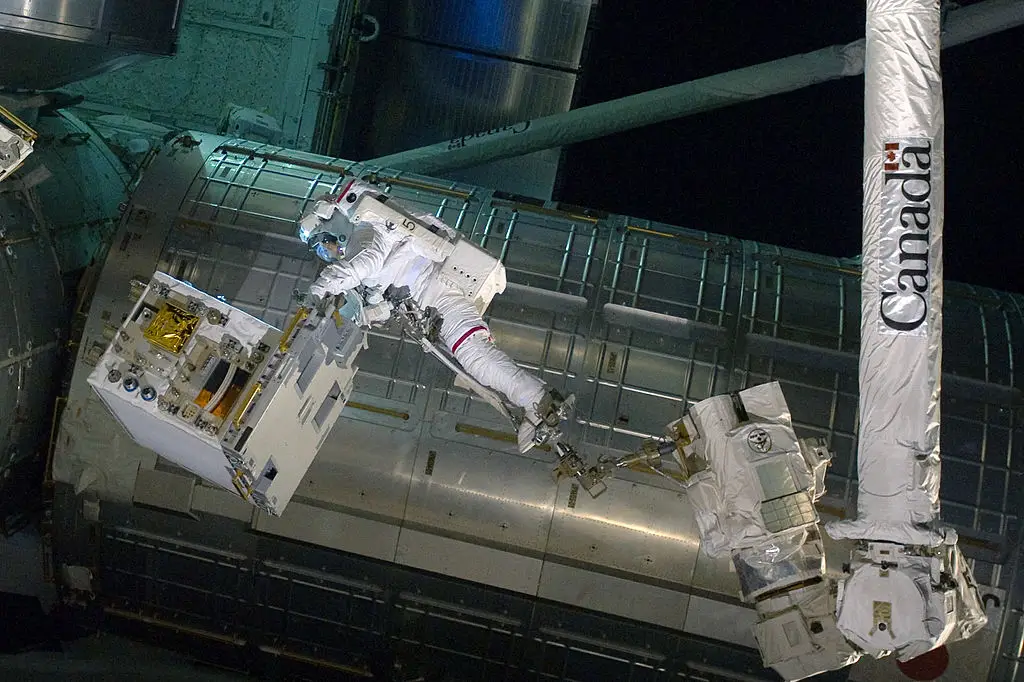
NASA astronaut Ronald Garan attached to a robotic arm on the International Space Station during a planned six-and-a-half-hour spacewalk in 2011. (NASA via Getty Images)

Advert

Currently, when carrying out restoration duties outside the International Space Station (ISS), among many others, they must put on diapers - so that if they do need to pee they can do so without it flying around their suit.

But wearing diapers isn't very futuristic is it? Heck, these are people literally out of this world and they currently wear what babies wear.

Well to give these disposable nappies their space name, they are maximum absorbency garment's (MAGs), and they were created in the early 1980s.

They work exactly like a diaper does but the only thing is that if a baby was left in their's without being changed for up to eight hours it would be classed as child neglect - unless of course that period is bedtime.
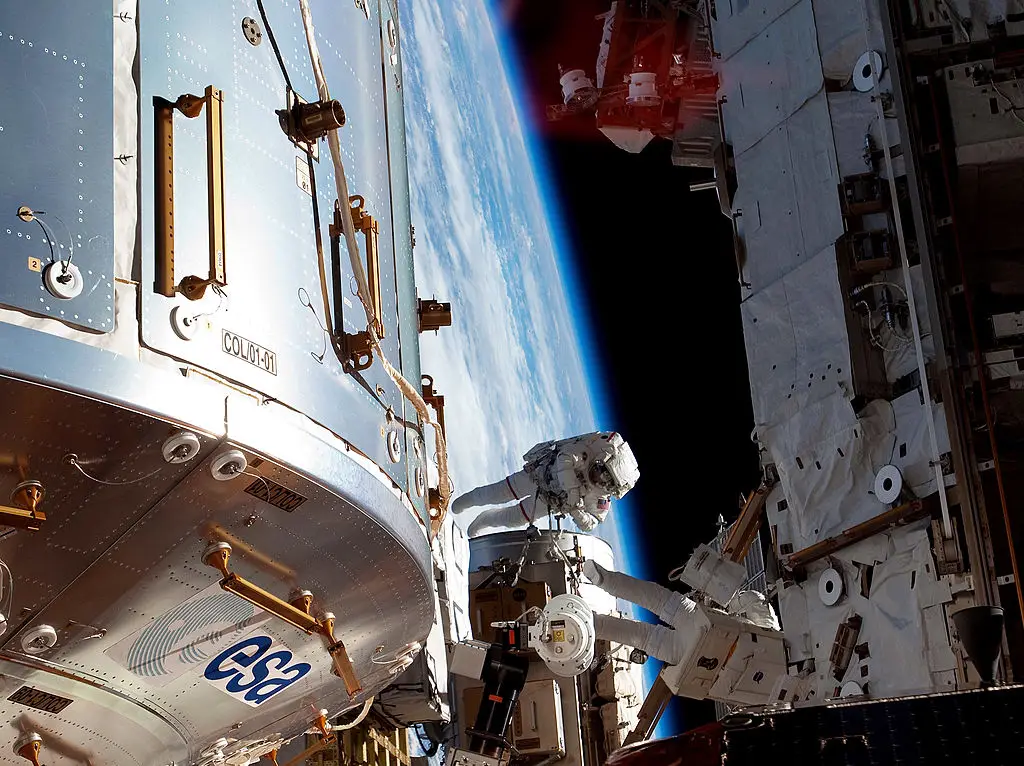
NASA astronauts Steve Bowen and Alvin Drew pictured working on the ISS in what was a six-hour-34-minute spacewalk in 2011. (NASA via Getty Images)

Well, that's how long some astronauts spend on spacewalks outside the ISS - although I'm sure they would alleviate their bladders beforehand so they wouldn't have to 'go' in them straight away.

Just like with babies diapers, if MAGs aren't replaced they can irritate your skin and even cause infection - as well as them feeling rather uncomfortable.

What's more, is while they are floating outside of the space station they only have a maximum of 0.2 gallons of water that they can store in their in-suit drink bag.

Well, leave it to the scientists to find a solution.
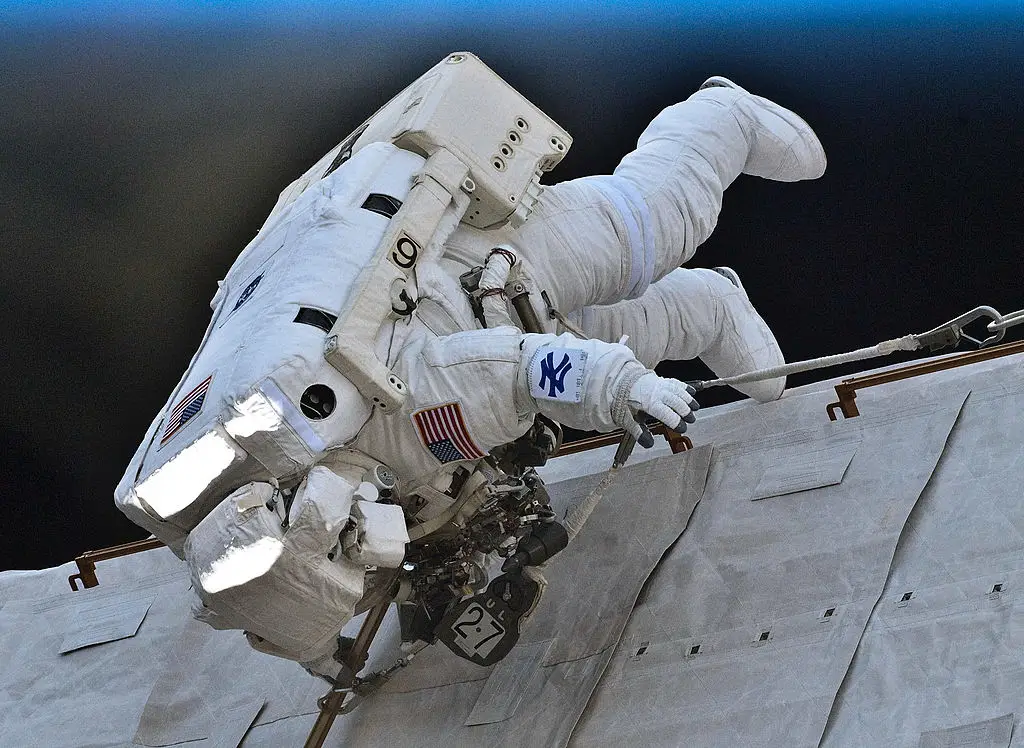
NASA astronaut Garrett Reisman dons a New York Yankee logo on his forearm during a seven-hour-25-minute spacewalk in 2010. (NASA via Getty Images)

It would involve astronauts wearing underwear made from a flexible compression material and lined with antimicrobial fabric, and it would be fitted with a humidity sensor which will know when urine is prevalent.

When it senses pee a vacuum then comes on and it sucks the urine up into a filtration device on the astronaut's back.

What's more is that it takes just five minutes until you are able to drink the fresh water.

However, it is still in testing but if it makes it out of the final stages it might interest NASA and other space agencies - like Elon Musk's SpaceX.

Although it is not likely to be ready before 2026.

Choose your content:

a day ago
2 days ago
3 days ago
4 days ago
  • Anna Barclay/Getty Images
    a day ago

    iPhone users warned to change specific setting when using public chargers

    Using public chargers can be risky

    Technology
  • Raquel Natalicchio/Houston Chronicle via Getty Images
    2 days ago

    Artemis II astronauts share powerful realization they had when returning to Earth

    Reid Wiseman, Victor Glover, Christina Koch, and Jeremy Hansen made history this month

    Technology
  • Getty Stock
    3 days ago

    How to get money from $135 million Android settlement as millions of users could be eligible

    Android users all over the country could be owed money after Google's settlement

    Technology
  • Getty Stock Photo
    4 days ago

    ChatGPT's unsettling answer when I asked what's the scariest thing about AI

    The chat bot listed six concerns when it comes to the future of AI

    Technology
  • NASA scientists explain why astronauts strap down their arms to avoid 'zombie pose'
  • Shocking new study reveals ‘possible hostile’ alien threat could be attacking Earth in a few months
  • Stranded NASA astronauts are surviving on soup made from their own urine
  • Stranded NASA astronauts could face serious impacts on their bodies as SpaceX announces official date of return