
Brutal regime stranded NASA astronauts have to do every day on the International Space Station to avoid serious health issue

The astronauts who've been stranded at the International Space Station for almost eight months have to take on a gruelling workout regime to avoid a serious health issue.
Sunita 'Suni' Williams and her crew mate, Barry 'Butch' Wilmore, set off from Earth in June 2024 and were only supposed to spend eight days in space.
But their mission has since been prolonged after technical issues with their Boeing capsule meant that they could not return home as planned.
The capsule has since returned to Earth without them in tow... my stomach is churning just at the thought.
Advert
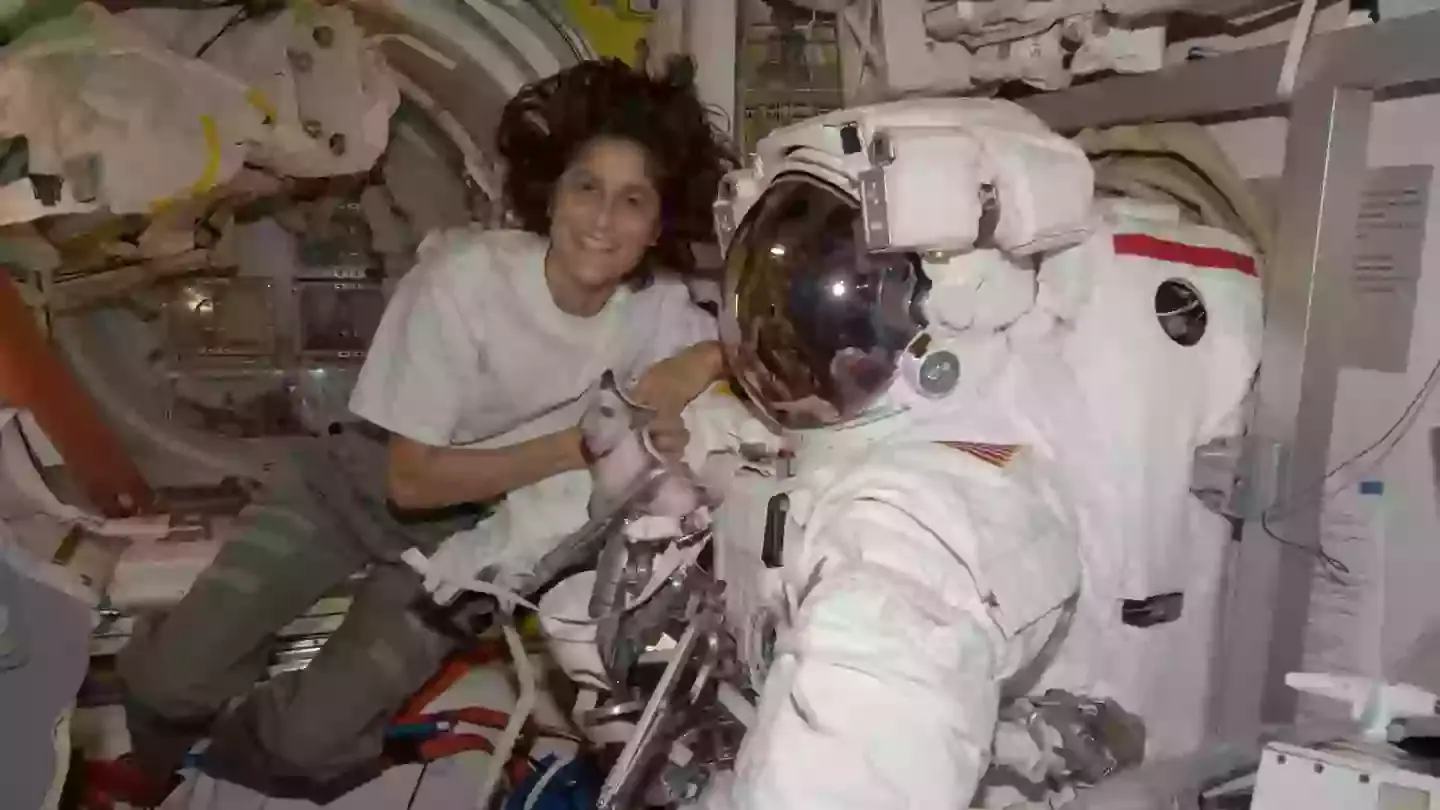
Anyway, Williams and Wilmore have since taken up residence at the International Space Station (ISS) and are expected to finally return home sometime in March.
Since they've been there for so long, Williams says she's forgotten how to do things like walking and sitting down.
Speaking on a video call with students at Needham High School in Massachusetts earlier this week, the 59-year-old astronaut said (via Mail Online): "I've been up here long enough, right now I've been trying to remember what it's like to walk. I haven't walked. I haven't sat down. I haven't laid down."
And speaking to press from the ISS on Friday (31 January), the pair discussed a routine they've been forced to implement into the daily lives, which could keep a potentially-debilitating condition at bay.
One major issue they're forced to face on a daily basis is the loss of bone density caused by microgravity.
NASA revealed astronauts can lose 'up to 1 percent to 2 percent of bone density per month in the hip and spine, compared to bone loss of 0.5 percent to 1 percent per year in post-menopausal women and much older men on Earth'.
Loss of bone density weakens people's bones, meaning back home they will be fragile and are at an increased risk of fractures and 'early-onset osteoporosis', which, according to Mayo Clinic, causes bones to 'become weak and brittle'.
As such, the pair have to conduct around two or more hours of exercise everyday to strengthen their bones.
"Your joints don't hurt, which is quite nice," 62-year-old Wilmore explained.
Williams also addressed prior concerns about her health in November, saying: "There’s a lot of changes that go on up here. But it’s funny, I think there’s some rumours around out there that I’m losing weight and stuff. I’m actually right at the same amount."

And touching on her muscles, she added: "I think things shift around quite a bit. You’ve probably heard of a fluid shift, where folks in space, their heads look a little bigger because the fluid evens out along the body.
"But Butch [Wilmore] and I have been up here for a number of months, we’ve been on the workout gear. We’ve got a bike, we got a treadmill and we got weightlifting equipment.
"And I could definitely tell that weightlifting - which is not something I do all the time - has definitely changed me. My thighs are a little bigger, my butt is a little bigger, we do a lot of squats."
Topics: Space, Science, Health, Technology, NASA
 Ellie Kemp