unilad homepage
unilad homepage
    • News
      • UK News
      • US News
      • World News
      • Crime
      • Health
      • Money
      • Sport
      • Travel
    • Music
    • Technology
    • Film and TV
      • News
      • DC Comics
      • Disney
      • Marvel
      • Netflix
    • Celebrity
    • Politics
    • Advertise
    • Terms
    • Privacy & Cookies
    • LADbible Group
    • LADbible
    • SPORTbible
    • GAMINGbible
    • Tyla
    • UNILAD Tech
    • FOODbible
    • License Our Content
    • About Us & Contact
    • Jobs
    • Latest
    • Archive
    • Topics A-Z
    • Authors
    Facebook
    Instagram
    X
    Threads
    TikTok
    YouTube
    Submit Your Content
    Out-Of-Control Rocket Has Crashed Into Far Side Of The Moon After At Least Seven Years

    Home> Technology

    Published 13:55 4 Mar 2022 GMT

    Out-Of-Control Rocket Has Crashed Into Far Side Of The Moon After At Least Seven Years

    The rocket is expected to have created a new crater as it hit the moon.

    Emily Brown

    Emily Brown

    google discoverFollow us on Google Discover
    Featured Image Credit: Alamy

    Topics: Space, Technology, SpaceX, World News

    Emily Brown
    Emily Brown

    Emily Brown is UNILAD Editorial Lead at LADbible Group. She first began delivering news when she was just 11 years old - with a paper route - before graduating with a BA Hons in English Language in the Media from Lancaster University. Emily joined UNILAD in 2018 to cover breaking news, trending stories and longer form features. She went on to become Community Desk Lead, commissioning and writing human interest stories from across the globe, before moving to the role of Editorial Lead. Emily now works alongside the UNILAD Editor to ensure the page delivers accurate, interesting and high quality content.

    Advert

    Advert

    Advert

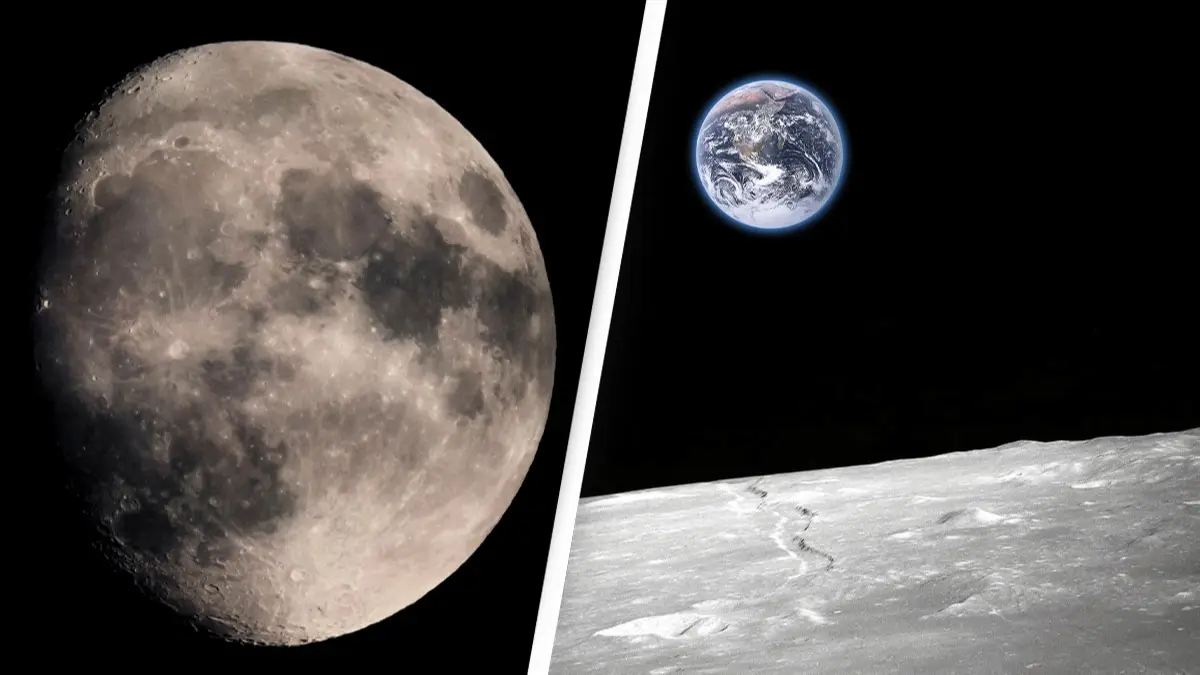
    An out-of-control rocket stage has crashed into the far side of the moon after floating around in space for at least seven years.

    A new crater is expected to have been carved out in the moon as a result of the impact by the object, which has been dubbed WE0913A.

    Astronomers anticipated the object would strike the moon shortly after midday GMT, though its trajectory for the far-side of the moon means it is out of range of ground telescopes and out of immediate view of NASA's Lunar Reconnaissance Orbiter (LRO), making it tough to confirm exactly when it struck.

    Researchers believe the object hit the 350-mile-wide Hertzsprung crater, with astronomer Jonathan McDowell, of the Harvard-Smithsonian Institute for Astrophysics, saying the strike is 'not a big deal at the current level of occupation of the moon, which is currently population: robots, a couple of dozen; humans, zero'.

    As cited by the National Geographic, he added: 'And maybe alien mutants grown from the human poop left there. There’s not much for it to hit.'

    Advert

    The origins of the rocket are currently disputed and are unlikely to be confirmed unless better orbital tracking data can be found to allow astronomers to trace the rocket stage's path through space.

    There are, however, theories about where the rocket came from, with researchers previously speculating that Elon Musk's SpaceX might be responsible before moving on to China as a potential culprit.

    The impact of the rocket has been a long time coming, having been tracked on and off since it was first spotted in 2015, and in January, astronomer Bill Gray was alerted to its collision with the moon when he ran a computer program that plotted its trajectory, National Geographic reports.

    He was reportedly met with the sight of a blinking line which popped up on his screen, highlighted in red and reading 'IMPACT', in capital letters.

    Vishnu Reddy of the University of Arizona, whose group’s observations helped characterised the object, said it was identified as a rocket stage due to a 'very characteristic light curve of a rocket body tumbling', saying: 'That was a giveaway.'

    Alice Gorman, a space archaeologist at Flinders University, has said the crater formed by the collision will 'become part of China’s archaeological record on the moon, and we have to consider it in relation to the other Chinese sites'.

    She added: 'What we’re creating here is a sort of a modern Anthropocene bombardment phase, potentially. Kind of a geological era created by human activities that will leave its marks on the surface of the moon. It’s already started.'

    NASA's LRO is now set to seek out the crash site.

    If you have a story you want to tell, send it to UNILAD via [email protected]  

    Choose your content:

    4 days ago
    7 days ago
    9 days ago
    10 days ago
    • Justin Sullivan/Getty Images
      4 days ago

      OpenAI names 22 industries at risk of job losses as it proposes four day week

      Two new reports suggest AI might be coming for your job - but you could also get a three day weekend

      Technology
    • Kayla Bartkowski/Bloomberg via Getty Images
      7 days ago

      Congressman Tim Burchett claims he has seen UFO footage that ‘defies logic’

      Tim Burchett says he has seen UFO footage that couldn't be man made - and he wants answers from the government

      Technology
    • NASA/JPL-Caltech/MSSS
      9 days ago

      NASA's Curiosity rover makes groundbreaking discovery that suggests Mars can support life

      An expert has claimed the new reveal 'increases the prospect that Mars offered a home for life in the ancient past'

      Technology
    • John Nacion/Variety via Getty Images
      10 days ago

      Bill Nye issues stern warning to Trump over concerns he could 'end NASA'

      Bill Nye the Science Guy revealed that Donald Trump's NASA proposal is a 'huge mistake'

      Technology
    • Bizarre music heard by astronauts on far side of the moon that left them terrified after NASA warning
    • What To Know About The Out-Of-Control Rocket Set To Hit The Moon Today
    • NASA leaders speak out as Artemis II historic moon mission ends with 'perfect splashdown'
    • Scientists issue warning over controversial plan to launch 50,000 mirrors into space