Startling study suggests scientists may have miscalculated global warming's timeline

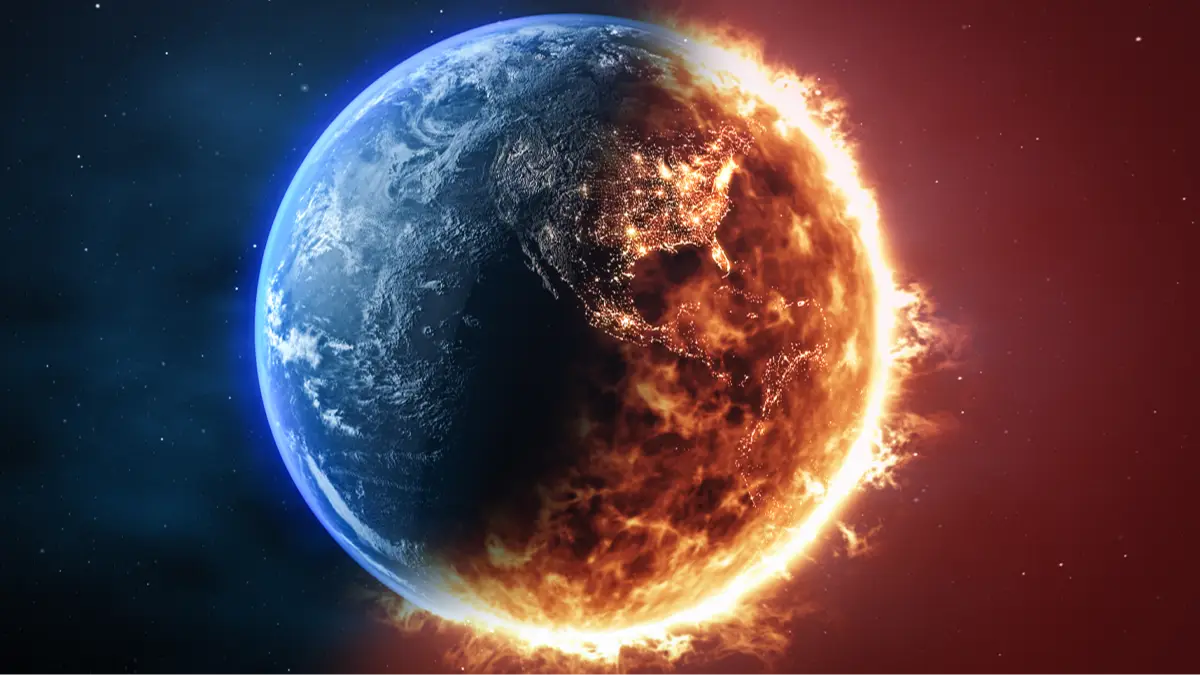
A team of scientists have predicted that Earth is around two decades further into the devastating affects of global warming than previously anticipated.
The study, titled '300 years of sclerosponge thermometry shows global warming has exceeded 1.5 °C [2.7°F]', suggests that scientists may have miscalculated global warming's timeline during previous analysis.
But before we dive into that it's important to explain exactly what global warming is - even with it being a term so frequently used.
NASA explains the phenomenon as: "The long-term heating of Earth’s surface observed since the pre-industrial period (between 1850 and 1900) due to human activities, primarily fossil fuel burning, which increases heat-trapping greenhouse gas levels in Earth’s atmosphere.
Advert
"This term is not interchangeable with the term 'climate change'. Since the pre-industrial period, human activities are estimated to have increased Earth’s global average temperature by about 1 degree Celsius (1.8 degrees Fahrenheit), a number that is currently increasing by more than 0.2 degrees Celsius (0.36 degrees Fahrenheit) per decade.
"The current warming trend is unequivocally the result of human activity since the 1950s and is proceeding at an unprecedented rate over millennia."
Now, authors of this new study - Malcolm T. McCulloch, of Australia, Amos Winter, of Indiana, US, Clark E. Sherman, of Puerto Rico, and Julie A. Trotter, also of Australia - have claimed that the average global warming is already at 1.7°C [around 3°F].
Their study, published February 5, used ocean temperature records from the past 300 years, preserved in coral-like structures, to show that industrial-era warming actually started around the 1860s - more than 80 years earlier than previous records from sea surface temperatures suggested
The researchers used a method (Sr/Ca palaeothermometer) to match these records with modern sea surface temperature data. They found that temperatures stayed nearly constant from 1700 to the early 1860s, before starting to rise.
By the late 20th century, land temperatures were rising about twice as fast as ocean temperatures.
This earlier start to warming and faster land warming means that by 2020, global temperatures were already 1.7°C [around 3°F] higher than pre-industrial levels - 0.5°C [0.9°F] higher than previous climate reports predicted, according to the paper.
Meanwhile, they also suggest that Earth might reach 2°C [3.6°F] of global warming by the late 2020s - nearly 20 years sooner than expected.
However, other scientists have questioned the findings, saying that there are flaws in the work.
In 2015, 195 nations across the world signed the Paris Agreement which is treaty which sees the countries pledge to tackle climate change by staying within the 1.5 °C [2.7°F] threshold.
Topics: Climate Change, Environment, Science, Nature
 Joe Yates