unilad homepage
unilad homepage
    • News
      • UK News
      • US News
      • World News
      • Crime
      • Health
      • Money
      • Sport
      • Travel
    • Music
    • Technology
    • Film and TV
      • News
      • DC Comics
      • Disney
      • Marvel
      • Netflix
    • Celebrity
    • Politics
    • Advertise
    • Terms
    • Privacy & Cookies
    • LADbible Group
    • LADbible
    • SPORTbible
    • GAMINGbible
    • Tyla
    • UNILAD Tech
    • FOODbible
    • License Our Content
    • About Us & Contact
    • Jobs
    • Latest
    • Archive
    • Topics A-Z
    • Authors
    Facebook
    Instagram
    X
    Threads
    TikTok
    YouTube
    Submit Your Content
    Scientists accidentally discovered a whole new organ in the human body
    Home>Technology>News
    Published 13:28 7 Oct 2024 GMT+1

    Scientists accidentally discovered a whole new organ in the human body

    Not bad for a day's work, is it?

    Emily Brown

    Emily Brown

    google discoverFollow us on Google Discover
    Featured Image Credit: Netherlands Cancer Institute/YouTube/Antoni Van Leeuwenhoek

    Topics: Science, Health, Cancer

    Emily Brown
    Emily Brown

    Emily Brown is UNILAD Editorial Lead at LADbible Group. She first began delivering news when she was just 11 years old - with a paper route - before graduating with a BA Hons in English Language in the Media from Lancaster University. Emily joined UNILAD in 2018 to cover breaking news, trending stories and longer form features. She went on to become Community Desk Lead, commissioning and writing human interest stories from across the globe, before moving to the role of Editorial Lead. Emily now works alongside the UNILAD Editor to ensure the page delivers accurate, interesting and high quality content.

    Advert

    Advert

    Advert

    It's no secret that humans have long been an intriguing topic of scientific study, but when it comes to what's inside our bodies, you'd probably have thought we'd got it covered by now.

    There's 206 bones, a heart, a brain, blood, muscles - you get the picture. We've had years of dissecting bodies and studying what's inside to figure it all out.

    So that makes it all the more surprising to learn that scientists discovered an entirely new organ just four years ago.

    Advert

    The discovery even came as a surprise to the scientists themselves, as they weren't looking for a new organ when it happened. As I mentioned, they probably thought we were all clued up in that area.

    Instead, the team studying in the Netherlands were actually looking at prostate cancer when they came across the mysterious organ.

    This might give you some clues about where it's located, and I can tell you right now, you're wrong.

    The organ is actually located just beneath the face, meaning we've been staring at it the whole time.

    So, how did the scientists stumble upon this organ?

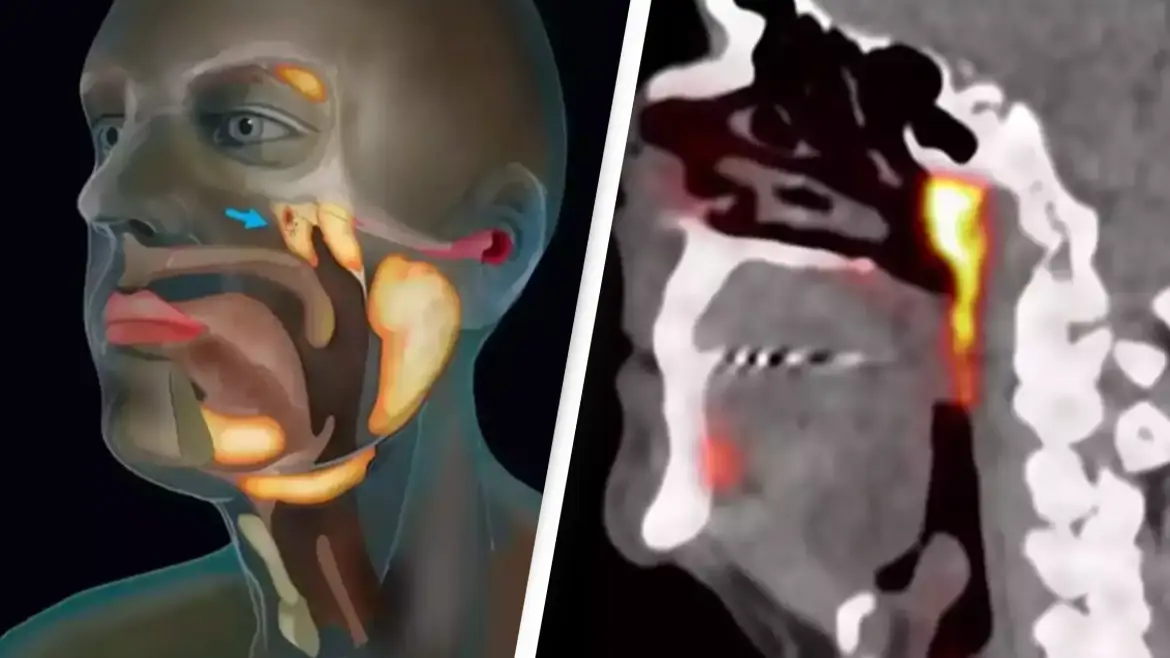
    Well, it all went down after the scientists at the Netherlands Cancer Institute conducted a series of CT and PET scans on patients who had been injected with radioactive glucose, which makes tumours glow on scans.
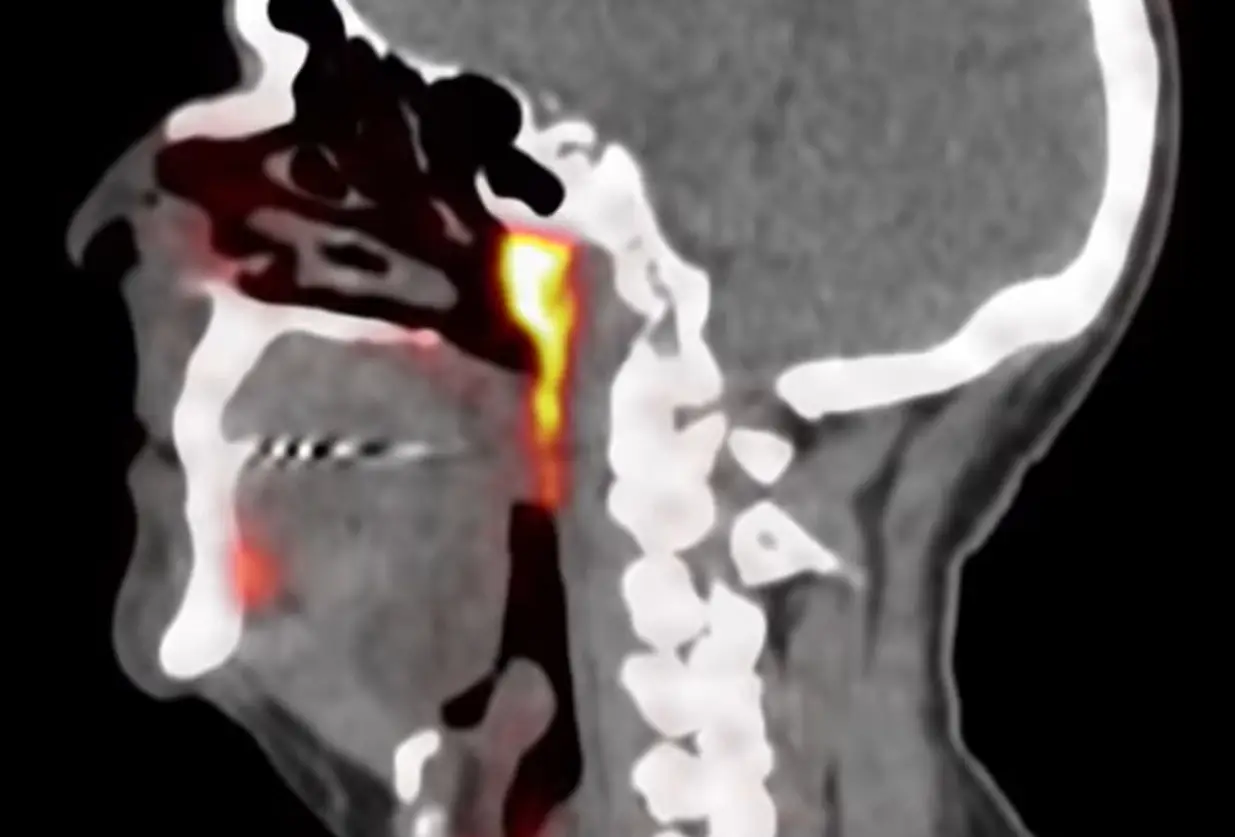
    That glowing thing is the organ you never knew you had  (YouTube/Antoni Van Leeuwenhoek)
    That glowing thing is the organ you never knew you had (YouTube/Antoni Van Leeuwenhoek)

    When analyzing the scans, the team noticed two areas within the heads were lighting up.

    The image indicated a set of salivary glands were tucked away in there, and upon further investigation, the scientists found that was exactly the case.

    When they managed to track down the organ, the team gave it the catchy name of the 'tubarial salivary gland'.

    The glands can be found behind the nose, in the nook where the nasal cavity meets the throat, and they're intended to 'lubricate and moisten the area of the throat behind the nose and mouth'.
    The organ is located behind the nose and mouth (Getty Stock Image)
    The organ is located behind the nose and mouth (Getty Stock Image)

    Dr Wouter Vogel, radiation oncologist at the Netherlands Cancer Institute, explained that the reason the glands have gone unnoticed for so long is likely because it takes 'very sensitive imaging' to spot them.

    On top of that, they're 'not very accessible'.

    "People have three sets of large salivary glands, but not there," he said.

    "As far as we knew, the only salivary or mucous glands in the nasopharynx are microscopically small, and up to 1,000 are evenly spread out throughout the mucosa. So, imagine our surprise when we found these."

    The accidental discovery offered hope to scientists that it may help cancer patients experience less complications after receiving radiotherapy, as they believe many complications surrounding the treatment are connected to the tubarial salivary glands.

    Choose your content:

    6 hours ago
    a day ago
    2 days ago
    • (Photo by Emanuele Cremaschi/Getty Images)
      6 hours ago

      Playstation users who bought games within four-year period eligible for Sony $7.85 million settlement

      Sony has been accused of monopolizing the market through its PlayStation Store

      Technology
    • Dhiraj Singh/Bloomberg via Getty Images
      a day ago

      iPhone users can check if they’re eligible for Apple's $250m payout over AI accusations

      The payout applies to people who bought certain iPhones between June 2024 and March 2025

      Technology
    • Christopher Willard/Disney via Getty Images
      2 days ago

      Shark Tank star Lori Greiner issues warning over hidden Gmail setting and reveals how to disable it

      Lori Greiner has warned 1.8 billion Gmail users about a setting that allows access to their private emails

      Technology
    • Getty Stock
      2 days ago

      Every country where ChatGPT is banned and why

      One in eight people on the planet can't access ChatGPT - and their governments want to keep it that way

      Technology
    • Scientists discovered a hiccup cure technique that actually has '100 percent cure rate'
    • Scientists accidentally discovered a new organ in the human body
    • Scientists develop world's first ovarian cancer vaccine that 'could wipe the disease out'
    • Scientists discover humans have 'hope molecules' and reveal how the body can 'produce antidepressants'