unilad homepage
  • News
    • UK News
    • US News
    • World News
    • Crime
    • Health
    • Money
    • Sport
    • Travel
  • Film and TV
    • Netflix
  • Music
  • Tech
  • Features
  • Celebrity
  • Politics
  • Advertise
  • Terms
  • Privacy & Cookies
  • LADbible Group
  • LADbible
  • SPORTbible
  • GAMINGbible
  • Tyla
  • UNILAD Tech
  • FOODbible
  • License Our Content
  • About Us & Contact
  • Jobs
  • Latest
  • Archive
  • Topics A-Z
  • Authors
Facebook
Instagram
X
Threads
TikTok
YouTube
Submit Your Content
Scientists discover one of the biggest countries in the world is 'splitting in two

Home> News> World News

Updated 21:04 14 Jun 2024 GMT+1Published 21:05 14 Jun 2024 GMT+1

Scientists discover one of the biggest countries in the world is 'splitting in two

A study suggested that the plate beneath Indian was splitting

Niamh Shackleton

Niamh Shackleton

google discoverFollow us on Google Discover
Featured Image Credit: Planet Observer/Universal Images Group via Getty Images / DESHAKALYAN CHOWDHURY/AFP via Getty Images

Topics: India, News, Science

Niamh Shackleton
Niamh Shackleton

Niamh Shackleton is an experienced journalist for UNILAD, specialising in topics including mental health and showbiz, as well as anything Henry Cavill and cat related. She has previously worked for OK! Magazine, Caters and Kennedy.

X

@niamhshackleton

Advert

Advert

Advert

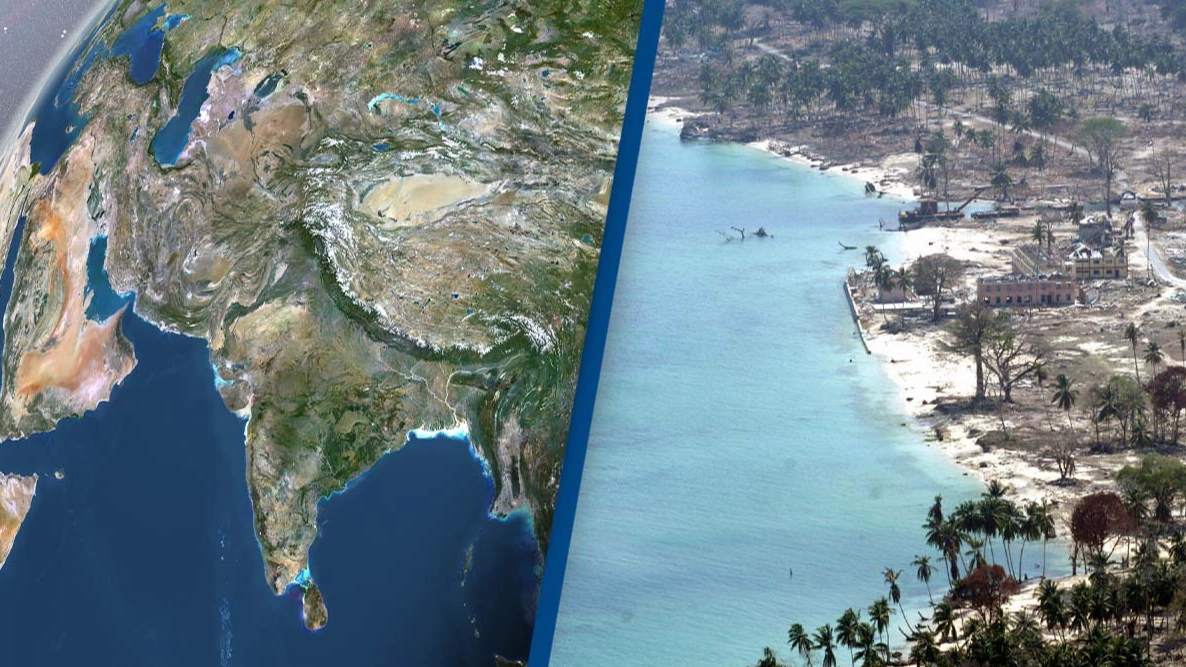
A study has suggested that the tectonic plate located beneath India's could be dividing into two.

India is the seventh largest country in the world, coming in behind the likes of Australia, Brazil and the US.

It's said to be approximately 3.287 million km² and, if it was to be divided vertically - it would become two countries each around the size of Mongolia.

But India isn't thought to be splitting vertically, and scientists believe it's potentially sheering horizontally instead.

Advert

The theory was first presented at the American Geophysical Union conference which took place in December 2023.

The study - titled 'Slab tearing and delamination of the Indian lithospheric mantle during flat-slab subduction, southeast Tibet' - looks into the formation of the Himalaya.

The Himalaya is a mountain range spanning over five countries - India, Pakistan, Nepal, China and Bhutan - and according to the Geological Society, 'the Himalayan mountain range and Tibetan plateau have formed as a result of the collision between the Indian Plate and Eurasian Plate which began 50 million years ago and continues today'.
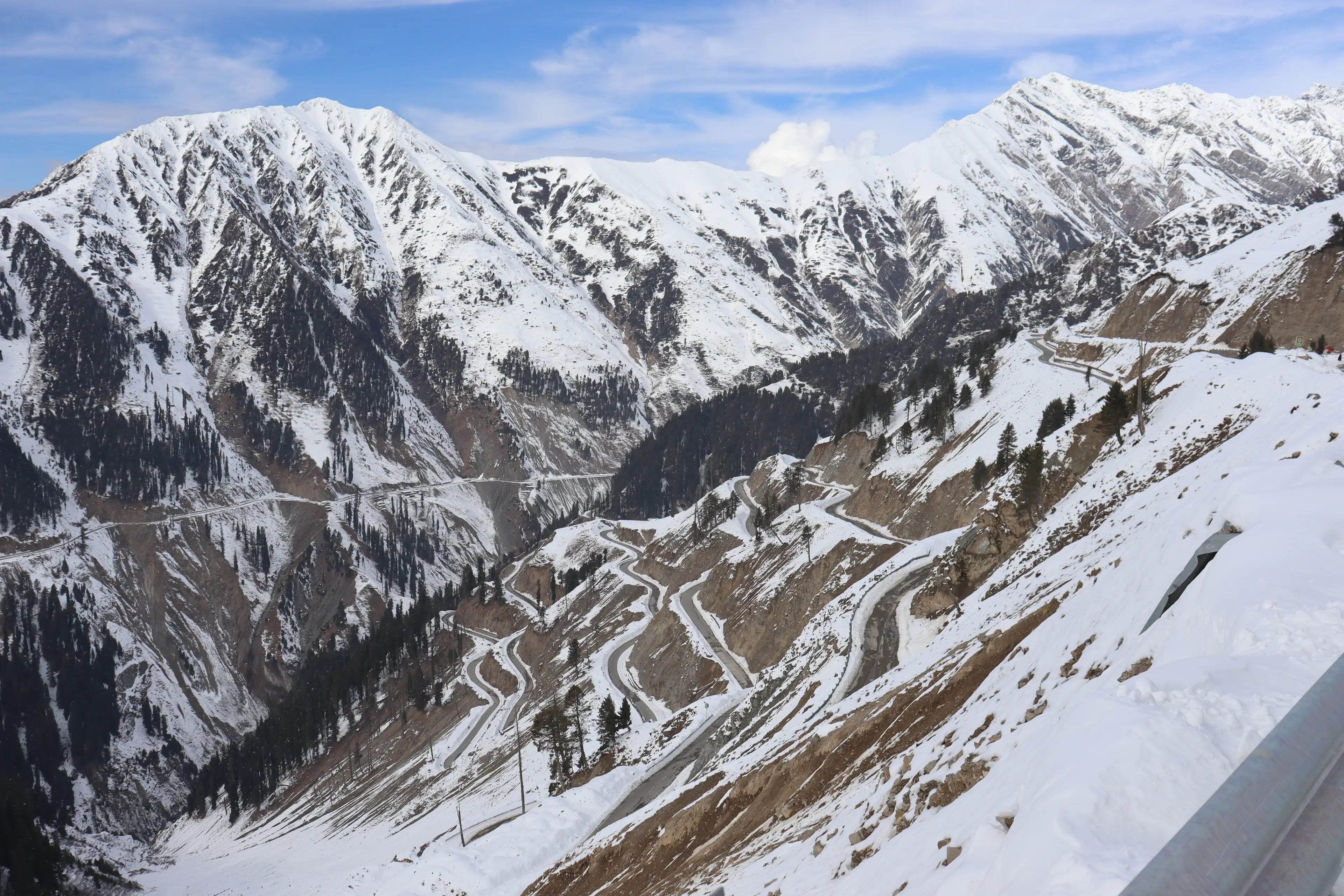
Researchers looked at the plates underneath the Himalaya. (Getty Images/ Nazim Ali Khan/ NurPhoto)

The study - led by Lin Liu, Danian Shi, Simon L Klemperer et al. - started by investigating the levels of helium present in the Tibetan springs and presented a new theory about the plates that lie underneath the mountain range.

The study found the levels of helium were higher in southern Tibet compared to northern Tibet, suggesting the Indian tectonic plate is splitting in two underneath the Tibetan plateau.

The study then used '3D S-wave receiver-functions' to analyze the Indian Plate.

The receiver function technique works by using information from teleseismic earthquakes to image the structure of the Earth and its internal boundaries.

The study details, as published in ESS Open Archive: "Our 3D S-wave receiver-functions newly reveal orogon-perpendicular tearing or warping of the Indian Plate."
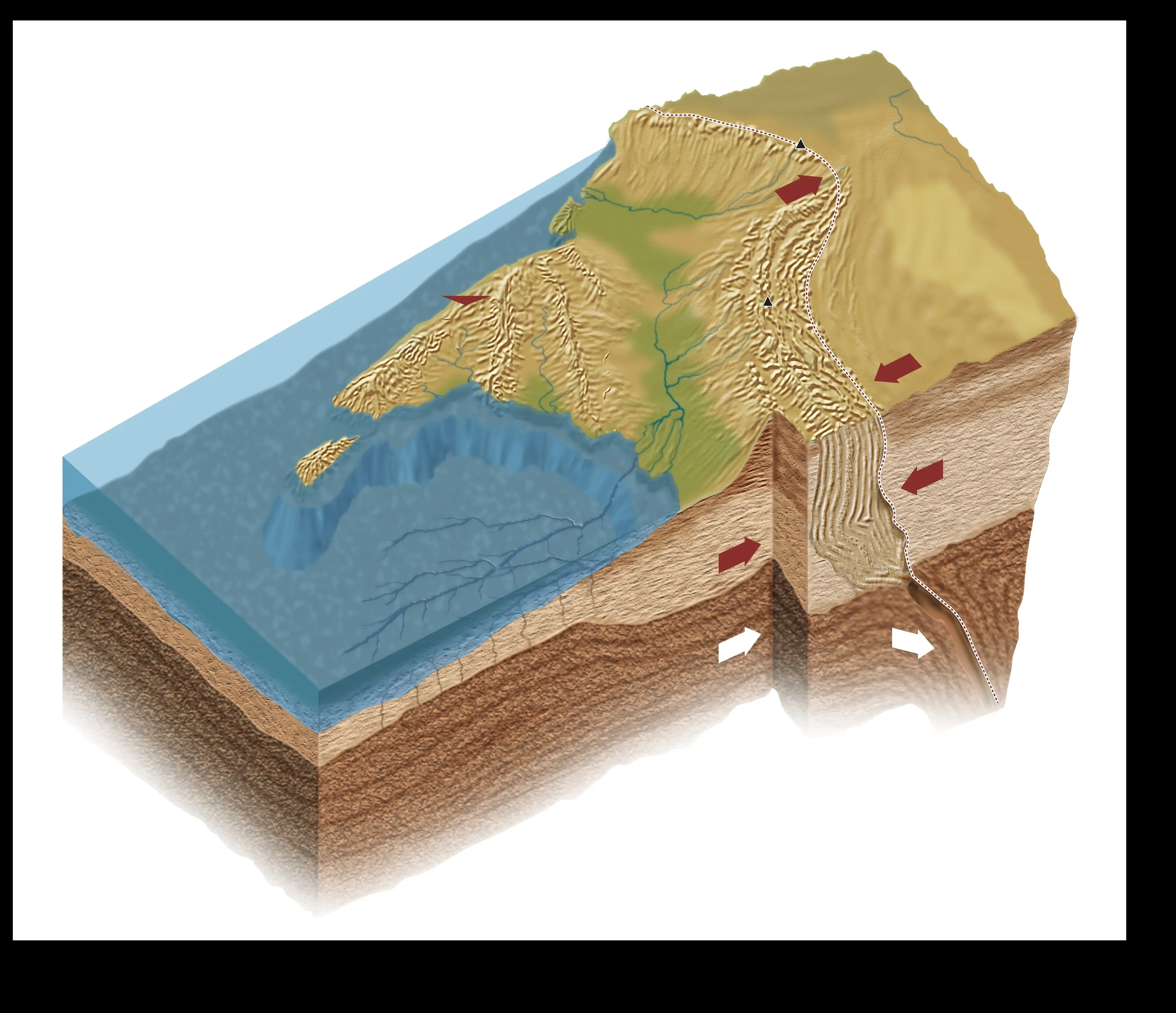
The study focused on the Indian and Eurasian tectonic plates. (Getty Images/ DEA / D'ARCO EDITORI/De Agostini)

One of the images appeared to show evidence of the top and lower slabs of the Indian Plate appearing to detach.

This subsequently suggests the Indian Plate is 'underplating' or 'subducting' beneath a 'mantle wedge'.

The study resolves: "Our SRFs objectively map depths to distrinct Indian and Tibetan lithosphere-asthenosphere boundaries across a substantial region of south-eastern Tibet.

"The inferred boundary between the two lithospheres is corroborated by more subjective mapping of changing SWS parameters, and by independent interpretations of the mantle suture from mantle degassing patterns and the northern limit of sub-Moho earthquakes."

Basically, this means the Indian Plate would peel into two, opposed to breaking into two.

  • Scientists have discovered that time is just an illusion
  • Reason why Africa is splitting in two after scientists discovered huge crack
  • Scientists discover water on the surface of two asteroids for the first time ever
  • Scientists discover a new language is developing in the United States

Choose your content:

10 hours ago
11 hours ago
  • Getty Stock
    10 hours ago

    How much you will get from Trader Joe's $7.4m settlement and how to make a claim

    The grocery store chain was involved in a multi-million dollar class action settlement

    News
  • YouTube/Veritasium
    10 hours ago

    Expert exposes tap-to-pay flaw that can steal thousands from a locked iPhone

    Hackers can steal thousands from your bank account just by standing near your iPhone, using an exploit that has been around for years

    News
  • YouTube/LADBible Stories
    11 hours ago

    Plastic surgeon reveals why BBLs are so dangerous and how patients could die

    Leading plastic surgeon Dr Dan Marsh opened up about why the procedure is so risky, and what can be done to reduce the danger

    News
  • Getty Stock
    11 hours ago

    Professor reveals two things that make you wake up at 3am every night

    Waking up in the middle of the night can be frustrating if it happens once, but if it becomes a pattern you can easily slip into insomnia

    News