NASA brings back sample of an asteroid but is unable to open the lid

NASA made a staggering discovery while excavating a sample of the asteroid Bennu during a potentially-fatal investigation in September this year.
The team in question were able to successfully return the sample of rocks and dust to Earth, after firing a spacecraft at the asteroid and touching down very briefly to collect it.
Upon it's landing to Earth however, the scientists that are responsible for opening the sample - known to be an often painfully long, slow, and intricately delicate process - have come face to face with an unforeseen dilemma.
Advert
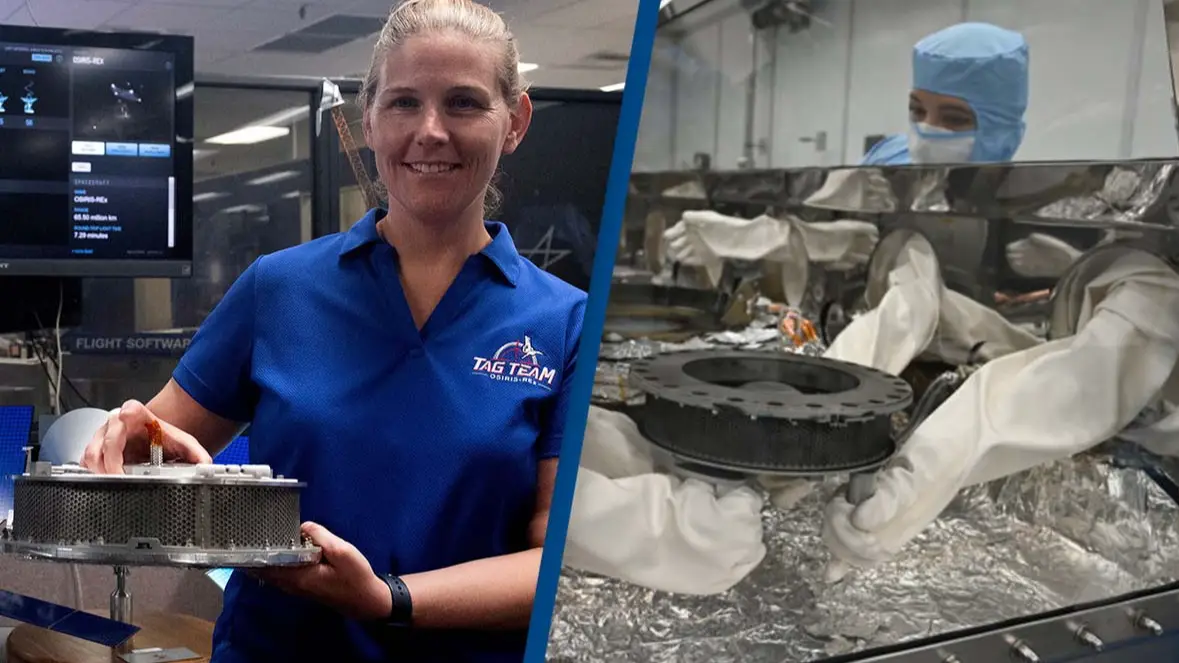
Despite having spent months rehearsing for the studying of the sought-after sample, the on-the-group team cannot open the Touch-and-Go Sample Acquisition Mechanism (TAGSAM) to access it.
On 20 October, NASA announced: "In the last week, the team at NASA’s Johnson Space Center in Houston changed its approach to opening the TAGSAM head, which contained the bulk of the rocks and dust collected by the spacecraft in 2020.
"After multiple attempts at removal, the team discovered two of the 35 fasteners on the TAGSAM head could not be removed with the current tools approved for use in the OSIRIS-REx glovebox."
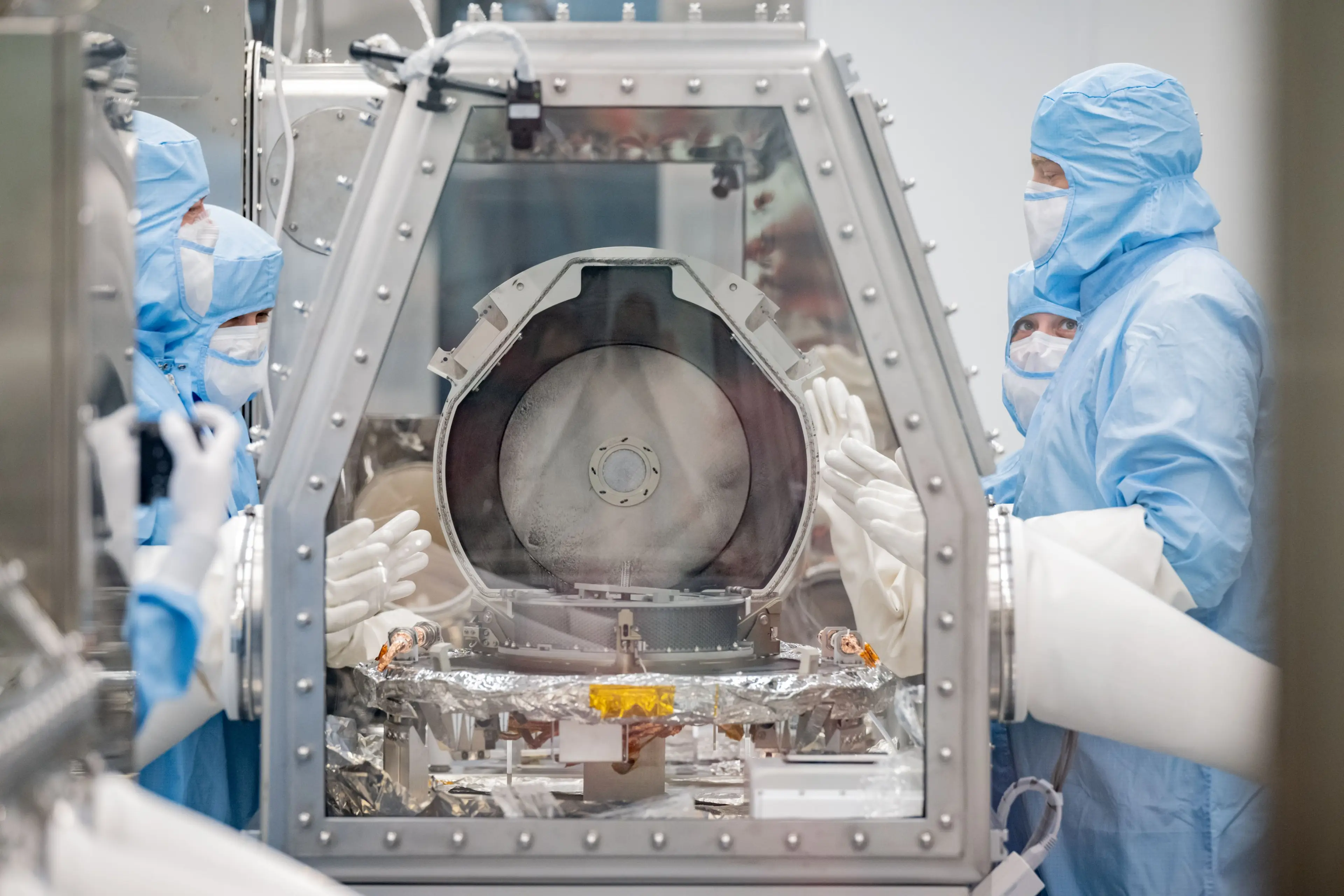
Though this may sound like an issue fixable by using the skills of a mechanic or engineer, the reality is that recovering the sample will be much more complicated.
This is because the tools used by the team must be able to fit inside the glovebox, which itself flows nitrogen in order to keep the samples pristine.
The glovebox also keeps the sample free from contamination by the atmosphere on Earth.
So far, the team of scientists have been able to access 70.3 grams (2.48 ounces) of rocks and dust from outside and inside the sample head.
A portion of the samples were also made accessible through a mylar flap.
On the plus side however, in total, this hugely surpasses their initial goal of 60 grams (2.12 ounces).
But there is still material inside which cannot be accessed via the mylar flap, and which is being kept inside by those difficult to open fasteners.
NASA's frustrating news comes just days after the channel Airplane Mode wowed space fanatics by demonstrating the speed of the ISS was shown through amazing animation, with incredible footage of the flyby.

The video, that has been viewed more than 700,000 times since being posted on YouTube in 2022, begins by showing a simulation of the ISS in space.
The space station moves at an average speed of 17,150mi/h (27,600km/h) as it orbits the planet.
The video shows a first-person view of what it would be like to move at Mach 22 speeds through New York City, flying past the large body of water to reach the city in just over a second.
“This really puts into perspective how slow sound actually is, this is crazy stuff,” one YouTuber commented.
“I think it's crazy that we as humans made an object go that fast. I bet Newton would be pretty shocked to hear we actually went fast enough to orbit Earth like he theorized back when the fastest vehicles were sailing ships,” another remarked.
Topics: International Space Station, NASA, Science, Space
 Rhianna Benson