unilad homepage
  • News
    • UK News
    • US News
    • World News
    • Crime
    • Health
    • Money
    • Sport
    • Travel
  • Film and TV
    • Netflix
  • Music
  • Tech
  • Features
  • Celebrity
  • Politics
  • Advertise
  • Terms
  • Privacy & Cookies
  • LADbible Group
  • LADbible
  • SPORTbible
  • GAMINGbible
  • Tyla
  • UNILAD Tech
  • FOODbible
  • License Our Content
  • About Us & Contact
  • Jobs
  • Latest
  • Archive
  • Topics A-Z
  • Authors
Facebook
Instagram
X
Threads
TikTok
YouTube
Submit Your Content
Archaeologists uncover medieval skeleton with 400-year-old prosthetic hand

Home> News> World News

Published 19:57 1 Nov 2023 GMT

Archaeologists uncover medieval skeleton with 400-year-old prosthetic hand

The prosthetic was given to a man whose fingers were amputated

Emily Brown

Emily Brown

google discoverFollow us on Google Discover
Featured Image Credit: BLfD

Topics: Science, World News, Health

Emily Brown
Emily Brown

Emily Brown is UNILAD Editorial Lead at LADbible Group. She first began delivering news when she was just 11 years old - with a paper route - before graduating with a BA Hons in English Language in the Media from Lancaster University. Emily joined UNILAD in 2018 to cover breaking news, trending stories and longer form features. She went on to become Community Desk Lead, commissioning and writing human interest stories from across the globe, before moving to the role of Editorial Lead. Emily now works alongside the UNILAD Editor to ensure the page delivers accurate, interesting and high quality content.

Advert

Advert

Advert

Healthcare has come on leaps and bounds in the last few decades, but a 400-year-old prosthetic discovered on a skeleton proves that not all of our ideas are new.

Admittedly the materials and the process used to attach the prosthetic were probably a little less sterile and a little more painful a few hundred years ago, but the creation of a substitute hand is impressive all the same.

The discovery of the prosthetic was made during pipeline work in a grave in the Bavarian town of Freising, near the parish church of St George in Germany.

Advert

Images released by the Bavarian State Office for Monument Protection show a skeleton lying in the ground, with its arms crossed in front of its body, but it was the remains of the left hand in particular that caught the attention of archeologists.

In a press release, the office described the find as 'something special'.

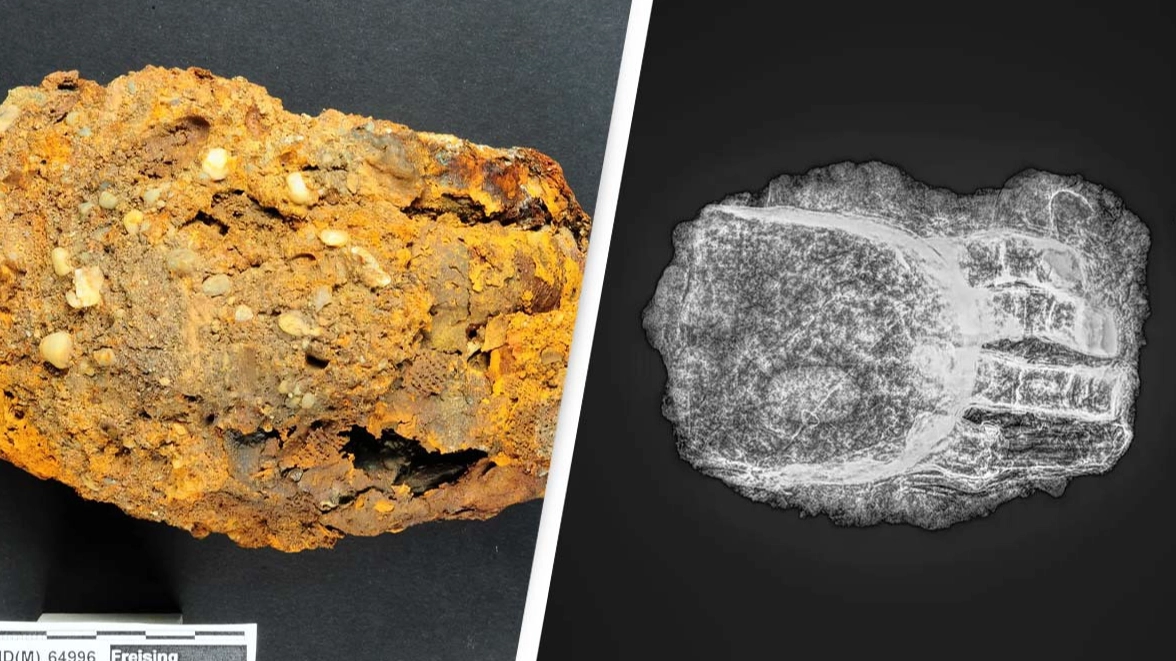
Created with iron and non-ferrous metal, the prosthetic was still attached to the remains of the left hand, and is believed to have once been covered with leather.

Inspection of the skeleton indicates that the fingers were amputated when their owner was still alive, leaving only the thumb behind.
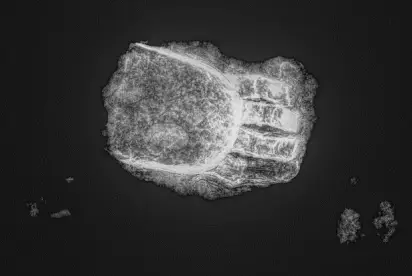
The owner of the prosthetic had their fingers amputated.
Bavarian State Office for Monument Protection

Dr Walter Irlinger, head of the Bavarian State Office for Monument Protection, explained that the prosthetic added four fingers to the owner's amputated hand.

"The index, middle, ring and little fingers are individually formed from sheet metal and are immobile," he said.

"The finger replicas lie parallel to each other, slightly curved. Presumably the prosthesis was made with straps [to be tied] on the stump of the hand."

The remains of gauze-like cloth found inside the prosthetic are believed to have acted as a cushion to protect the remains of the hand.
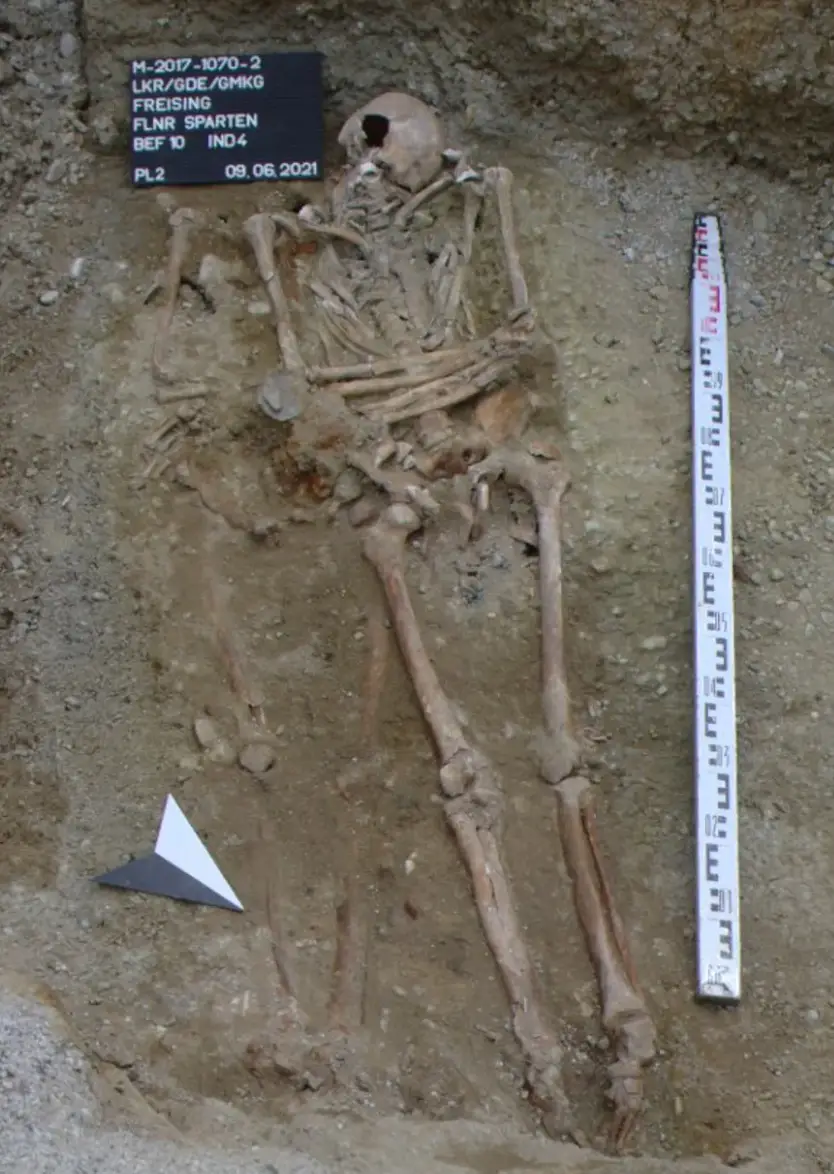
The skeleton was discovered in Freising.
Bavarian State Office for Monument Protection

Analysis of the remains led the archaeologists to believe that they belonged to a man who lived sometime between 1450 and 1620.

Though his cause of death is unknown, he is thought to have been aged between 30 and 50 when he died.

His death came around a time when there was a higher need for amputations and demand for prosthetic technology due to conflict across Central Europe, such as the Thirty Years' War.

Similar prosthetics have previously been discovered around Europe, including both static and mechanical styles.

Though the discovery in Freising isn't the most complex example of prosthesis uncovered, it indicates that doctors were already thinking at that time about how they could make life easier for amputees.

  • Archeologists discover 6,000-year-old skeletons with unexplained DNA that could rewrite history
  • Experts warn of giant spiders the size of a human hand that are spreading across US
  • Million-year-old skull could rewrite entire timeline of human evolution according to researchers
  • Scientists make unbelievable discovery inside rare 520-million-year-old fossil that made their ‘jaws drop’

Choose your content:

an hour ago
2 hours ago
  • Getty Stock Images
    an hour ago

    Most common nicknames 26,000,000 men use for their penis

    80 per cent of men have a name for their penis

    News
  • Alex Wong/Getty Images
    an hour ago

    Americans could receive $1,200 each as update given on Trump's promise that's part of new bill

    Two bills have been proposed which proposes rebates due to the increased cost of living from tariffs

    News
  • MARTIN BERNETTI/AFP via Getty Images
    an hour ago

    Man spent 120 days living under the sea and claims it taught him about humanity

    Rudiger Koch, a German engineer, built his own underwater pod to live in for four months

    News
  • Theo Wargo/Getty Images for Hot Girl Productions
    2 hours ago

    Megan Thee Stallion breaks silence after being hospitalized during Broadway performance with health update

    The rapper said that the health scare was 'a real wake-up call'

    Celebrity