unilad homepage
unilad homepage
    • News
      • UK News
      • US News
      • World News
      • Crime
      • Health
      • Money
      • Sport
      • Travel
    • Music
    • Technology
    • Film and TV
      • News
      • DC Comics
      • Disney
      • Marvel
      • Netflix
    • Celebrity
    • Politics
    • Advertise
    • Terms
    • Privacy & Cookies
    • LADbible Group
    • LADbible
    • SPORTbible
    • GAMINGbible
    • Tyla
    • UNILAD Tech
    • FOODbible
    • License Our Content
    • About Us & Contact
    • Jobs
    • Latest
    • Archive
    • Topics A-Z
    • Authors
    Facebook
    Instagram
    X
    Threads
    TikTok
    YouTube
    Submit Your Content
    Explorer explains shocking reason why reaching the top of Everest feels like a ‘horror movie’

    Home> News> World News

    Published 18:18 22 Apr 2025 GMT+1

    Explorer explains shocking reason why reaching the top of Everest feels like a ‘horror movie’

    Imagine the soundtrack from The Conjuring...

    Poppy Bilderbeck

    Poppy Bilderbeck

    google discoverFollow us on Google Discover
    Featured Image Credit: STR/AFP via Getty Images

    Topics: Health, Horror, Mental Health, Travel, World News, Community

    Poppy Bilderbeck
    Poppy Bilderbeck

    Poppy Bilderbeck is a freelance journalist with words in Daily Express, Cosmopolitan UK, LADbible, UNILAD and Tyla. She is a former Senior Journalist at LADbible Group. She graduated from The University of Manchester in 2021 with a First in English Literature and Drama, where alongside her studies she was Editor-in-Chief of The Tab Manchester. Poppy is most comfortable when chatting about all things mental health, is proving a drama degree is far from useless by watching and reviewing as many TV shows and films as possible.

    Advert

    Advert

    Advert

    A man who climbed Everest has revealed how he was proven completely wrong in thinking reaching the top would feel 'tranquil'.

    Matthew Dieumegard-Thornton climbed Mount Everest in May 2012. At the age of just 22-years-old, he became one of the youngest climbers in history to reach the summit.

    While the feat is certainly a great achievement, I think we're all aware climbing Earth's highest mountain above sea level - measuring 8,849 meters - is far from an easy challenge.

    However, what many of us may've not considered is how when you get to the top, it's not exactly all sunshine and views for miles or simply a glorious sense of achievement.

    Advert

    And Dieugmegard-Thornton revealed some eye-opening realities about his climb - including exactly why reaching the top didn't come to a 'tranquil end', but made him feel like he had landed himself inside a horror movie.

    The explorer told RedBull the climb typically takes five to six weeks to complete on average, designed to 'help your body acclimatise'.

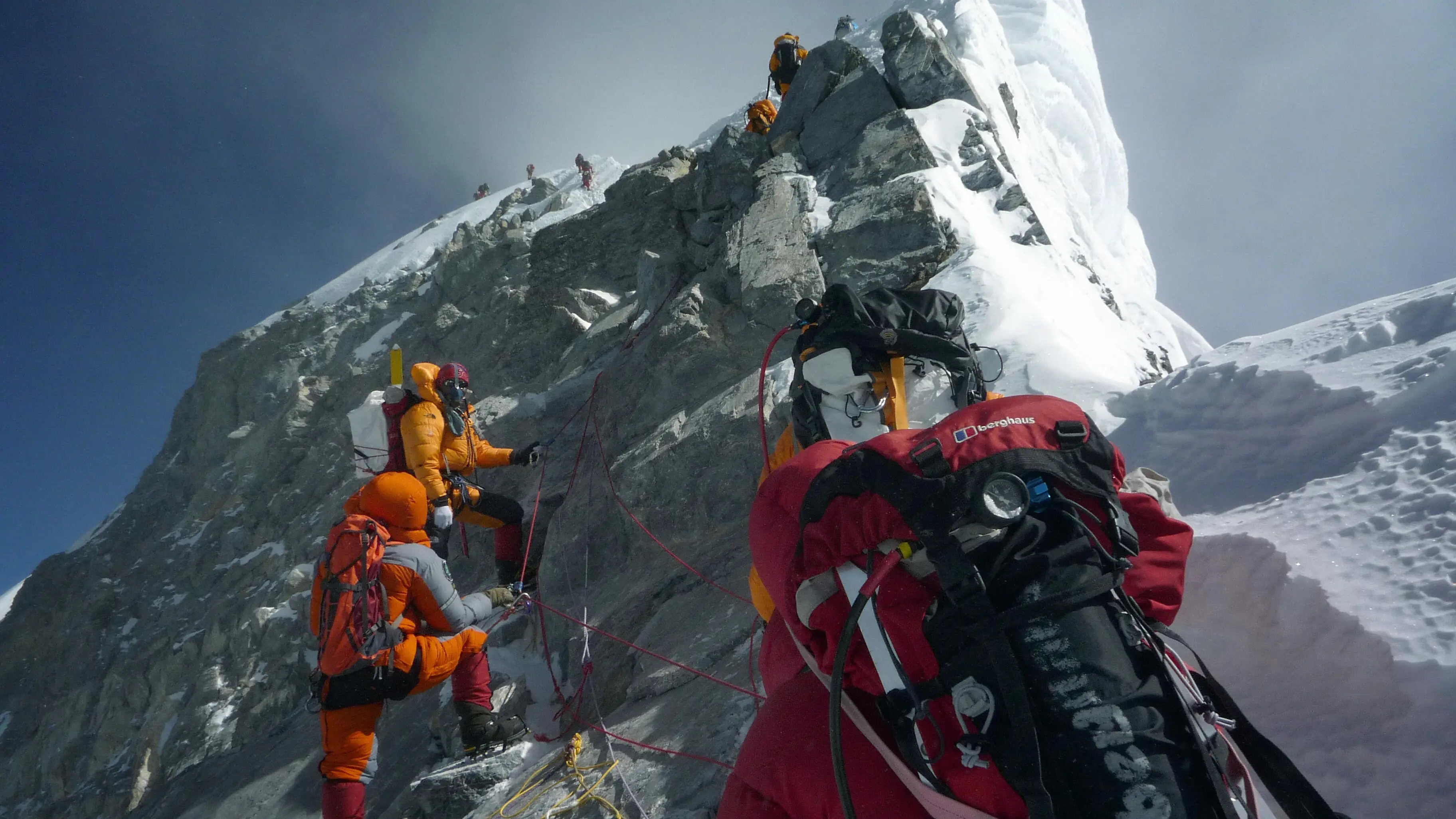
    However, 'nothing prepares you' for an area known as 'The Death Zone,' where there's simply 'not enough' oxygen and the air is so 'thin' it 'makes you delirious'.

    You'd think after tackling'The Death Zone,' alongside the crevices - which you have to 'traverse across on ladders' *gulp* - and trying to keep up with the cutting-corner Sherpas as well as seeing 'littered dead bodies' that reaching the top would be a welcomed relief.

    Alas, it was not.

    Dieugmegard-Thornton revealed: "I went into the climb imagining dying at the top of Everest would be quite a tranquil end - should the worst happen - because the oxygen is so low that you’d just fade out. But no, the summit is so windy and hostile - it’s simply not a nice place to be. It is extreme."

    The explorer revealed upon reaching the top he was simply reminded just how 'long' a way he was 'from help' and how 'nobody is going to rescue you' if something happens.

    "The wind adds so much suspense I can only liken it to the sound of a horror movie," he continued.
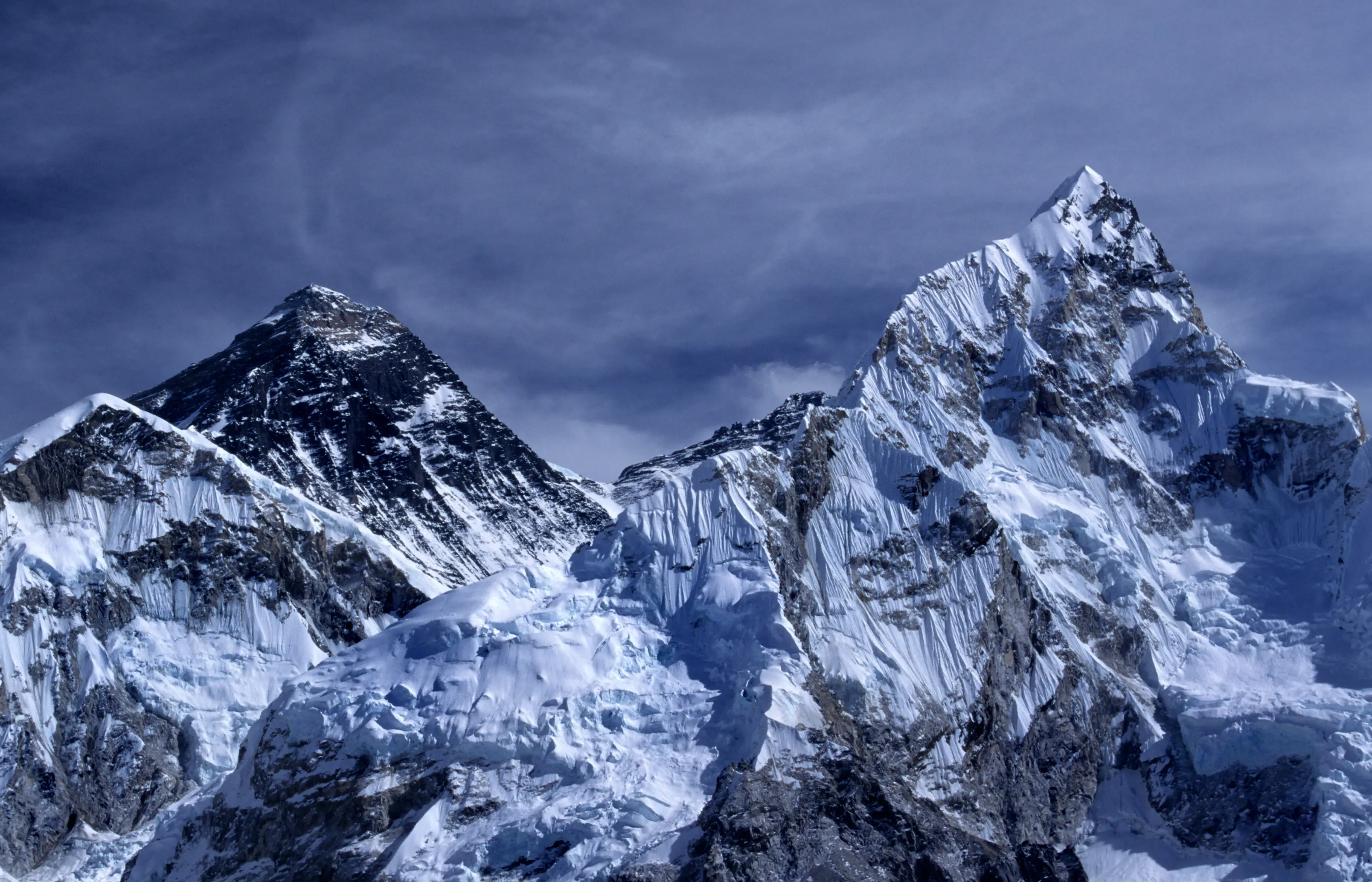
    You don't exactly just stand there relieved to be taking in the view... (Rahul Sharma/ INDIAPICTURE/Universal Images Group via Getty Images)
    You don't exactly just stand there relieved to be taking in the view... (Rahul Sharma/ INDIAPICTURE/Universal Images Group via Getty Images)

    By the time Dieugmegard-Thornton reached the top, he was 'hypoxic' - which means 'low on oxygen' - so much so, he 'completely forgot about taking photos for all [his] sponsors'.

    He resolved: "I only cared about myself in that moment as I felt so punch drunk. But when you’re pitting yourself against nature in a very raw way, thinking about yourself is no bad thing."

    Well, there goes climbing Everest off my bucket list - not that realistically it was ever actually going to end up on it in the first place.

    Choose your content:

    an hour ago
    2 hours ago
    4 hours ago
    • Getty Stock Image
      an hour ago

      Map shows America's most disliked state as 25 percent of its own residents agree

      Some of America's most successful states are also among its most disliked

      News
    • Andrew Harnik/Getty Images
      an hour ago

      Trump threatens to pull troops out of three countries and slams 'horrible' ally

      Some of America's closest military allies could see US troops disappear for the first time since World War Two

      News
    • Kyle Grillot/Bloomberg via Getty Images
      2 hours ago

      Biohacker Bryan Johnson details girlfriend's intimate microbiome score after bizarre message

      The biohacker wasn't holding back on the intimate details - with graphs to prove it

      News
    • Facebook/Barry Christian
      4 hours ago

      Missing Oklahoma Senate candidate Barry Christian found dead in truck near remote ravine

      Barry Christian was out campaigning four days before he was reported missing

      News
    • Woman who travels 5,000 miles for work explains why it's worth it
    • Pilot explains the bizarre reason why planes feel like they're 'sinking' during take-off
    • Reason why woman had no idea she was pregnant until she gave birth on family holiday
    • Doctor reveals 5 ways ADHD 'looks different' in women and why it's often undiagnosed