Doctor invents 'butt breathing' after heartbreaking moment watching dad on ventilator

A new invention could prove to be life-saving as he developed a new way to get oxygen into the body after taking issue with how his father was on a ventilator.
While it might sound like a joke, a doctor stands by his new invention that could be very useful in the event traditional ventilators are not immediately available.
Scientists at Cincinnati Children's Hospital in Ohio and the University of Osaka have been investigating the possibility of ‘bum breathing’ and whether it could be a viable way to increase a person’s oxygen levels when their lungs fail.
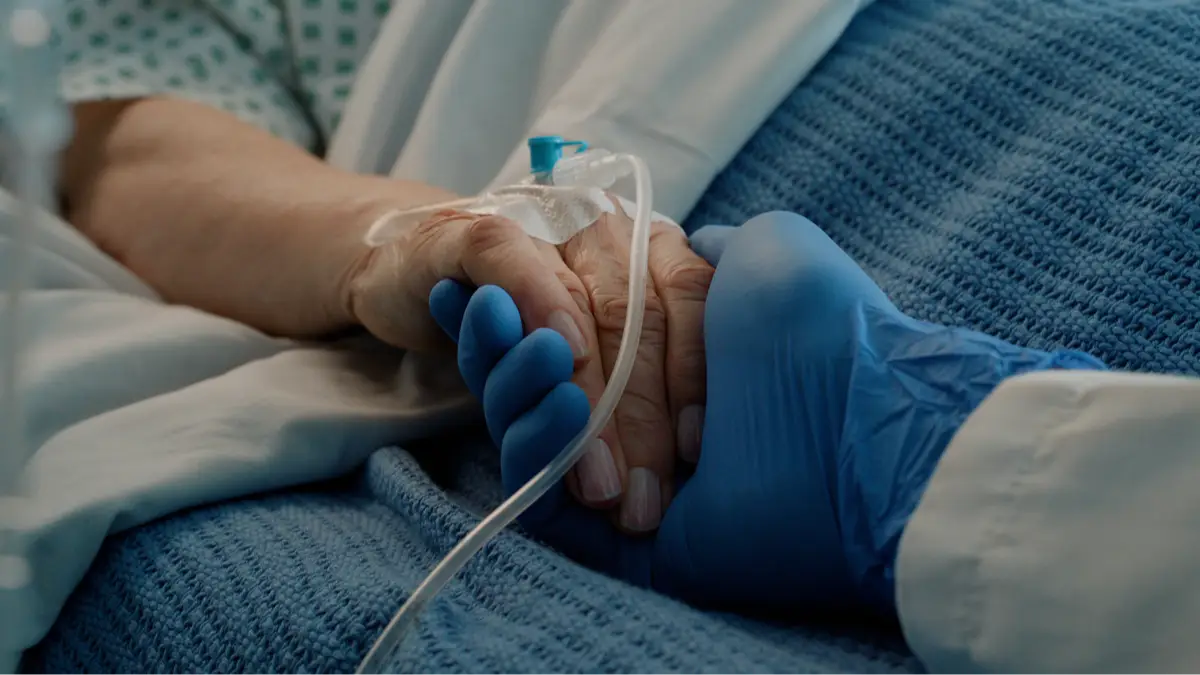
The brain behind the concept, Dr Takanori Takebe, was inspired to look into the concept after seeing how intrusive ventilator usage can be, something he witnessed firsthand when his father contracted pneumonia.
Advert
He noted that his father had already had part of a lung removed due to a past infection, meaning his options, if the ventilator wasn’t enough, were limited.

Takebe took inspiration from seeing how certain animals have the capacity to absorb oxygen through their skin, genitals or guts.
With this in mind, and the knowledge that the human intestinal tract is abundant in blood vessels, he hypothesized that oxygen could similarly traverse from the intestines into the body.
Takebe first experimented with mice and pigs, giving them enemas of this oxygen-rich liquid and came to the conclusion that it helped the animals survive low-oxygen conditions, according to a Science News report.
Since then, the testing phase has moved on to human trials.
According to a Mirror report, 27 men in Japan were administered non-oxygenated enemas to determine the maximum volume of liquid that individuals could tolerate over an hour and what side effects may they experience.

Some of the participants reported abdominal discomfort as well as some bloating and minor uneasiness.
The next set of trials will establish whether oxygen can successfully reach its target destination.
Critical care pulmonologist Kevin Gibbs admitted that Takebe’s ideas initially raised his eyebrows. He added that as he treats people with low oxygen levels, most of his work is above the belt.
With that said, according to the Science News outlet, he did note that if Takebe’s treatment proves effective it could be valuable in specific scenarios.
He said: "What I find exciting is if this drug works ... maybe you can administer this, and then all of the sudden they have this real boost in oxygen for the time it takes you to safely put someone on life support - and that would be huge."
Topics: Health, News, Technology, World News, Science
 Gerrard Kaonga