
Horrific disease explained after woman suffering from it chooses to end her life with voluntary assisted dying

Warning: This article contains discussion of assisted dying which some readers may find distressing.
A 25-year-old Australian woman made the heartbreaking decision that she wants to die by voluntary assisted dying due to a debilitating medical condition.
Annaliese Holland opened up about the medical condition which has left her needing round-the-clock care for most of her life.
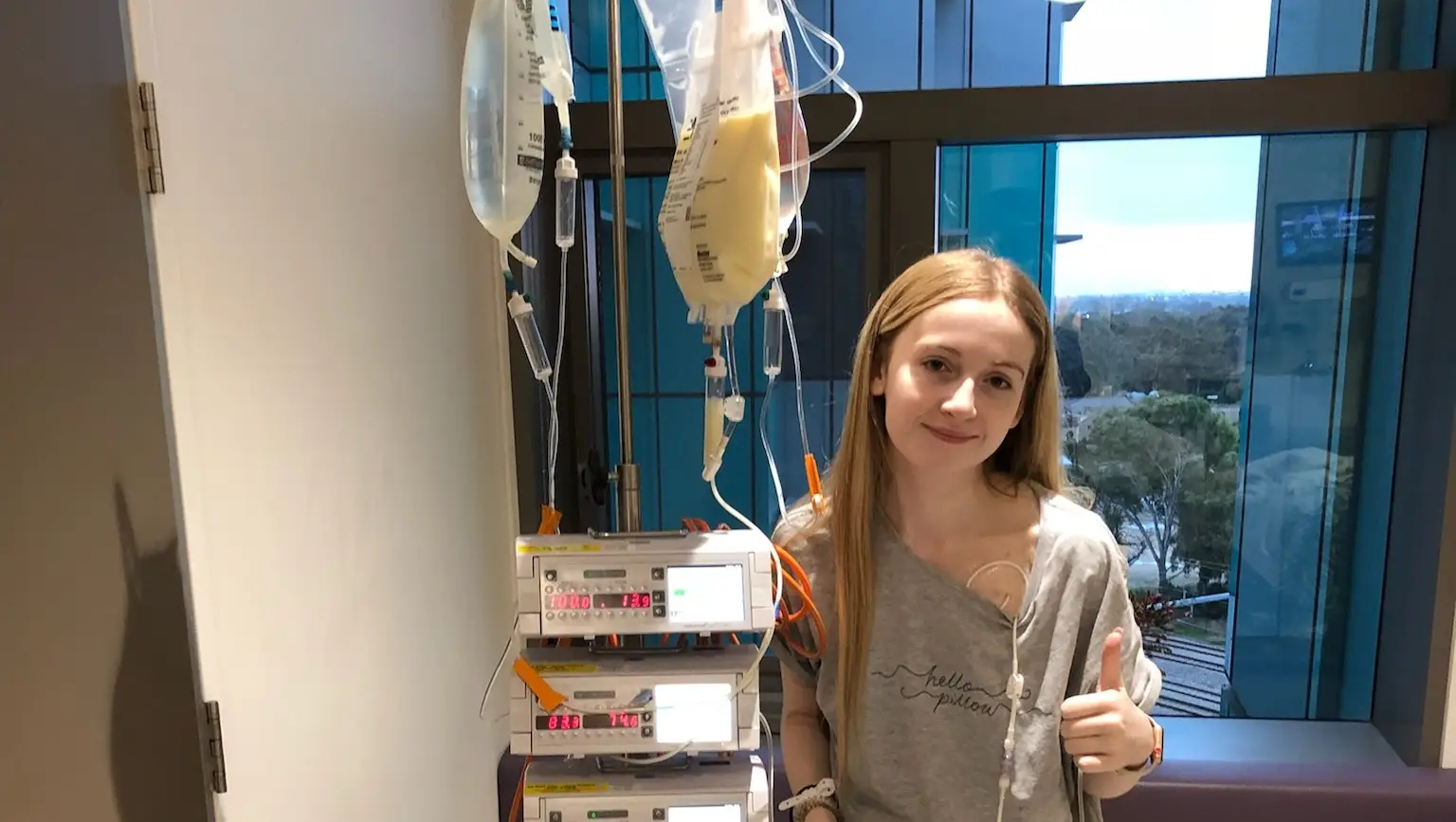
The condition is so severe that it has left Annaliese unable to physically eat anything, instead getting nutrition from a specialized source directly into her body.
Advert
Despite this, Annaliese has said that she still feels hunger when she smells or sees food, but physically cannot eat it due to her condition.
This is a very rare condition which sadly is terminal in Annaliese's case, though it is not always terminal. It is called autoimmune autonomic ganglionopathy, AAG, and around 100 people in the US are diagnosed with it each year.
What is autoimmune autonomic ganglionopathy (AAG?)
As its name suggests, AAG is an autoimmune disease, which means it is caused by the body's own immune system mistakenly attacking the body, leading to ill effects.
In the case of AAG, this impacts on the autonomic ganglia, which are a part of the body's nervous system which specifically deal with involuntary bodily functions, so functions that we can't directly control such as reflexes.
AAG means that your body can't process the signals from nerves properly, which causes disruption to these bodily functions.
What are the symptoms of AAG?
AAG can have a wide variety of symptoms depending on how it impacts the body's reflexes.
However, according to Cleveland Clinic, common symptoms of the condition include things like constipation, dilated pupils, dry mouth or dry eyes, fainting, urinary retention, and low blood pressure when you move to stand up.
The clinic added that around two thirds of people with the condition also have high levels of a particular kind of antibody called ganglionic acetylcholine receptor antibodies, or g-AChR antibodies. Researchers on the condition believe that the levels of these antibodies may correlate to the severity of symptoms.
Is AAG treatable?
The rarity of AAG as a condition means that medics do not currently have a standardized kind of treatment for it, and instead have to figure out how to respond to AAG on a case by case basis.
Annaliese has a very severe case which is terminal, but the condition can impact patients to varying levels of severity.
Sadly, AAG is not curable, so treatment typically focuses on managing it and minimizing symptoms. This might include plasma exchange, intravenous immunoglobulin (IVIG) therapy, intravenous corticosteroids, or immunosuppressive medications, according to Cleveland Clinic.
Many patients with the condition do however successfully manage their symptoms in the long term with proper medical intervention.
Anneliese's story
The effects of this can be debilitating, as Annaliese has sadly found out.
"I've been sick since being a child really, I lived in and out of the hospital ever since I went in for nine months," she told news.com.au.
"It actually took until I transitioned to the adult hospital that we found the diagnosis, and it came back that I did have this autoimmune disease that was causing it all along."
The condition has led to her having multiple operations, and she has now lost metres of her bowels.

"My stool would back up so much that I would throw it up or drain it out my tummy," she explained. "I was put on something called Total Parenteral Nutrition or TPN and that's basically a bag of nutrition that's delivered directly into your bloodstream through like, a line in your chest."
Annaliese has made the decision that she wants to use voluntary assisted dying if the condition becomes unbearable, and that thought has provided her with some relief.
“For me, I don’t want to have to wake up every day with anxiety about the pain that I know is ahead for me," she said.
"The pain of starving to death when they can’t feed me anymore, or the horror of sepsis. Knowing I can go when the time is right is just a huge relief."
For advice, support, and more information, you can contact Dignity in Dying via their website or email them at [email protected]. For more state resources, you can also contact End of Life Choices Oregon or Patient Choices Vermont.
Additionally, if you or someone you know is struggling or in crisis, help is available through Mental Health America. Call or text 988 to reach a 24-hour crisis center or you can webchat at 988lifeline.org. You can also reach the Crisis Text Line by texting MHA to 741741.
Topics: Australia, News, World News
 Kit Roberts