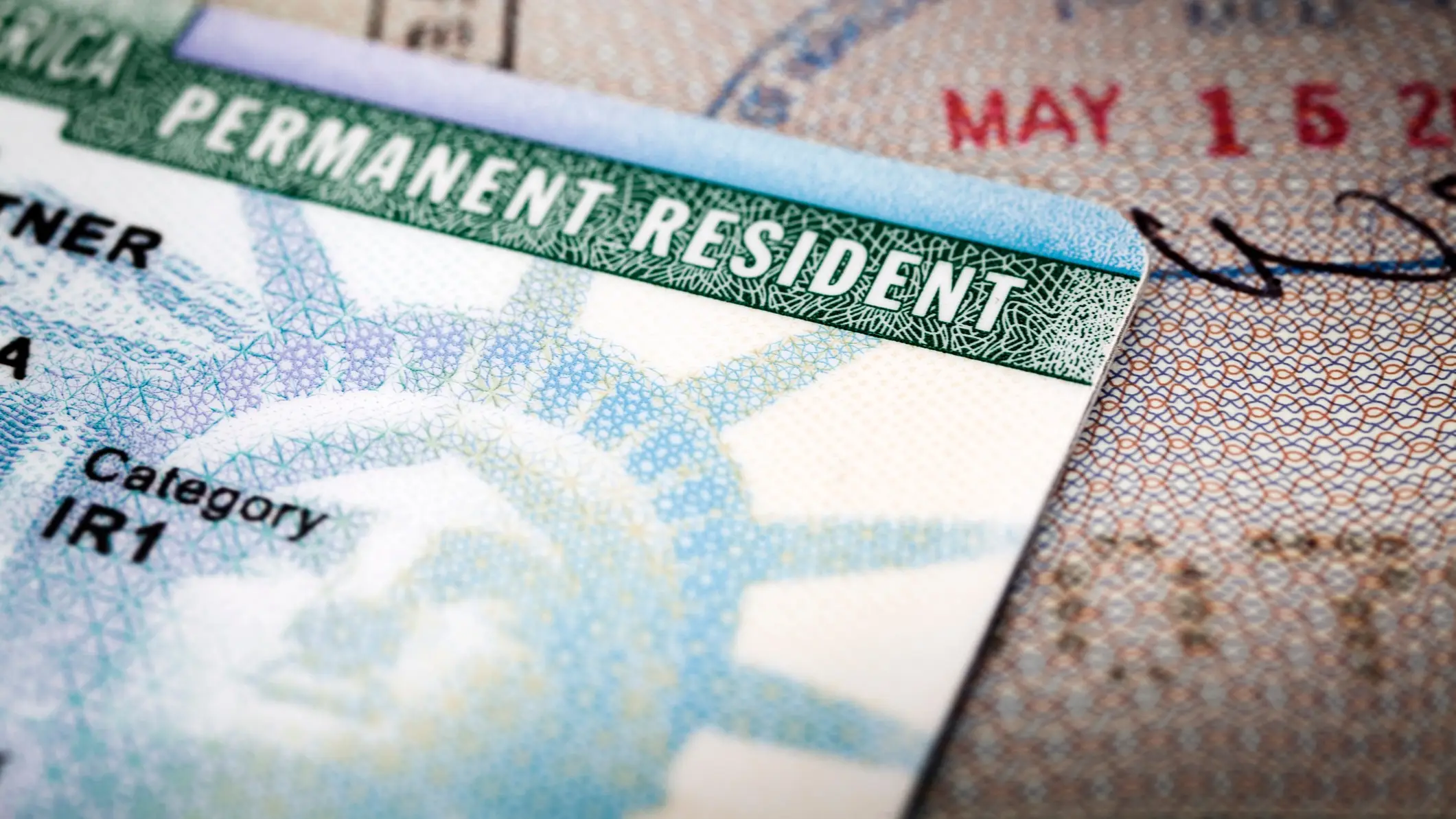
Everything we know as US plans crackdown that could make getting a green card way harder

Donald Trump's administration has issued a super-charged policy to crack down on green card applicants.
It comes after the president pledged to dramatically increase the number of deportations of undocumented immigrants, with a target of around one million removals per year.
In recent weeks, the government has stripped six people of their visas over social media comments about the killing of political activist Charlie Kirk, as per the Guardian.
Now, it's going to be harder for lower-income families to permanently move to the country.
Advert
The move, first issued in September, gives US Citizenship and Immigration Services (USCIS) officers permission to deny applicants who are likely to depend on certain government benefits.
Falling under the the 'public charge' inadmissibility ground, it means certain people will be denied entry to the US.
What is public charge?

According to the Immigration Legal Resource Center, grounds of inadmissibility are reasons that someone might be denied a green card, visa, or admission into the US.
When deciding to admit a person, immigration officers must 'decide whether that person is likely to become dependent on certain government benefits in the future'.
If they do, it would make them a 'public charge'.
A key requirement of Trump's newly-implemented policy is the the Affidavit of Support, a legally binding document from a sponsor who promises to financially support the immigrant.
Officers now must verify not just the existence of the affidavit but also the sponsor’s actual financial capacity.
This makes it more challenging for applicants with low-income sponsors to qualify.
Which benefits count as public charge?
Four types of benefits count towards the public charge test, as per Keep Your Benefits.
These concern cash benefits for income maintenance, including Supplemental Security Income, Temporary Assistance for Needy Families and General Assistance/Relief.
Medicaid for 'long-term medical care in an institution', such as a psychiatric hospital or a nursing home, are also part of the test.
However, Keep Your Benefits note most people who face a public charge test aren't even eligible for cash benefits, so it's worth talking to a legal aid lawyer.
Which benefits do not count as public charge?

Some benefits do not count towards the public charge test. These include certain healthcare programs, food and housing assistance, disaster relief and unemployment benefits.
The USCIS website explains: "We also encourage everyone, including aliens, to seek necessary medical care, including treatment or preventive services for COVID-19.
"You may seek pandemic-related benefits and services (including food assistance, housing programs, and others) for which you are eligible - without fear of negative consequences to your immigration status."
Topics: Donald Trump, Immigration, US News, Politics
 Ellie Kemp